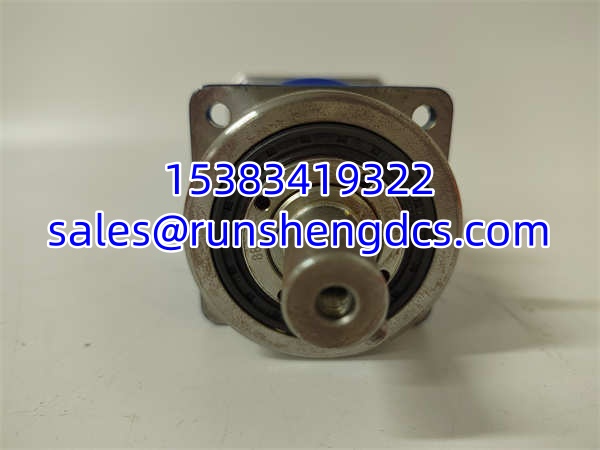
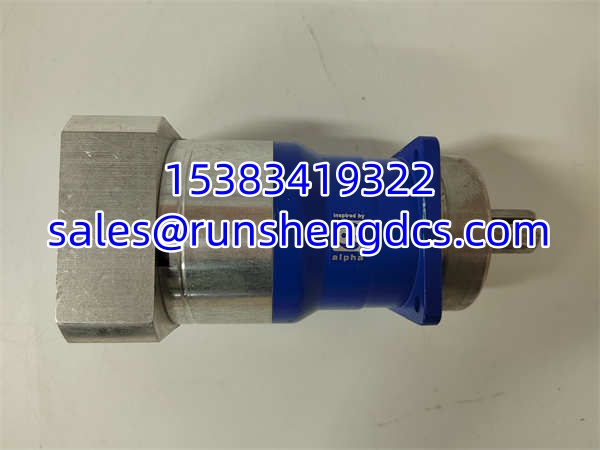
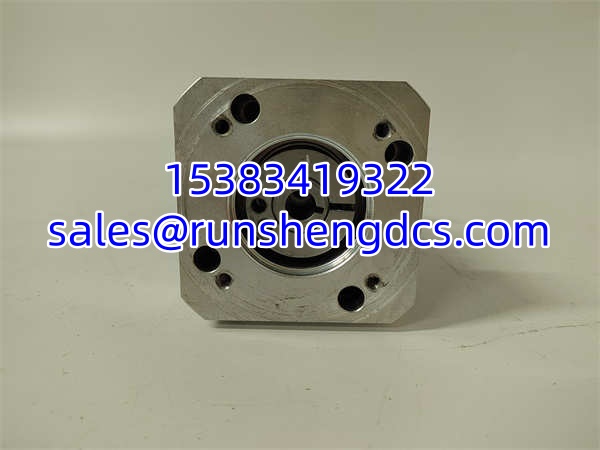

Description
Key Technical Specifications
| Parameter | Specification |
|---|---|
| Model Number | SP060S-MF2-20-1C1-2S |
| Brand | ALPHA (WITTENSTEIN) |
| Product Series | SP Series |
| Frame Size | 060 (compact) |
| Reduction Ratio | 20:1 |
| Gear Stages | 2-stage planetary |
| Motor Interface | MF2 (standard servo mount) |
| Output Configuration | 1C1 — Solid output shaft |
| Backlash (typical) | 3–8 arcmin (verify with OEM datasheet for exact grade) |
| Transmission Efficiency | >90% |
| Protection Class | IP65 |
| Lubrication | Lifetime sealed, maintenance-free |
| Reference Price | ~USD 4,535 (surplus channel; actual pricing varies) |
Product Introduction
You spec a servo axis for a pick-and-place gantry, and the positioning loop keeps oscillating at the reversal point. The gearbox is the usual suspect — excessive compliance or backlash in the planetary train turns a tight servo loop into a hunting mess. The SP060S-MF2-20-1C1-2S sits in the SP series lineup as a compact 060-frame, two-stage planetary reducer designed to mate directly with rotary servo motors via the MF2 interface. It converts high-speed, low-torque motor output into controlled, higher-torque motion at the load end.
The 20:1 ratio and 2-stage architecture give this unit a balance between speed reduction and torsional stiffness. Backlash in the 3–8 arcmin range (exact value depends on the precision grade ordered) keeps repeatability tight enough for servo positioning tasks without the cost of ultra-precision single-stage units. Transmission efficiency above 90% means less thermal waste in the gearbox housing. The solid output shaft (1C1) accepts standard keyway couplings, pinions, or bellows couplings for direct mechanical connection to the driven axis.
QA/QC Transparency SOP
- Intake & Origin Verification
Photograph the nameplate. Capture the full model string SP060S-MF2-20-1C1-2S, serial number, and any WITTENSTEIN/Alpha markings. Cross-reference the MF2 interface code against the motor adapter drawing to confirm it matches the target servo motor flange. - Visual & Mechanical Inspection
Rotate the output shaft by hand. Feel for binding, grinding, or uneven resistance through a full revolution. Inspect the output shaft for scoring, rust, or keyway damage. Check the motor mounting flange face for flatness and verify all bolt holes are clean and undamaged. - Electrical Parameter Tests
This is a mechanical device — no electrical tests apply to the gearbox itself. However, if the unit ships pre-assembled with a servo motor, verify motor winding resistance and insulation resistance (megger test at 500V DC) on the motor before coupling. - Backlash & Runout Verification
Lock the motor input shaft. Apply a known torque to the output shaft in both directions and measure angular displacement with a dial indicator or rotary encoder. Compare measured backlash against the OEM specification for the ordered precision grade. Measure output shaft radial runout. - Final QC & Packaging
Label with QC pass status, measured backlash value, and date. Seal the input and output openings with protective caps to prevent contamination. Pack with shaft protectors in place. Include a note that the unit must be mounted with the correct alignment tolerance before applying load.
Field Engineer Gotchas
- MF2 Interface Does Not Mean Universal Fit
The MF2 designation covers a range of motor flange sizes and pilot diameters. A Yaskawa Sigma-7 servo and a Siemens 1FK7 servo may both claim MF2 compatibility, but the bolt circle, pilot diameter, and shaft dimensions can differ. I have seen a technician spend half a shift trying to bolt a gearbox onto a motor that was 2mm off on the pilot diameter. Get the motor model number. Pull the adapter drawing. Confirm before ordering. - Backlash Grade Mismatch
The SP060S series ships in multiple backlash grades. The “3–8 arcmin” range is not a single spec — it spans at least two precision classes. If your application demands ≤5 arcmin and you receive an 8 arcmin unit, your positioning repeatability will not meet spec. Check the exact backlash value on the nameplate or certificate, not just the series datasheet. - Overlooking Shaft Key Dimensions
The 1C1 solid output shaft requires a matching keyway on the coupling or driven component. The key width and depth are specified per shaft diameter — and they vary between frame sizes. A loose key fit introduces play that defeats the purpose of a precision gearbox. Measure the shaft diameter and keyway before fabricating or ordering the coupling. - Thermal Limits on Continuous Duty
The MF (standard) variant is rated for duty cycles below 60%. If your application runs the axis continuously at high speed — conveyor drives, constant-velocity spindles — the MC (high-speed continuous) variant may be the correct choice. Running an MF-rated unit in continuous duty above its thermal limit will cook the grease and shorten bearing life. - Contamination During Storage
Surplus gearboxes sitting on a shelf for months can develop seal degradation or internal corrosion if stored in uncontrolled environments. Before installation, rotate the shaft and listen for abnormal noise. If the unit feels gritty or shows resistance spikes, the internal gear train may be compromised.
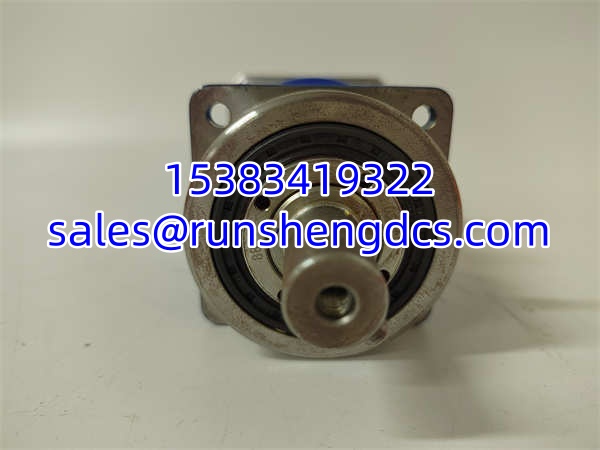
ALPHA SP060S-MF2-20-1C1-2S
Application Scenarios
- Robotic arm joint axes — Compact 060 frame fits inside tight joint housings while delivering the torque multiplication and low backlash needed for repeatable end-effector positioning.
- CNC machine tool feed drives — Ball screw-driven axes require minimal torsional compliance to maintain positioning accuracy during rapid traverse and cutting moves. The 20:1 ratio provides the speed-to-torque conversion for direct-coupled ball screw arrangements.
- Semiconductor wafer handling — Cleanroom-compatible versions of the SP series handle wafer transfer robots where vibration and particulate generation must stay minimal. The sealed IP65 housing prevents lubricant migration.
- Packaging machine indexing — Rotary indexing tables driven through servo-plus-gearbox combinations need fast acceleration and precise stop positioning. The low backlash of the SP060S keeps index-to-index repeatability within tolerance.
FAQ
Is the SP060S-MF2-20-1C1-2S compatible with any servo motor brand?
The MF2 interface is designed to adapt to common servo motor brands (Yaskawa, Siemens, Mitsubishi, Fanuc, etc.), but “compatible” requires matching the specific motor flange size, pilot diameter, and shaft dimensions. It is not a universal fit. Provide the exact motor model to the supplier before ordering.
What is the difference between the MF and MC variants?
The MF (standard) variant is rated for highly dynamic, intermittent duty cycles (typically below 60% duty cycle). The MC (high-speed) variant handles continuous operation at higher nominal speeds (above 60% duty cycle). If your axis runs continuously at speed, check whether the MF rating is sufficient.
Can I use this gearbox with a stepper motor instead of a servo?
Mechanically, yes — if the motor flange matches the MF2 adapter. Electrically, the gearbox does not care what drives the input shaft. However, stepper motors typically run at lower speeds and may not take full advantage of the precision planetary design. The backlash and stiffness benefits are most visible in closed-loop servo applications.
What is the expected service life?
WITTENSTEIN rates their SP series for up to 20,000 operating hours under specified load and speed conditions. Actual life depends on load profile, ambient temperature, duty cycle, and lubrication integrity. Verify the load rating against your specific application parameters.
Is there a newer replacement series?
The SP+ series is the successor generation to the SP series, offering both cyclic and continuous duty ratings. If you are specifying a new machine design, check whether the SP+ variant provides better performance or availability for your application.
How do I verify the backlash on a received unit?
Lock the input shaft stationary. Mount a dial indicator on the output shaft at a known radius. Apply torque in one direction, zero the indicator, then reverse the torque direction. The angular displacement measured at the output, converted to arcminutes, is the backlash. Compare against the rated value on the nameplate or test certificate.
What is the lead time for surplus units?
In-stock surplus units typically ship within about one week. If the specific model is not in stock, lead times can extend up to one month depending on supplier sourcing. Confirm availability and delivery timeline before committing to a project schedule.