Description
Key Technical Specifications
| Parameter | Typical / Verified Value |
|---|---|
| Brand | Absolute Process Instruments |
| Model | API4380-G |
| Product Type | DC-DC isolated signal conditioner |
| Input Signal | DC voltage or DC current (e.g., 0–10 VDC, 4–20 mA) |
| Output Signal | Proportional isolated DC voltage or current |
| Isolation | 3-port optical isolation: input / output / power |
| Accuracy | ±0.1% (family-typical; verify per nameplate) |
| Configuration | Field-configurable via external rotary and slide switches |
| Loop Excitation | Built-in 18 VDC unregulated loop supply for passive inputs |
| Power Supply | AC or DC supply option (verify label) |
| Dimensions | Approx. 102 × 64 × 32 mm (family-typical) |
| Weight | Approx. 250 g (family-typical) |
| Operating Temp | Verify with OEM nameplate/manual |
Product Introduction
Signal isolators are the quiet fix for ground loops, drifting analog readings, and mismatched I/O ranges. The Absolute Process Instruments API4380-G is a DC-DC isolated signal conditioner that accepts a DC voltage or current input and delivers a proportional, optically isolated DC output. It provides three-way isolation between input, output, and power supply, which helps eliminate ground loops, suppress common-mode noise, and protect downstream analog inputs.
The API4380-G is typically field-configurable using rotary and slide switches, allowing selection of common input and output ranges such as 0–10 VDC and 4–20 mA. It may also include an internal 18 VDC unregulated loop excitation supply for powering passive transmitters. Because the exact power option, range table, and revision depend on the individual unit, the physical nameplate should be treated as the final authority.
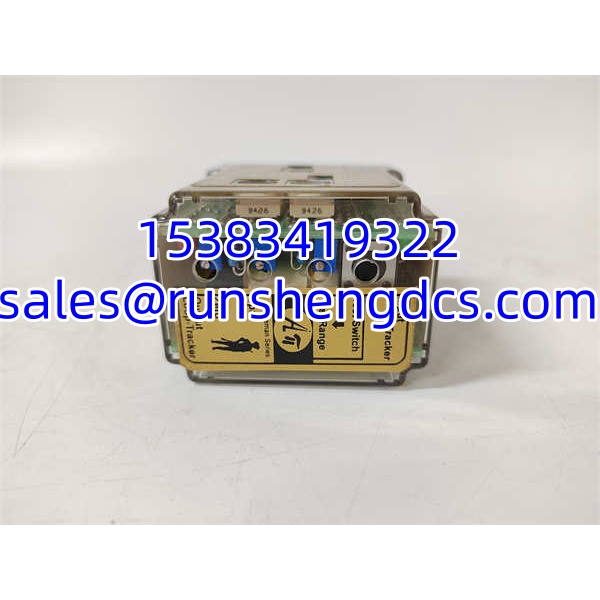
ABSOLUTE API4380-G
QA/QC Transparency SOP
- Intake & Origin Verification: Confirm model API4380-G on the label. Photograph serial number, range table, switch positions, power rating, and terminal condition.
- Visual Inspection: Check for burnt components, swollen capacitors, corroded terminals, cracked housing, or damaged screw terminals.
- Electrical Parameter Tests: Apply rated supply power. Inject a known DC input and verify proportional output voltage/current. Confirm optical isolation between input, output, and supply.
- Accuracy & Stability Testing: Test at zero, mid-scale, and full-scale. Verify linearity, response stability, and loop excitation voltage where applicable.
- Final QC & Packaging: Label the unit with verified model, range settings, power option, and test results. Seal in anti-static packaging. Any unit with unstable output, failed isolation, or unreadable range labels is quarantined.
Field Engineer Gotchas
- Wrong identity risk. Some listings call the API4380-G an encoder or ABB module. It is an Absolute Process Instruments DC-DC signal conditioner.
- Switch configuration mismatch. Risk: incorrect rotary/slide switch settings can produce wrong output ranges or inverted scaling. Solution: photograph and verify switch positions before removal and after installation.
- Power option confusion. The unit may be AC- or DC-powered depending on the specific build. Do not assume 24 VDC or 115 VAC without checking the label.
- Loop excitation trap. If the downstream transmitter requires loop power, confirm the 18 VDC excitation is present and correctly wired.
- Legacy replacement risk. Newer isolators may not share the same terminal layout, range table, or mounting dimensions. Match function and wiring, not just model number.
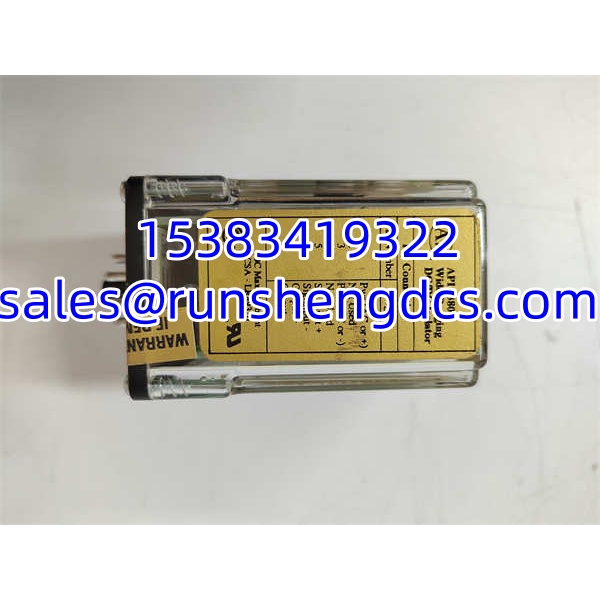
ABSOLUTE API4380-G
Application Scenarios
- Breaking ground loops between field transmitters and DCS/PLC analog inputs.
- Converting 4–20 mA or 0–10 VDC signals to match downstream controller input requirements.
- Isolating noisy analog signals in power generation, chemical, oil & gas, or manufacturing plants.
- Providing loop excitation for passive 2-wire transmitters where the source cannot supply power.
FAQ
No. Although some surplus listings describe it as an encoder, reliable references identify it as a DC-DC isolated signal conditioner from Absolute Process Instruments.
What input/output signals does it support?
It typically supports DC voltage and current signals such as 0–10 VDC and 4–20 mA, configured via onboard switches.
Does it provide isolation?
Yes. It provides optical isolation with three-way separation between input, output, and power supply.
Can it power a 2-wire transmitter?
It may provide an internal 18 VDC unregulated loop excitation supply, but this should be confirmed on the specific unit.
Is it still in production?
Availability is mainly through surplus and refurbished channels. Current production status should be confirmed with the manufacturer or distributor.
Do you provide an OEM datasheet?
A verified OEM datasheet is not attached here. Final validation should be done against the physical nameplate and the installed system wiring.