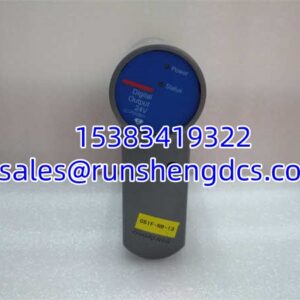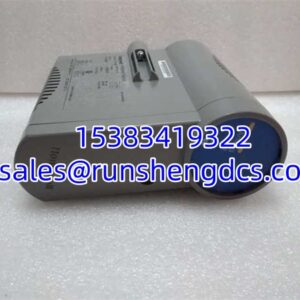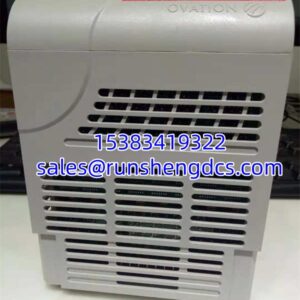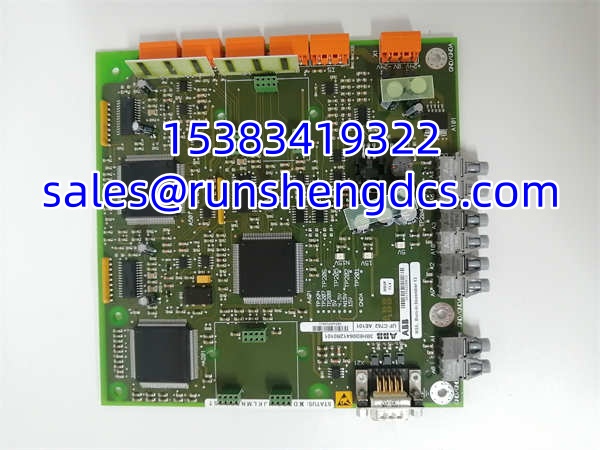

Description
Key Technical Specifications
- Product Model: ABB UFC762AE101 3BHE006412R0101
- Manufacturer: ABB
- Product Type: High Voltage Circuit Breaker Module / Main Board
- Communication Interfaces: Profibus DP (9-pin Sub-D), Modbus, CAN BUS/DeviceNet
- Power Supply: Dual power redundant input, DC 12-36V (Typical 24V)
- Protection Level: IP30 (Corrugated aluminum reinforced casing)
- Operating Temperature: -10°C to 70°C (Optional wide temp: -40°C to 85°C)
- Dimensions: 136mm x 106mm x 54mm
- Mounting Style: 35mm DIN Rail
- Weight: 800g
- Surge Protection: 600W, 4000V Lightning Protection
Product Introduction
High-voltage switching in petrochemical or steel smelting plants is unforgiving. A delayed signal or corrupted data packet can result in catastrophic equipment failure or severe safety hazards. The ABB UFC762AE101 3BHE006412R0101 acts as the intelligent nervous system for these high-voltage circuit breakers. It translates control logic into precise mechanical operations (manual, electric, or spring) while continuously monitoring circuit health. This module is designed to adapt to high-voltage environments, ensuring smooth operation and efficient production.
Engineers rely on the ABB UFC762AE101 3BHE006412R0101 because it bridges legacy mechanical breakers with modern DCS/PLC networks. Featuring dual power redundant inputs and robust surge protection (600W), it withstands the electrical noise typical of industrial substations. The board supports multiple bus standards, including Profibus DP and DeviceNet, allowing integration into existing automation architectures. Bottom line — it provides the deterministic control and safety monitoring required when millions of dollars in rotating equipment are on the line.
QA/QC Transparency SOP
- Intake & Origin Verification: We verify the ABB UFC762AE101 3BHE006412R0101 against ABB manufacturing records to confirm the 3BHE006412R0101 part number matches the high-voltage breaker module specifications, ensuring authenticity and preventing counterfeit parts.
- Live Functional Testing: Each unit is mounted on a test rack to validate the Profibus DP and Modbus communication stacks. We simulate bus faults to verify the relay alarm output (DC48V/1A) triggers correctly.
- Electrical Parameter Tests: Using calibrated multimeters, we verify the dual 24V DC redundant power inputs and check the 4000V lightning protection circuits. Continuity is tested across all 9-pin Sub-D and 5-pin CAN bus terminals.
- Firmware/Config Verification: We read out the onboard firmware and verify compatibility with the target DCS/PLC system. Configuration parameters are backed up and cleared to factory defaults to prevent legacy settings from causing integration issues.
- Final QC & Anti-Static Packaging: After passing all tests, the ABB UFC762AE101 3BHE006412R0101 is sealed in anti-static shielding with desiccant packs. A QC sticker with test date and technician ID is applied before shipping.
Field Engineer Gotchas
- Missing Terminal Resistors: The ABB UFC762AE101 3BHE006412R0101 does not come with built-in terminal resistors for the Profibus DP port. I’ve seen technicians spend hours troubleshooting bus errors only to realize they forgot to add external termination. Always verify your network topology and add resistors externally as needed.
- Power Supply Polarity: While the module has reverse protection, relying on it is a bad habit. The dual redundant DC inputs (12-36V) must be wired correctly. I’ve seen boards survive reverse polarity but have degraded protection circuits that failed during the next surge event. Wire it right the first time.
- CAN Bus Jumper Settings: For DeviceNet/CANOpen applications, the 120R terminal resistor is optional and must be enabled by shorting pin 1 and pin 5 on the 5-pin data interface. Forgetting this jumper on the end-of-line node will cause intermittent communication drops.
- Thermal Derating: The operating temperature is rated up to 70°C, but in enclosed panels with other VFDs, ambient temps can spike. Ensure adequate ventilation. I’ve seen these modules throttle or trip alarms in poorly ventilated cabinets during summer months.
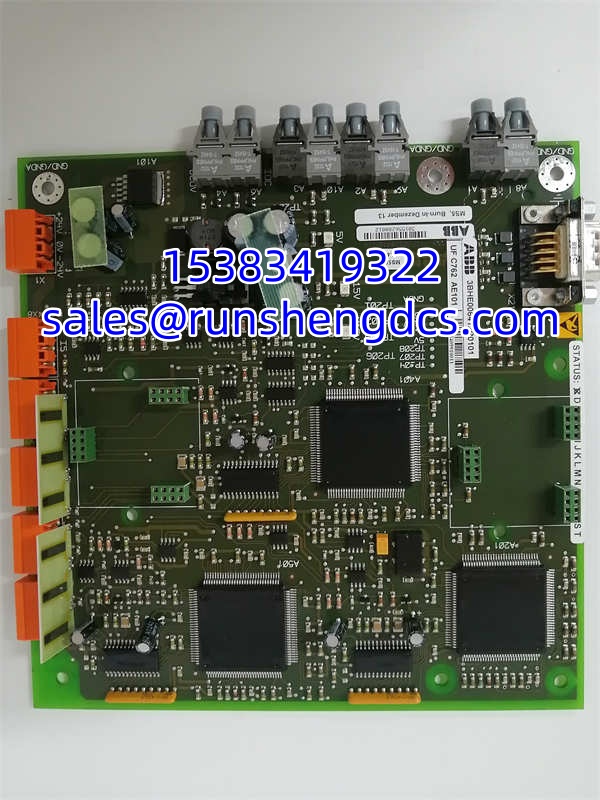
ABB UFC762AE101 3BHE006412R0101
Application Scenarios
- Petrochemical Refineries: Controlling high-voltage feeders for compressors and pumps, providing remote trip/close commands and real-time status monitoring to the central DCS.
- Steel Smelting Plants: Managing power distribution to electric arc furnaces, where rapid fault detection and isolation are critical to prevent grid instability.
- Power Generation Substations: Serving as the intelligent interface for medium-voltage breakers, integrating with plant protection relays for coordinated tripping.
FAQ
Yes, as long as your PLC supports Profibus DP or Modbus. The acts as a standard slave device. Just ensure you have the correct GSD file for your PLC configuration.
Does this board support hot-swapping on the bus?
No. The is not designed for hot-swapping on live Profibus or CAN networks. Pulling it while powered can cause bus collisions and trip other breakers. Plan a maintenance window.
What is the relay alarm output used for?
The relay (DC48V/1A) is a hardwired fault indicator. It closes when the module detects a bus data interface fault or internal error. Use this to trigger a pilot light or send a discrete signal to your safety PLC, independent of network health.
Is the 3BHE006412R0101 suffix critical?
Yes. Suffixes often indicate firmware revisions or minor hardware changes (e.g., component sourcing). The must match your system’s configured version, or you may face communication incompatibilities. Send us a photo of your existing module’s label for verification.
Can I use this for low-voltage applications?
Technically yes, but it’s overkill. The is designed for high-voltage environments with enhanced isolation and surge protection. For LV applications, consider standard I/O modules to save cost.
What’s the typical MTBF for this module?
ABB doesn’t publish a specific MTBF for the , but field experience suggests 10-15 years in climate-controlled environments. Power supply capacitors and relay contacts are the most likely failure points over time.
Will this work with my old Advant OCS system?
Verify compatibility before purchasing. The is often used in newer inverter and breaker applications. Older Advant systems may require different communication modules. Send us your system model number for confirmation.