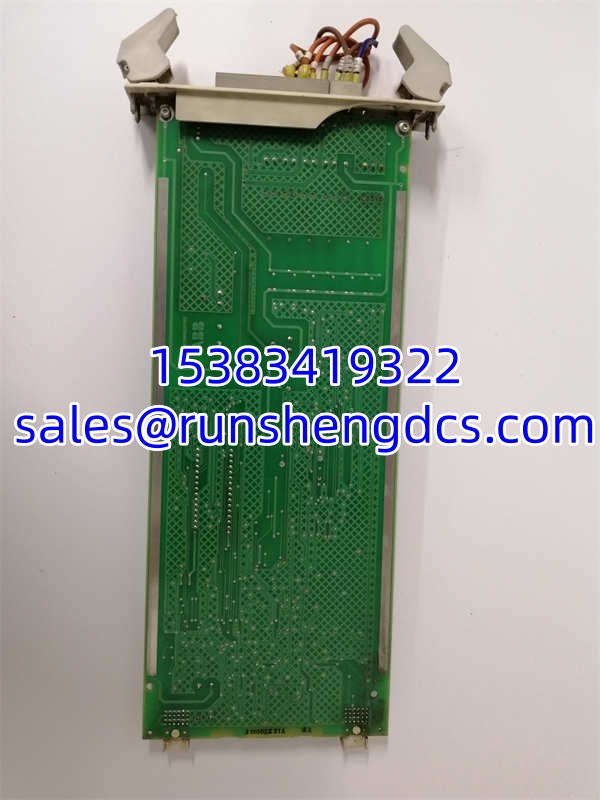

Description
Key Technical Specifications
| Parameter | Specification |
|---|---|
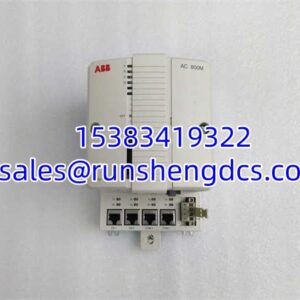
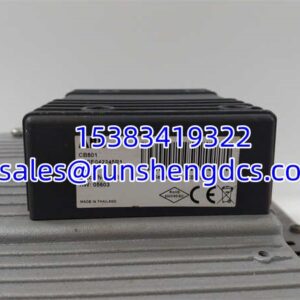
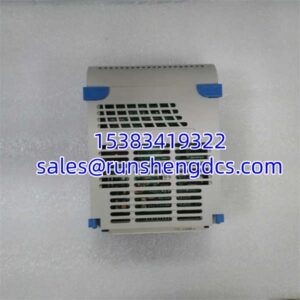
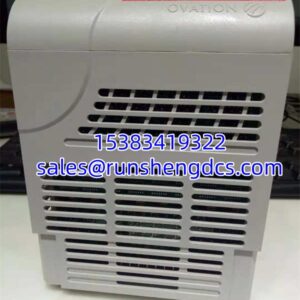
| Product Model | TC520 (3BSE001449R1) |
| Manufacturer | ABB Automation Technologies |
| Product Type | System Status Collector / State Acquisition |
| Primary Function | Real-time system state monitoring & fault diagnosis |
| Communication | Compatible with multiple DCS/PLC control systems |
| Key Features | Fault prediction, early warning, data sharing |
| Dimensions | 279 x 153 x 27 mm (L x W x H) |
| Weight | 0.29 kg |
| Mounting | DIN Rail / Rack Mount |
| Application | Power, Chemical, Metallurgy, Pharma, Food Processing |
Product Introduction
DCS failures rarely happen without warning; they usually scream in the form of subtle status bit flips or communication timeouts that standard I/O modules ignore. The ABB TC520 is the system’s nervous system, dedicated solely to watching the health of the controller, backplane, and network. It doesn’t control the process; it controls the reliability of the process by catching the “sick” signals before they become a plant trip.
We specify the 3BSE001449R1 for its dedicated state acquisition logic, which offloads diagnostic polling from the main CPU. This module scans for anomalies like bus errors, memory checksum failures, and power supply droops, then pushes this data to the HMI or historian. Bottom line: it’s the difference between a scheduled maintenance window and a 3 AM emergency call. If your system is old, this card is often the only thing standing between you and a blind spot in your diagnostics.
QA/QC Transparency SOP
We don’t trust “tested” stickers on diagnostic cards. Every TC520 3BSE001449R1 goes through a five-step validation process before it ships:
- Intake & Origin Verification: We trace the 3BSE001449R1 batch code against OEM records. Visual inspection checks for cracked connectors on the backplane pins and signs of heat stress on the status LEDs.
- Live Functional Testing: The unit is mounted on a live ABB test rack. We inject simulated faults (e.g., bus short, power sag) to verify the module correctly latches the error and updates the status bits.
- Electrical Parameter Tests: Using a Fluke 115, we verify 5V/24V rail tolerance and check continuity on all diagnostic input lines. No open circuits allowed.
- Firmware/Config Verification: We read the internal firmware version. Diagnostic cards often have version-specific bit maps; we ensure the 3BSE001449R1 matches the target system’s expected revision.
- Final QC & Anti-Static Packaging: Unit is cleaned, LED lenses are inspected for clarity, and it’s sealed in an ESD bag. Note: Diagnostic accuracy depends on clean contacts.
Field Engineer Gotchas
- The “Ghost” Fault: The TC520 is sensitive to backplane noise. If you have a loose terminal screw on an adjacent power module, the TC520 might report a “System Bus Error” that doesn’t exist. War Story: Spent 4 hours chasing a bus fault on a TC520, only to find a 24V return wire was vibrating loose. Always check the physical backplane integrity before blaming the card.
- Firmware Bit Mapping: The 3BSE001449R1 has evolved over 20 years. A “1” in bit 4 might mean “Power Supply OK” in Rev A but “Communication Timeout” in Rev C. Warning: Never swap a without verifying the firmware revision and the corresponding status map in your documentation. You could be masking a real fault.
- LED Interpretation: The front panel LEDs are active-low on some revisions. If the “System OK” LED is off, the system might actually be fine, or the LED might be burned out. Solution: Always trust the HMI/diagnostic software over the front panel LEDs on these older units.
- Battery/Supercap Check: Some variants use a small capacitor to retain fault latches during power cycles. If this is dry, you’ll lose the “first-out” fault when the power blips. Check: If you’re seeing intermittent fault loss, the retention cap is likely dead. Replace the module.
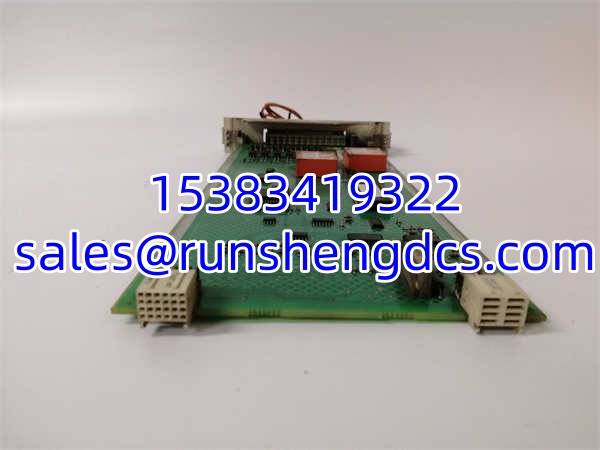
ABB TC520 3BSE001449R1
Application Scenarios
- Legacy DCS Diagnostics: In 20-year-old ABB Advantage/Advant OCS systems, the is often the only reliable source of truth for backplane health when the main controller’s self-diagnostics are limited.
- Power Plant Trip Analysis: When a unit trips unexpectedly, the 3BSE001449R1 provides the millisecond-resolution status snapshot needed to distinguish between a sensor failure and a controller crash.
- Chemical Batch Reactors: Prevents “batch abort” due to false I/O faults. The filters out noise-induced status glitches, ensuring the batch only stops for real safety conditions.
FAQ
Can I hot-swap this module?
Generally, no. The monitors the backplane state; pulling it can be interpreted as a catastrophic backplane failure by the main CPU. Power down the rack or isolate the slot if your backplane supports it. Don’t risk a system-wide reset.
Is 3BSE001449R1 compatible with 3BSE001449R0?
Usually, yes. The R0 is the base revision. The R1 typically includes minor component updates or firmware fixes. However, always verify the status bit map. ABB occasionally reassigns bits in minor revisions. Check the “Hardware Manual” for your specific system version.
Why is my “System Fault” LED flashing?
It indicates a latched, non-critical fault or a communication loss with the main CPU. Check: Read the diagnostic buffer via the HMI. If the buffer is empty, the module might be in “Test Mode” or have a corrupted EEPROM. Try a power cycle. If it persists, the module is likely failing.
Does this module control any I/O?
No. The is strictly a read-only status device. It does not drive outputs or accept field inputs. It talks only to the backplane and the main controller. Do not wire field devices to it.
How do I clear a latched fault?
You usually need to issue a “Reset Diagnostics” command from the HMI or controller. Power cycling the module often won’t clear a hard latch. If the fault returns immediately after reset, you have a real hardware issue (e.g., shorted bus, failing PSU).
What is the MTBF?
ABB doesn’t publish a specific MTBF for the as it’s a passive monitor. Field experience suggests 15-20 years for the electronics, but the accuracy degrades as internal capacitors age. Treat any over 15 years old as “suspect” until proven otherwise.
Can I use this for a non-ABB system?
No. The 3BSE001449R1 uses ABB’s proprietary backplane protocol. It will not communicate with Siemens, Allen-Bradley, or Honeywell racks. Don’t try to adapt it; you’ll just damage the backplane.