
Description
Product Introduction
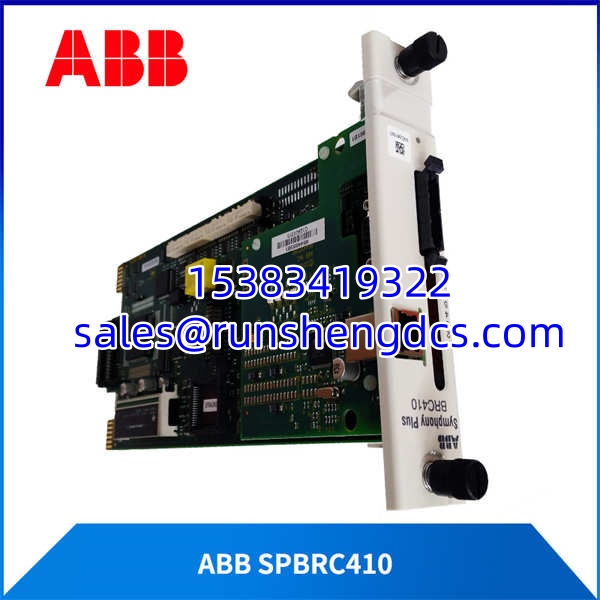
The ABB SPBRC410 is the translator sitting between your legacy Bailey Infi 90 system and the modern Symphony Plus network. Think of it as a bridge card that doesn’t just pass data; it actively manages the conversation.
This module is equipped with a Modbus TCP interface, allowing it to act as a Master or Slave on the Ethernet network, seamlessly talking to PLCs, HMIs, or higher-level MES systems. On the field side, it handles digital signal outputs (relay or TTL) to control valves, motors, or indicate status. It’s not a high-speed motion controller, despite some generic listings; it’s a workhorse for process integration, handling up to 30,000 function blocks in the broader controller family. If you’re maintaining a power plant or water treatment facility running Symphony Plus, this card is likely the glue keeping your sub-systems synchronized.
Key Technical Specifications
| Parameter | SPBRC410 Specification |
|---|---|
| Communication | Modbus TCP (Master/Slave), Profibus, Ethernet/IP |
| Serial Interfaces | RS-232, RS-485 |
| Power Supply | 24V DC |
| Input Current | Max 10 mA |
| Output Frequency | Up to 1 kHz |
| Control Capacity | Supports up to 30,000 Function Blocks (System Level) |
| Protection Rating | IP20 |
| Operating Temp | -25°C to +70°C |
| Dimensions | 178mm × 51mm × 330mm |
| Weight | ~0.3 kg |
Compatibility & Replacement Matrix
| Your Current Model | Direct Replacement / Variant | Notes |
|---|---|---|
| SPBRC410 | SPBRC410 | Exact match. Verify the “SP” prefix for Symphony Plus. |
| BRC410 | ✅ Legacy Equivalent | Often refers to the same Bailey Infi 90 era card. Check firmware compatibility. |
| SPBRC410ABB | ✅ Variant | Manufacturer-specific suffix. Functionally identical. |
| NPM22 / SPNPM22 | ❌ Different Module | This is a Network Processor Module. Do not confuse with the Bridge Controller. |
| ICT13A | ❌ Different Module | Computer Interface Module. Different slot and function. |
Quality Inspection & SOP Transparency
Bridge cards are the first line of defense against data loss. Here’s our validation drill:
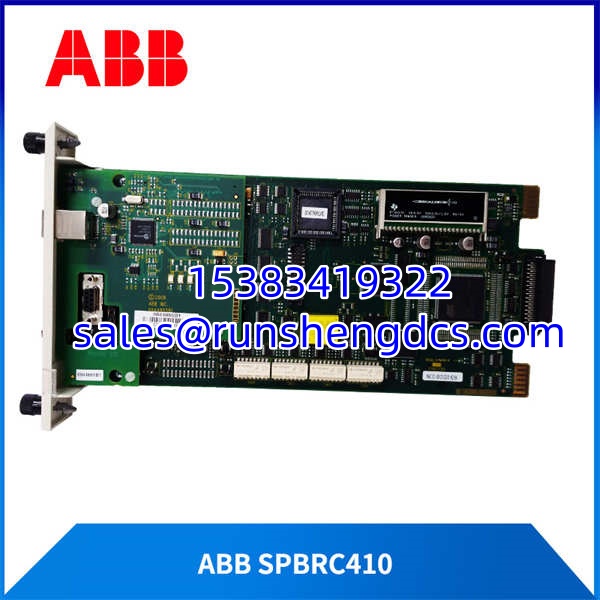
- Visual & Connector Audit: We inspect the RS-485/232 terminals for corrosion and the Ethernet port for bent pins. The “SPBRC410” silkscreen is verified against known counterfeit fonts.
- Power-On Self-Test: We apply 24V DC and verify the module boots, the “RUN” LED stabilizes, and no “FAULT” LEDs are active.
- Modbus TCP Handshake: We connect via Ethernet and poll the module using a Modbus master tool. We verify it responds to holding register reads and coil writes. No timeouts allowed.
- Serial Loopback: For RS-485 ports, we perform a loopback test to ensure the UART is functional and not stuck in a fault state.
- Final QC & Packaging: Anti-static bag, rigid foam protection (to protect the backplane connector), and a test report with the serial number. If it fails the Modbus poll, it’s rejected.
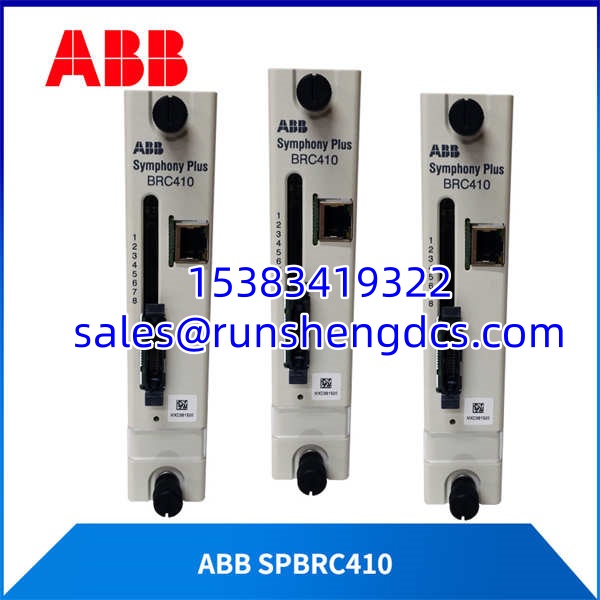
ABB SPBRC410
Common Replacement Pitfalls
- The SP prefix matters. Older BRC410 cards may lack the enhanced Modbus TCP stack or firmware updates required for modern Symphony Plus controllers.
- Ignoring Firmware: Even with the same model number, firmware differences can cause protocol mismatches. Always check the firmware version on the old unit (via the controller software) and match it.
- Wiring RS-485 Backwards: The uses standard RS-485, but field wiring errors are common. If communication fails, check your A/B polarity and ensure you have a 120Ω termination resistor at the end of the bus.
- Modbus Address Conflicts: If replacing a failed card, ensure the new unit’s Modbus Slave ID matches the old one. The system won’t automatically re-address it.
- Power Supply Sag: The module draws max 10mA, but if your 24V DC supply is already near the limit with other cards, adding a new bridge card could cause a brownout. Check your power budget.
FAQ
A: It’s a Bridge Controller Module within the ABB Symphony Plus DCS. It doesn’t run standalone ladder logic like a PLC; it bridges data between the DCS controller and external systems (PLCs, SCADA) via Modbus TCP or serial.
Q: Can I use a standard BRC410 in a Symphony Plus rack?
A: Risky. The “SP” in denotes Symphony Plus compatibility. Older Bailey Infi 90 BRC410 cards may work physically but could fail to communicate due to firmware or backplane protocol differences. Always specify for Symphony Plus systems.
Q: My module shows a “COMM FAIL” LED. What’s wrong?
A: Check the Ethernet cable first. Then, verify the Modbus TCP port (usually 502) is open and the Slave ID matches. If using serial, check your baud rate, parity, and stop bits. A mismatch here = instant failure.
Q: Does this module support hot-swapping?
A: Yes, the Symphony Plus architecture supports hot-swapping for I/O and bridge modules. However, always verify the system is configured for hot-swap in the software before attempting it in the field. Pulling a card without configuration can trip the controller.
A: is a Bridge Controller (protocol conversion, I/O). NPM22 is a Network Processor Module (internal DCS network traffic management). They are not interchangeable. Check your slot assignment and system diagram.