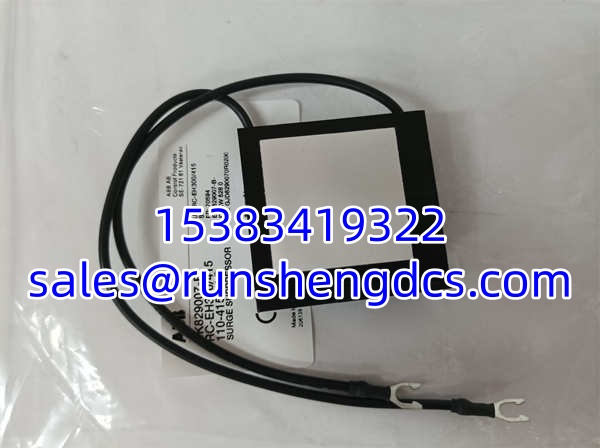

Description
Key Technical Specifications
| Parameter Name | Parameter Value |
|---|---|
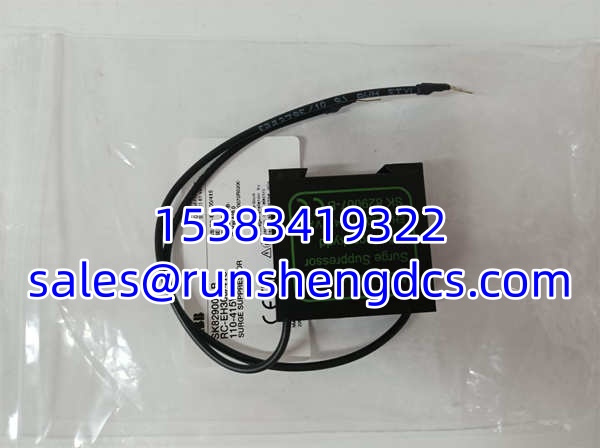
| Product Model | ABB SK829007-B |
| Manufacturer | ABB |
| Product Category | Automation Control Module |
| Product Net Width | 58 mm |
| Product Net Depth | 15 mm |
| Product Net Height | 205 mm |
| Product Net Weight | 0.015 kg |
| Operating Environment | Industrial Automation |
| Mounting Type | DIN Rail / Backplane |
| Key Features | Compact Design, High Reliability |
Product Introduction
Legacy control systems often rely on highly specific, compact modules that are no longer in active production. The ABB SK829007-B is one such component, serving as a vital building block in older ABB automation and DCS architectures. Engineers frequently encounter this module when maintaining legacy infrastructure where replacing the entire system is not a viable option.
Sourcing the ABB SK829007-B is essential for minimizing downtime in facilities that depend on this specific form factor. With its compact dimensions (58mm x 15mm x 205mm) and lightweight construction (0.015 kg), it was designed for high-density panel layouts. Securing a tested and verified ABB SK829007-B ensures that critical process control loops can continue operating without the massive capital expenditure of a full system migration.
QA/QC Transparency SOP
When dealing with surplus automation components, verification is everything. Here is our process for the ABB SK829007-B:
- Intake & Origin Verification: We verify the manufacturing date and serial number to assess the age of the component. A visual inspection is performed to check for any physical damage, corrosion on the backplane pins, or signs of thermal stress.
- Live Functional Testing: The ABB SK829007-B is installed in a compatible ABB test rack to verify that it powers up correctly and establishes communication with the backplane.
- Electrical Parameter Tests: We use precision multimeters to verify the internal power regulation and check for any short circuits or excessive current draw that could indicate failing internal capacitors.
- Firmware/Config Verification: If applicable, we read the module’s internal configuration to ensure it is not locked or corrupted from its previous deployment.
- Final QC & Anti-Static Packaging: After passing all tests, the is cleared, labeled with our QA stamp, and sealed in an anti-static bag with desiccant to prevent moisture damage during storage.
Field Engineer Gotchas
- Backplane Pin Damage: The has a compact form factor, making it susceptible to bent pins if forced into the slot. Risk: Bent pins can cause short circuits or communication failures. Fix: Always inspect the backplane pins before insertion and slide the module in straight. Never force it.
- Firmware/Revision Mismatch: ABB modules often have hardware revisions that are not forward or backward compatible. Risk: Installing a newer revision in an old system can cause the controller to fault. Fix: Always match the exact part number and revision code. Check the existing module’s label before ordering.
- ESD Sensitivity: Like all solid-state control modules, the is highly sensitive to electrostatic discharge. Risk: Handling the module without proper grounding can instantly destroy internal logic. Fix: Always wear a grounded wrist strap and handle the module by its edges.
- Power Supply Sag: If the is a power or high-draw module, a failing power supply can cause intermittent faults. Risk: The module may boot but fail under load. Fix: Measure the 5VDC and 24VDC rails at the module’s terminals while the system is running.
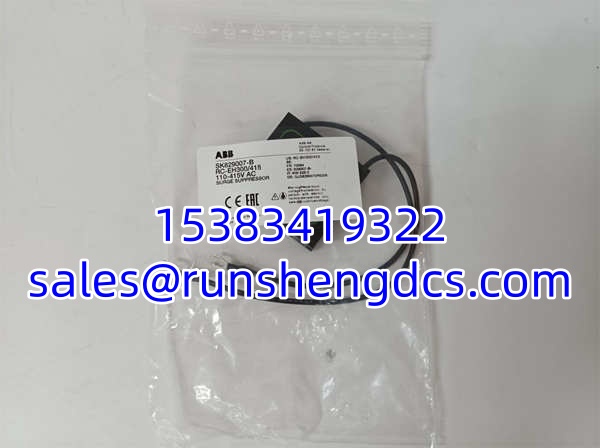
ABB SK829007-B
Application Scenarios
- Legacy Manufacturing Lines: The is frequently found in automotive and packaging plants built in the 1990s and early 2000s. These lines are often too expensive to rewire but still highly productive. Replacing a failed with a tested surplus unit is often the only cost-effective repair strategy.
- Power Generation Auxiliary Systems: Many power plants use ABB DCS systems for balance-of-plant controls. The may be used in coal handling or water treatment subsystems. When a failure occurs, having a pre-tested spare is critical to avoid derating the plant’s output.
- Real-World Failure Case: A chemical processing facility had an ABB controller faulting intermittently. Diagnostics pointed to the slot. Maintenance replaced the module, but the fault returned. Root Cause: The backplane connector had a cracked solder joint due to years of thermal cycling. Resolution: The backplane was repaired, and a new was installed. Lesson: Always suspect the backplane when a module fails repeatedly.
FAQ
No, the is a discontinued product. ABB no longer manufactures or provides direct support for this module. Your best option is to source a tested surplus unit from a reputable supplier.
No. Industrial control modules are proprietary. You must replace the with the exact same part number. Even minor revisions can cause compatibility issues. Always verify the full part number on the existing module’s label.
Common symptoms include the module not powering on, communication errors on the network, or the controller entering a fault state when this module is installed. If you suspect the , try swapping it with a known good unit in a non-critical slot to isolate the problem.
What is the lead time for this module?
As a surplus item, availability of the can fluctuate. We recommend securing a spare as soon as possible to avoid extended downtime. Contact us directly for current stock levels and pricing.
Do you offer a warranty on this discontinued part?
Yes. We stand behind our testing process. Every we sell comes with a 1-year warranty against manufacturing defects and our internal testing failures. We want you to have confidence in your legacy system repairs.
Component-level repair is possible but often not cost-effective or reliable for critical control applications. The internal components of the are aged, and repairing one failure often leads to another. A tested surplus replacement is generally the safer and faster option.