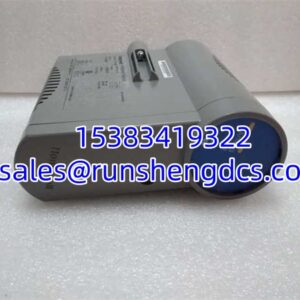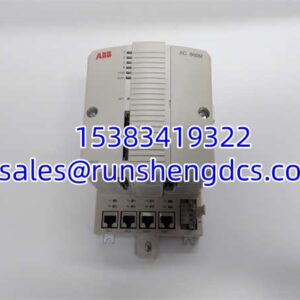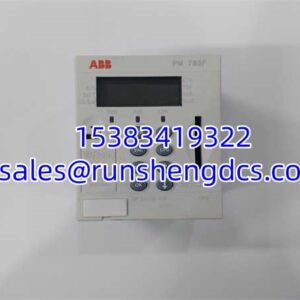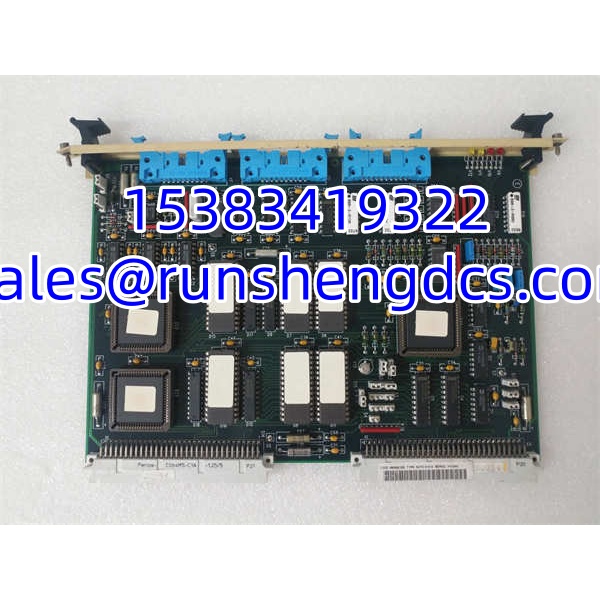

Description
Key Technical Specifications
| Parameter | Typical / Verified Value |
|---|---|
| Manufacturer | ABB |
| Part Number | SCYC51010 58052515G |
| Module Family | ABB SCY series control boards |
| Function Class | Pulse signal processing unit |
| Pulse Frequency | Up to 50 kHz (per available listings) |
| Typical Inputs | Encoder / proximity / photoelectric pulse signals |
| Signal Conditioning | Filtering and level conversion |
| Board Format | Industrial control card |
| Status | Legacy / surplus |
| Documentation | No verified OEM datasheet located |
Product Introduction
Legacy ABB control racks do not always fail dramatically. More often, a single aging I/O or signal-conditioning board starts throwing intermittent counts, missed pulses, or unstable readings that waste troubleshooting hours.
The ABB SCYC51010 58052515G is listed as a pulse signal processing unit within the ABB SCY series board family, commonly referenced with related modules such as SCYC51020, SCYC51040, and SCYC51090. It is typically used where encoder, proximity switch, or photoelectric pulse signals must be acquired, filtered, and converted into a form the control system can count or measure — for example, speed monitoring, material counting, or frequency-based diagnostics. Because this part circulates mainly through surplus channels, do not assume it is a universal drop-in replacement. Confirm the revision, connector layout, and system compatibility against your existing card before pulling the old one.
QA/QC Transparency SOP
- Intake & Origin Verification: Record part number, revision suffix, serial number, and physical condition. Reject boards with burnt components, corroded connectors, or missing labels.
- Live Functional Testing: Apply rated supply voltage on a controlled test bench. Inject known pulse signals and verify stable counting/frequency response. Check status LEDs and output behavior where applicable.
- Electrical Parameter Tests: Measure supply current, input/output continuity, isolation, and signal integrity. Flag excessive ripple, shorted inputs, or unstable outputs.
- Firmware/Config Verification: Capture any readable revision data, jumper settings, or calibration tags. For analog/pulse boards, hardware revision and jumper configuration matter more than firmware version.
- Final QC & Anti-Static Packaging: Bag in ESD packaging with desiccant. Attach a test label showing serial, revision, date tested, and pass/fail result.
Field Engineer Gotchas
- Revision mismatch: The “58052515G” suffix matters. A different revision may change jumpers, input thresholds, or connector pinout. Compare labels side-by-side before swapping.
- Pulse wiring noise: Long encoder cables in high-EMI areas can create false counts. Check shielding, grounding, and termination before blaming the board.
- Backplane compatibility: SCY-series boards may look similar but serve different functions. Do not force a SCYC51020/SCYC51040 into a SCYC51010 slot without documentation.
- Surplus history: Many listings recycle the same photos across different SCY boards. Require a clear nameplate photo and a functional test report.
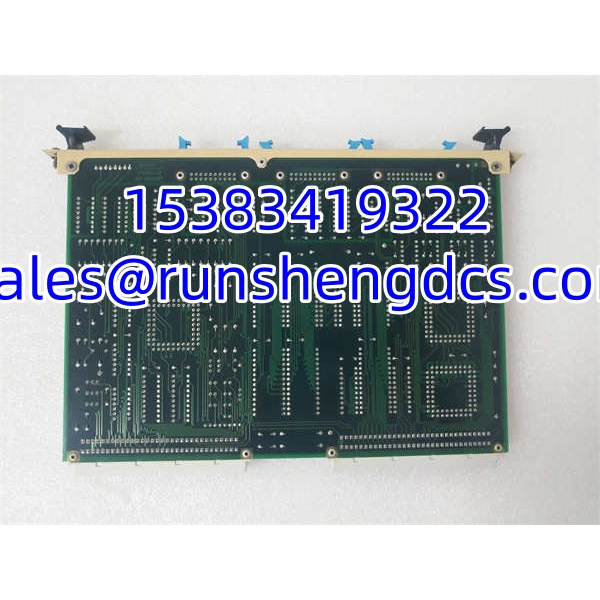
ABB SCYC51010 58052515G
Application Scenarios
- Conveyor line material counting: Replacing a failed pulse board that feeds counted items into a PLC/DCS totalizer.
- Motor speed monitoring: Conditioning encoder or tachometer pulses for speed feedback in older ABB-controlled systems.
- Packaging machine indexing: Maintaining spare pulse cards where OEM replacements are no longer readily available.
- Legacy system holdover: Keeping tested SCYC51010 spares available during a phased migration to a modern I/O platform.
FAQ
Is SCYC51010 58052515G still sold new by ABB?
Unlikely. It appears as a legacy/surplus item in secondary markets. Verify current availability directly with ABB or an authorized distributor.
What does this module actually do?
Available listings describe it as a pulse signal processing unit that accepts pulse inputs and conditions them for control-system use. Confirm the exact role from your system manual.
Can I substitute SCYC51020 or SCYC51040?
Not automatically. These are different part numbers in the same board family. Treat them as non-interchangeable unless the OEM documentation explicitly allows it.
Does it support 50 kHz input?
Up to 50 kHz is listed in available sources, but this should be verified against the module label or OEM data before relying on it for high-speed counting.
What should I check before installing a surplus unit?
Match the full part number and revision, inspect connectors, verify supply voltage, and run a bench pulse test if possible.
Is there an official datasheet?
No verified OEM datasheet was located in available sources. Use the module nameplate, system manual, or OEM support for confirmation.