
Description
Key Technical Specifications
| Parameter | Value |
|---|---|
| Manufacturer | ABB |
| Product Line | AC 800M Control System |
| Module Type | Redundant CPU / Controller |
| Part Number | 3BSE018162R1 |
| Processor | PowerPC @ 1GHz |
| Memory | 512MB RAM + 512MB Flash |
| Redundancy | CPU, Power, Communication (Optional) |
| Communication | 2x Ethernet (10/100/1000Mbps), RS-232/485 |
| I/O Expansion | S800/S900 Series (Max thousands of points) |
| Operating Temp | -25°C to +70°C |
| Safety Rating | IEC 61508 SIL3 |
| Mounting | TP830 Base Plate / DIN Rail |
Product Introduction
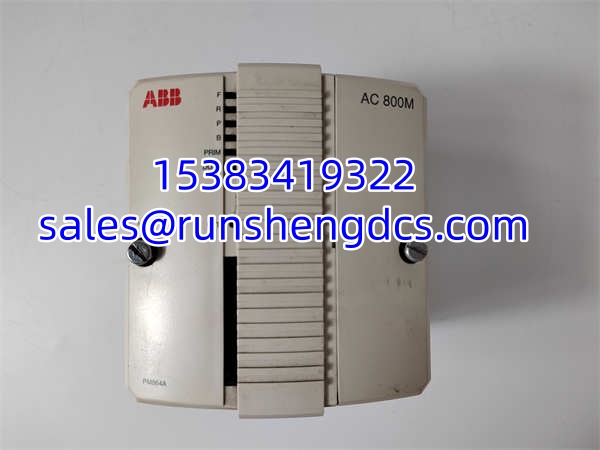
When a redundant CPU fails in a critical process, you don’t have time to troubleshoot architecture. The ABB PM864A 3BSE018162R1 is built to prevent that exact scenario. It serves as the high-availability brain of the AC 800M system, taking over seamlessly if the primary processor drops. This module handles everything from complex PID loops to managing thousands of distributed I/O points across the CEX bus.
We stock the ABB PM864A 3BSE018162R1 because plants running 800xA systems need immediate replacements, not 16-week lead times. With 512MB of RAM and a 1GHz PowerPC core, it provides enough headroom for most process control applications without the cost of the newer PM866. Just remember: redundancy only works if the configuration is flawless. A mismatched firmware version between the primary and secondary CPU will cause more headaches than a single failed board.
QA/QC Transparency SOP
- Intake & Origin Verification: We trace the ABB PM864A 3BSE018162R1 to its decommissioned site. Visual inspection checks for cracked solder joints on the Ethernet ports and corrosion on the CEX bus connectors.
- Live Functional Testing: The module goes on an AC 800M test rack. We verify boot sequence, LED status, and successful handshake with the TP830 base plate. No “blink test” here; it must load firmware.
- Electrical Parameter Tests: Using a Fluke 115, we check 24VDC input stability and internal 5V/3.3V rail ripple. Isolation resistance between Ethernet and serial ports is verified.
- Firmware/Config Verification: We read the onboard Flash to confirm the firmware revision matches the label. Configuration jumpers and Ethernet MAC addresses are photographed and logged.
- Final QC & Anti-Static Packaging: After passing, it gets a test sheet, anti-static bag, and desiccant. If it fails the boot test, it’s scrapped. No “as-is” sales on redundant CPUs.
Field Engineer Gotchas
- Firmware Rev Mismatch: The ABB PM864A 3BSE018162R1 must match its redundant partner exactly. Risk: Redundancy failover timeout or system fault. Fix: Always check the firmware version in Control Builder M before swapping. I’ve seen a redundant pair sit in “Sync Error” for days because someone installed a newer rev without updating the primary.
- IP Address Configuration: This CPU uses COM4 for initial IP setup via IPConfig tool. Risk: Installing the CPU and expecting it to auto-join the network. Fix: Use the TK212 serial cable and IPConfig utility before connecting to Ethernet. Don’t assume the old IP is saved in Flash.
- CEX Bus Termination: The CEX bus requires proper termination at both ends. Risk: Intermittent I/O communication errors. Fix: Check the BC810 terminator on the last module. I’ve chased ghost I/O faults for a week only to find a missing terminator after a CPU swap.
- Battery Backup: The PM864A uses a battery to retain retain/coldretain variables during power loss. Risk: Cold start on power cycle, losing process state. Fix: Replace the SB821 backup battery before installation. A dead battery will wipe your retentive data the next time the panel blinks.
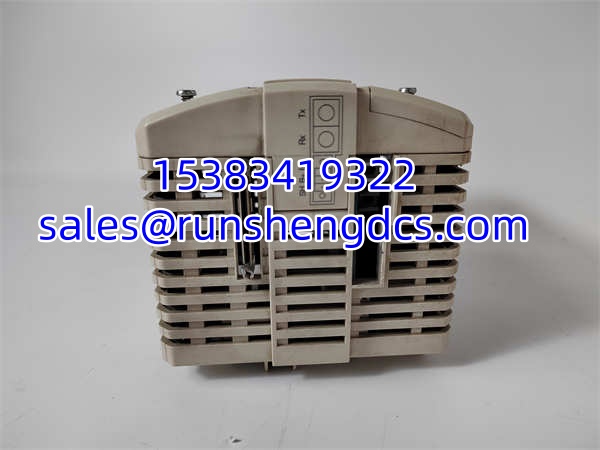
ABB PM864A 3BSE018162R1
Application Scenarios
- Oil & Gas Refineries: Managing distillation column control with redundant failover to prevent unsafe shutdowns.
- Power Generation: Turbine control and balance-of-plant automation where uptime is non-negotiable.
- Pulp & Paper Mills: Coordinating high-speed paper machine drives and chemical dosing systems.
- Case Study: A paper mill had a PM864A fail during a shift change. The redundant CPU took over, but the new replacement CPU had a different firmware rev. The system stayed in degraded mode for 6 hours while we downgraded the firmware. We now ship all units with a firmware verification report. Bottom line — check your revs before you swap.
FAQ
Yes. The “K02” or “AK02” suffix typically denotes redundancy, but verify the label. The supports CPU, CEX bus, and communication redundancy.
Can I hot-swap this CPU?
No. The AC 800M CPU is not hot-swappable. Pulling the while powered will crash the redundant pair. Plan a maintenance window.
Why is my redundancy not syncing?
Check firmware versions, IP addresses, and CEX bus cabling. The requires identical configuration on both nodes. Also verify the TK851 redundant connection cable is seated properly.
Does this support S800 I/O?
Yes. The supports S800 and S900 I/O series via the CEX bus. Max expansion depends on your power supply and bus length.
How do I set the IP address?
Use the IPConfig utility via COM4 with a TK212 serial cable. Do not try to set it via Ethernet first. The stores the IP in Flash, but only after successful IPConfig handshake.
Is this compatible with 800xA?
Yes. The is designed for ABB 800xA and Control Builder M Professional. Verify your 800xA version supports the CPU’s firmware revision.
How do I know if it’s truly tested?
Ask for the test report. If the seller can’t show you a boot log, redundancy sync test, or firmware verification, walk away. Redundant CPUs are mission-critical. “Tested” is a marketing word; data is engineering.