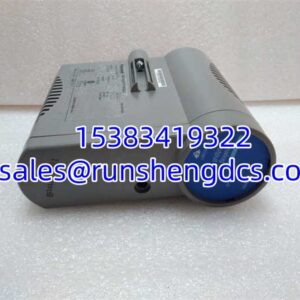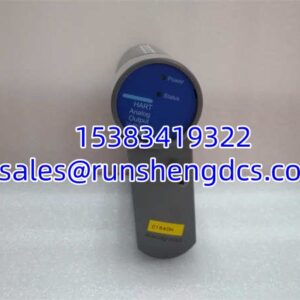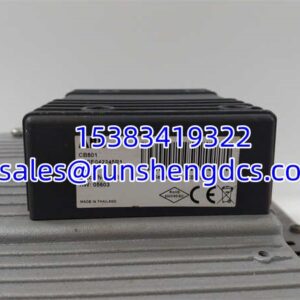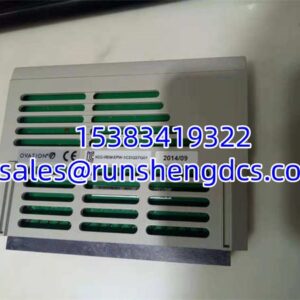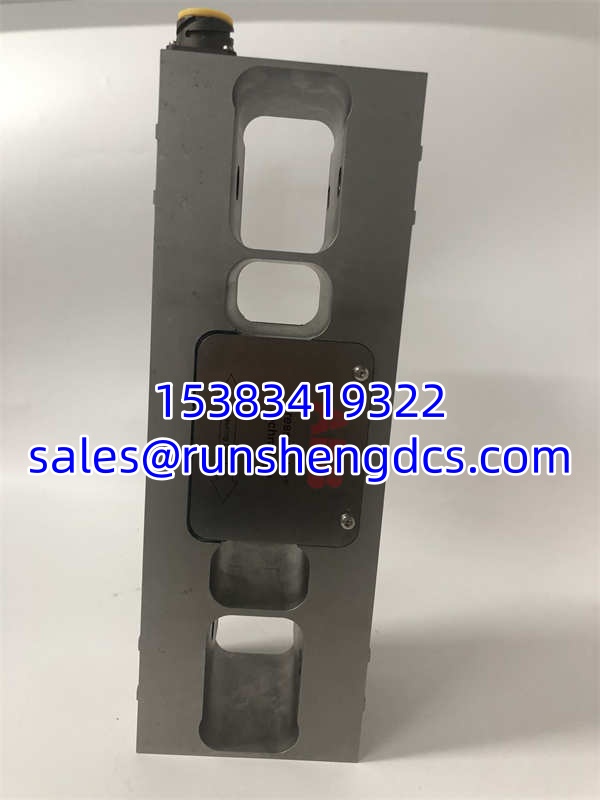

Description
Key Technical Specifications
- Product Model: PFTL101B 2.0KN
- Manufacturer: ABB
- Product Type: Pressductor® PillowBlock Load Cell
- Measurement Principle: Magneto-Elastic Effect (Pressductor®)
- Nominal Load (Rated Capacity): 2.0 kN (≈ 450 lbf)
- Overload Capacity: 500% of Nominal Load
- Permitted Transverse Load: 30.0 kN
- Deflection at Nominal Load: 0.015 mm
- Protection Class: IP66 (Mill Duty Version)
- Output Signal: High-power, low-impedance AC (Requires Amplifier)
- Accuracy Class: 0.5
- Repeatability Error: < ±0.05%
Product Introduction
Strain gauges fail when you bend them too far or get moisture in the seal. The ABB PFTL101B 2.0KN doesn’t rely on physical deformation. It uses the magneto-elastic effect: when force is applied to the special steel core, its magnetic permeability changes, generating a measurable AC signal. This means the ABB PFTL101B 2.0KN has virtually no moving parts, no wear, and can survive 500% overload without permanent damage. It’s the workhorse for heavy rolls and high-speed lines where standard load cells would be crushed or drift.
Bottom line — it’s built for the mill, not the lab. The “B” in PFTL101B indicates the Mill Duty version with a fixed cable and IP66 protection against emulsions and coolant. You cannot plug this directly into a PLC; it needs an ABB PFEA11x amplifier to convert the raw magnetic signal into 0-10V or 4-20mA. The 2.0 kN rating is the sweet spot for medium-tension paper, foil, and textile lines, offering high resolution without risking saturation during threading jams.
QA/QC Transparency SOP
- Intake & Origin Verification: We verify the 3BSE004185R1 part number and inspect the fixed cable for sheath damage or connector corrosion. We check the laser-etched serial plate to confirm it’s not a counterfeit re-sticker.
- Live Functional Testing: The PFTL101B 2.0KN is mounted on a test rig with a calibrated hydraulic ram. We apply 0%, 50%, and 100% load and verify the output voltage against a PFEA113 amplifier matches the 0.5% accuracy class.
- Electrical Parameter Tests: Using a Fluke 8845A, we measure coil resistance and insulation resistance (>100 MΩ) to ensure the internal windings haven’t shorted from moisture ingress.
- Mechanical Inspection: We verify the bearing seat bore is within tolerance and the housing shows no signs of impact deformation that would alter the magnetic path.
- Final QC & Anti-Static Packaging: After passing, the PFTL101B 2.0KN is sealed with the fixed cable coiled safely, accompanied by a test report showing linearity at 1.0 kN and 2.0 kN.
Field Engineer Gotchas
- Missing Amplifier: The 2.0KN outputs a raw AC signal, not 4-20mA. If you wire it to an analog input card, you’ll read noise or zero. You must use a PFEA112 or PFEA113 amplifier. I’ve seen a tech spend a shift chasing a “broken sensor” that was actually just unamplified.
- Transverse Load Crush: The 2.0 kN rating is for the measurement direction. The permitted transverse load is 30 kN, but if you misalign the bearing block by >0.5°, you create a bending moment that can crack the housing. Always use a dial indicator to verify parallelism during install.
- Cable Length Limits: The fixed cable on the Mill Duty version is typically 5m. Do not splice or extend it with standard wire. The low-impedance AC signal is sensitive to capacitance. If you need longer runs, use the ABB 3BSE018741R50 extension cable.
- Ground Loops: The sensor housing must be grounded to the mill frame, but the signal shield must be grounded only at the amplifier (single-point). Grounding both ends will inject 50/60Hz hum that looks like tension flutter.
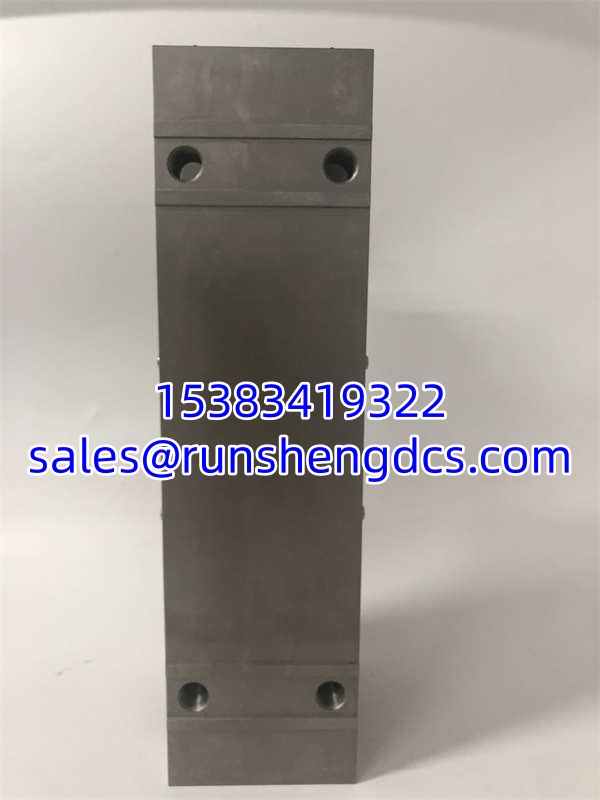
ABB PFTL101B 2.0KN
Application Scenarios
- Paper Machine Dryer Sections: High humidity and steam require IP66 protection. The 2.0KN monitors felt tension to prevent sheet breaks without corroding like standard strain gauges.
- Steel Pickling Lines: Acid mist and emulsions destroy seals. The Mill Duty fixed cable and stainless housing survive where epoxy-coated sensors fail in weeks.
- Foil & Film Winding: Low tension (0.5-2.0 kN) requires high resolution. The 0.015mm deflection ensures the web doesn’t slip on the roll during tension transients.
Real-World Case Study: A copper foil mill kept burning out load cells every 3 months due to coolant ingress. They switched to 2.0KN Mill Duty units. The fixed cable eliminated the connector corrosion point, and the IP66 seal held for 2+ years. Tension control stability improved from ±3% to ±0.8%, reducing foil tear-offs by 40%.
FAQ
Technically yes, but only if it accepts raw Pressductor® AC signals. Most standard controllers expect mV/V or 4-20mA. You’ll likely still need the PFEA11x amplifier to convert the signal. Check the input impedance spec carefully.
The “B” series has a higher transverse load capacity (30 kN vs 5-10 kN) and is designed for heavier rolls and harsher environments. The “A” is for lighter, cleaner applications. Do not substitute “A” for “B” on a heavy mill stand.
No. The magneto-elastic principle is inherently stable. ABB calibrates it at the factory, and it doesn’t drift like strain gauges. Only recalibrate if you suspect physical damage or after a massive overload event (>500%).
How do I know if the sensor is overloaded?
If the amplifier shows a saturation alarm or the output clips at max scale, you’ve likely exceeded the 2.0 kN nominal load. Check the transverse load; if the bearing is misaligned, you might be seeing 30 kN transverse on a 2 kN sensor, which will eventually crack the core.
Is the fixed cable replaceable?
No. The cable is welded and potted inside the housing for IP66 integrity. If the cable is damaged, the entire 2.0KN must be replaced. Use the correct ABB extension cable for length issues.
What amplifier do I need for 2.0 kN?
The PFEA113-65 is the standard choice for 2.0 kN. It supports the full range and provides the necessary excitation. The PFEA112 is for lower ranges; verify the gain setting matches your sensor.
Can I mount this vertically?
The is a horizontal force sensor. Vertical loads will not be measured correctly and may damage the internal magnetic circuit. Use the PFTL301 series for vertical applications.