Description
Product Introduction
The ABB PFSK152 3BSE018877R1 is a signal conditioning module designed for the ABB 800xA system. It sits between field instruments and the main controller, preparing analog signals for processing.
This module provides galvanic isolation, which is critical for protecting sensitive control hardware from ground loops and electrical noise. In field deployments, we’ve found this isolation prevents erratic readings that can be a nightmare to troubleshoot. It accepts a standard 4-20 mA input and operates on a 24 V DC supply, ensuring compatibility with a vast majority of industrial sensors.
Key Technical Specifications
- Input Signal: 4-20 mA
- Supply Voltage: 24 V DC
- Electrical Isolation: Galvanic, 1500 V
- Mounting: DIN Rail
- Operating Temperature: 0 to 60 °C
- Response Time: < 10 ms
- Accuracy: ±0.1% of span
- EMC Standard: IEC 61326
- Safety Standard: IEC 61010-1
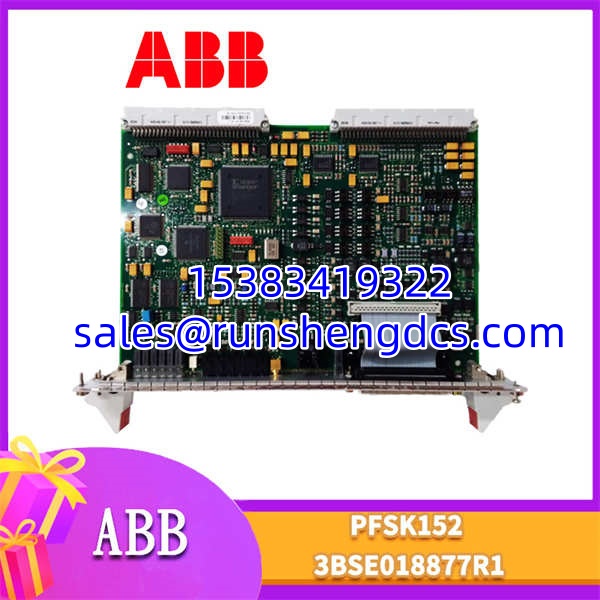
ABB-PFSK152-3BSE018877R1
Compatibility & Replacement Matrix
- PFSK151 (3BSE018876R1) → PFSK152 (3BSE018877R1) : Needs Adaptation — Firmware and configuration settings must be updated in the 800xA system.
- PFSK152 (3BSE018877R1) → PFSK152 (3BSE018877R2) : Direct — Hardware is identical, but verify firmware compatibility with your system version.
Quality Inspection & SOP Transparency
- Incoming Inspection: We verify the source of every ABB PFSK152 3BSE018877R1 using packing lists and customs documents. Our team performs an anti-counterfeit check, comparing serial numbers against ABB’s database and inspecting the label for correct fonts and spacing. A visual inspection follows, looking for any signs of corrosion, repair marks, or yellowing of the plastic housing.
- Live Functional Test: The module is installed in a live ABB AC800M test rack. After power-up, we observe the status LED sequence—it should be a solid green, not blinking amber. We then simulate a 4-20 mA signal at the input and verify the corresponding digital value is read correctly by the controller over the S800 I/O bus. This test runs under a 24-hour load to log for any abnormal temperature rise.
- Electrical Parameter Test: Using a Fluke 115 multimeter, we check the supply current draw. An insulation resistance test is performed with a 500 V megger, and the reading must be greater than 10 MΩ.
- Firmware Verification: We connect to the module’s service port and record the exact firmware version. For this model, we check for revisions compatible with 800xA System Version 6.0 and later. Any specific DIP switch settings are photographed for our records.
- Final QC & Packaging: After passing all tests, a QC engineer signs off on the report. The module is sealed in an anti-static bag, packed in bubble wrap, and placed in a carton with a “QC Passed” label and the date. Test photos and video are available on request.
Common Replacement Pitfalls
- ❗ Firmware Revision Mismatch: This is the most common headache. You swap in a new PFSK152, and the controller throws a “Module Mismatch” error. The reason is often a firmware jump between the old and new hardware. Always record the firmware version from the old module before you take it out. Honestly, I once spent half a day on a site because I assumed a newer module would just work. It didn’t.
- DIP Switch / Jumper Misconfiguration: The might have DIP switches for input scaling or termination resistors. The factory default is rarely what your process needs. Take a clear photo of the old module’s switch settings before you remove it. Then take another photo. This simple step catches most configuration errors.
- Power Budget Shortfall: A single doesn’t draw much power, maybe 3 W. But if you’re filling a rack with them, the load adds up. Calculate the total power consumption of all modules in the rack and ensure your 24 V DC power supply has at least a 20% headroom. A 2.5 A supply might be fine for a few modules, but it will brown out if you max out the rack.
- ESD Damage: These modules contain sensitive CMOS electronics. Always use a wrist strap and an anti-static mat. I watched a contractor grab one of these bare-handed in a dry server room once. The module smoked on power-up. That’s a very expensive mistake.
- Connector Pinout Confusion: While the physical connector looks standard, always cross-check the pinout in the manual against your wiring diagram. A reversed polarity on the 24 V supply will kill the module instantly.
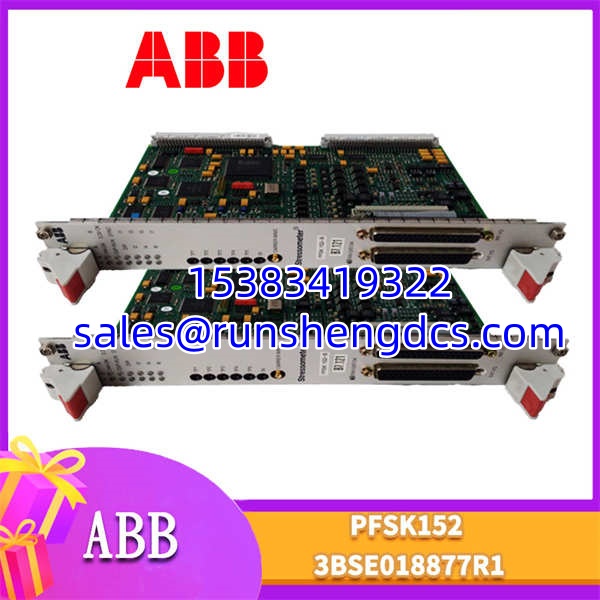
ABB-PFSK152-3BSE018877R1
FAQ
Can I just swap this in directly?
It depends on your situation:
- Yes, it’s a direct hardware swap.
- If the firmware versions are different: No. You will likely need to connect with the Control Builder M software to download the correct firmware and configuration to the new module.
My system runs 800xA version 5.1. Will this module work?
No. The reason is firmware compatibility. The 3BSE018877R1 is generally supported on 800xA System Version 6.0 and later. Using it with an older version like 5.1 will result in a communication failure. We recommend confirming your system version with your OEM technical support before ordering.
| Feature | PFSK151 (3BSE018876R1) | (3BSE018877R1) |
|---|---|---|
| Input Type | 4-20 mA | 4-20 mA |
| Isolation Voltage | 500 V | 1500 V |
| 800xA Support | Older versions | Version 6.0+ |
The offers higher galvanic isolation, which is better for electrically noisy environments.
Is this a new or refurbished part?
This is a New Original (New Surplus) part. It is a genuine ABB component that was never installed but may have been in storage. It is not a refurbished or repaired unit.
How do I know if the module is genuine ABB?
We perform a multi-point verification. We check the serial number against ABB’s records, inspect the label quality (font, spacing, and material), and examine the housing for any signs of molding inconsistencies common in counterfeits. We can provide photos of the actual unit on request.