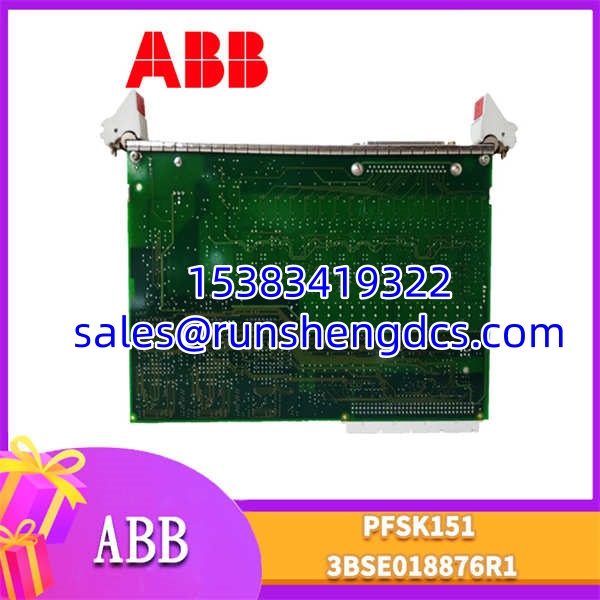

Description
Product Introduction
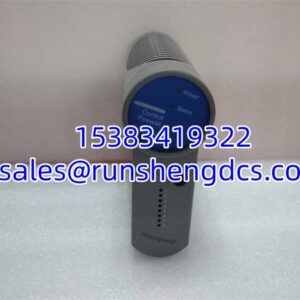
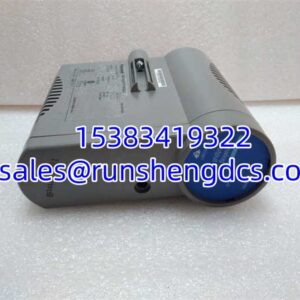
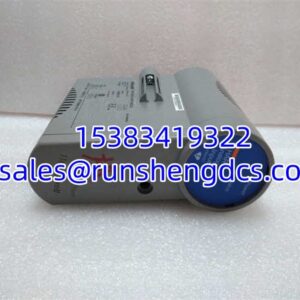
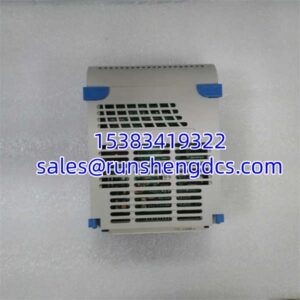
For the engineer responsible for a paper machine or film extruder, a snapped web means hours of cleanup and lost production. The ABB PFSK151 3BSE018876R1 is the control module designed to prevent that exact scenario. It sits in the ABB tension control lineup as the primary processor for the PFEA111/112 amplifier, handling the complex math to keep material tension constant.
This module is a workhorse in web handling applications. It accepts signals from load cells and dancer positioners, then calculates the necessary output to the drive. The inclusion of a PROFIBUS DP interface means it slots directly into an 800xA or Advant OCS system without needing a separate gateway. It operates on a standard 24 V DC supply and is rated for industrial temperatures up to 55 °C. Honestly, its reputation for stability in high-vibration environments is well-earned.
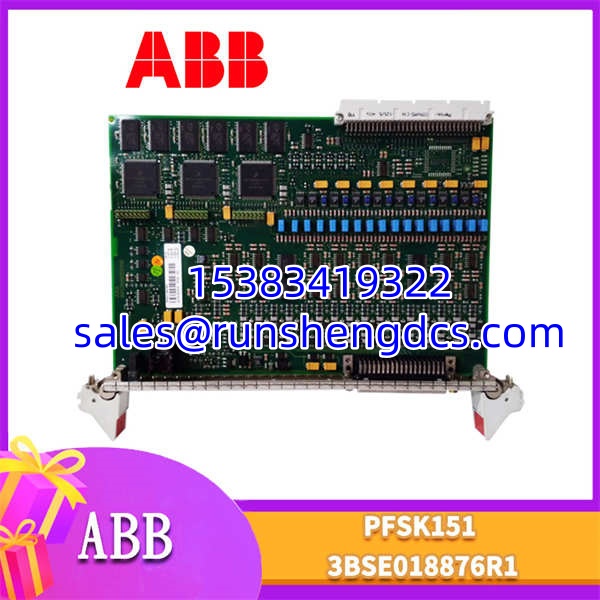
ABB-PFSK151-3BSE018876R1
Key Technical Specifications
- Supply Voltage: 24 V DC ±10%
- Power Consumption: 10 W typical
- Communication: PROFIBUS DP V1 (9.6 kbit/s to 12 Mbit/s)
- Operating Temperature: 0 to 55 °C (32 to 131 °F)
- Storage Temperature: -40 to 70 °C (-40 to 158 °F)
- Humidity: 5 to 95% non-condensing
- Protection Class: IP 20
- Mounting: DIN rail or panel mount
- Weight: Approx. 0.8 kg
- Dimensions (W x H x D): 125 x 100 x 120 mm
Compatibility & Replacement Matrix
- PFSK151 3BSE018876R1 → PFSK150 3BSE018876R0 : Needs Adaptation — The PFSK151 is the direct successor to the PFSK150. While the physical footprint is nearly identical, the firmware is different. You cannot simply swap them without checking the system configuration.
- PFSK151 3BSE018876R1 → PFSK151 3BSE018876R2 : Direct — The R2 revision is a newer hardware version. It is backward compatible, but you should verify the firmware version to ensure it matches your controller software.
Quality Inspection & SOP Transparency
We don’t just look at the box. Every ABB PFSK151 3BSE018876R1 undergoes a documented checkout process before it leaves our bench.
- Incoming Inspection: We start by verifying the source. The serial number on the module’s label is checked against ABB’s manufacturing records to confirm it’s not a grey market refurb. We inspect the housing for cracks and the DIN rail clip for stress.
- Live Functional Test: The module is installed in a test rack with a PFEA111 amplifier simulator. We power it up with a calibrated 24 V DC supply and watch the boot sequence. The LEDs should cycle through a specific pattern. We then connect a laptop running ABB’s configuration tool over PROFIBUS to establish a handshake.
- Electrical Parameter Test: Using a Fluke 87V multimeter, we measure the input current draw under load to ensure it’s within the 10 W spec. We also check the insulation resistance on the I/O terminals.
- Firmware Verification: We read the firmware version directly from the module’s memory. For the , we’re typically looking for version 2.x or higher. This is critical for compatibility with newer 800xA systems.
- Final QC & Packaging: After passing all tests, the module is wiped down, placed in a static-shielding bag, and packed in a double-walled carton. A QC sticker with the test date and technician ID is applied to the outside.
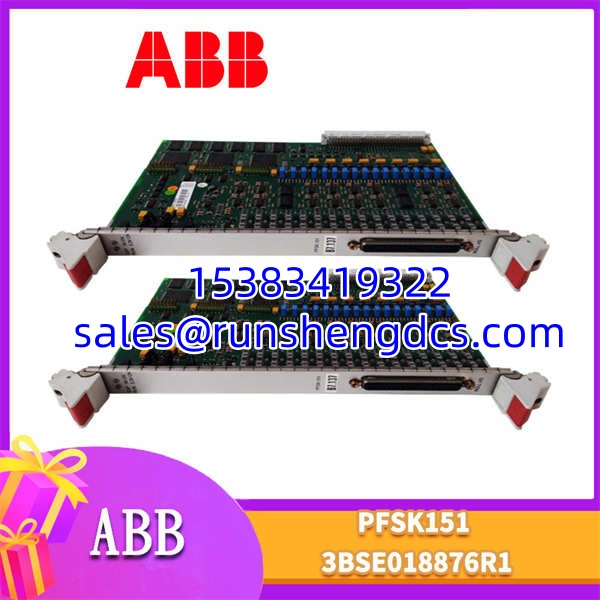
ABB-PFSK151-3BSE018876R1
Common Replacement Pitfalls
Swapping out a tension controller seems straightforward until you miss a detail and the web snaps on startup. Here are the traps we see time and again.
- Firmware Revision Mismatch: This is the big one. A new might ship with firmware v3.0, while your old system runs v1.5. The new firmware might not talk to your old operator panel. Always check your system’s firmware version before you order.
- DIP Switch / Jumper Misconfiguration: The has DIP switches on the side for setting the PROFIBUS address and termination. The factory default is almost never the correct address for your network. Take a clear photo of the old module’s switch settings before you pull it out.
- Connector / Terminal Incompatibility: The main I/O connector is a pluggable terminal block. It’s easy to damage the pins when removing it. If the pins are bent, the connection will be intermittent, leading to wild tension swings. Inspect the connector closely.
- Power Budget Shortfall: The draws about 10 W, but it also supplies power to the connected PFEA amplifier. If your 24 V DC power supply is already near its limit, adding this module could cause a voltage dip. Calculate your total rack load.
- ESD Damage: The electronics inside are sensitive. We’ve seen modules fail because a technician handled the circuit board without a wrist strap. Always ground yourself before touching the module.
Get these five right and you’ll cut rework time by most of the afternoon.
FAQ
Can I just swap this in directly for my old PFSK150?
It depends on your situation. If your system is running an older version of the ABB application software, a direct swap might cause a communication fault. The uses a different internal protocol. You will likely need to update the module’s firmware and reload the tension application from your engineering station. It’s not a purely mechanical swap.
There isn’t one. The PROFIBUS address is set manually using the DIP switches on the side of the module. The default factory setting is typically address 1, but this is rarely used in a live network. You must set the switches to match the address configured in your PLC or DCS hardware configuration.
Honestly, you need the diagnostic software to know for sure. The red LED is a general fault indicator. It could be anything from a broken wire to a load cell failure. Connect your laptop to the PROFIBUS network, open the ABB tension control tool, and read the diagnostic buffer. It will give you a specific error code.
Is this module compatible with the S800 I/O system?
No. The reason is that the is a standalone controller that communicates over PROFIBUS DP. It is not an S800 I/O module that plugs into a TU8xx terminal unit. It sits alongside the S800 I/O on the same PROFIBUS network but is a separate node.
Do you offer a warranty on this?
Yes, we provide a 12-month warranty on all new original parts. This covers any defects in the module itself. It does not cover damage from incorrect installation, such as applying the wrong voltage or ESD. If the module fails during normal operation within the warranty period, we will replace it.