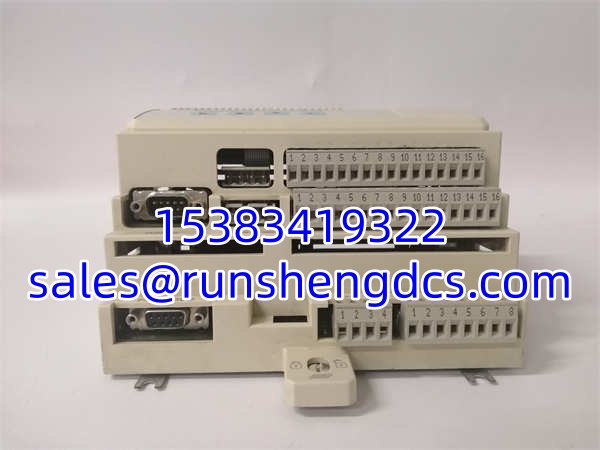

Description
Key Technical Specifications
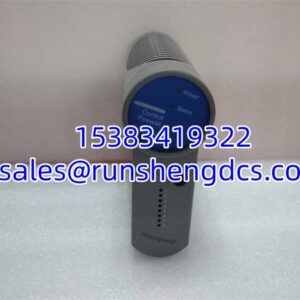
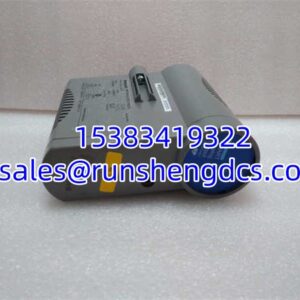
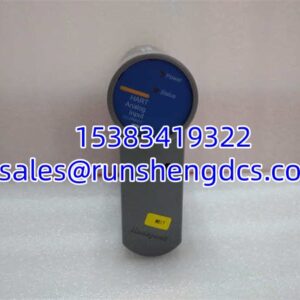
- Product Model: PFEA113-20
- Manufacturer: ABB
- Product Type: Tension Electronic Unit
- Sensor Inputs: 4 Channels (PFCL/PFTL Series)
- Analog Outputs: 6 Configurable (0-10V / 4-20mA)
- Communication: PROFIBUS-DP (RS485) + RS232 Service Port
- Power Supply: 24V DC (18-36V DC), 12W Max
- Display: 2×16 Character LCD with Keypad
- Protection Class: IP20
- Mounting: DIN Rail (EN 50022)
- Operating Temp: +5°C to +55°C
- Filtration: 5ms to 1500ms Selectable
Product Introduction
Web tension control isn’t about “good enough”; it’s about microns and grams. The ABB PFEA113-20 is the high-end workhorse of the PFEA11x family, built specifically for complex lines where two sensors just don’t cut it. It handles up to four load cells simultaneously, performing real-time sum/difference calculations to eliminate mechanical misalignment errors before they ever reach your PLC.
Bottom line — this module buys you process stability. With 6 configurable analog outputs and native PROFIBUS-DP, the PFEA113-20 doesn’t just measure tension; it actively drives brakes, clutches, and vector drives in a tight closed loop. It’s IP20, DIN-rail mounted, and designed to sit inside a clean control cabinet, keeping the messy web physics out of your DCS.
QA/QC Transparency SOP
We don’t trust “tested working” stickers. Every PFEA113-20 goes through a rigorous bench protocol before it ships.
- Intake & Origin Verification: We verify the 3BSE050092R20 order code and inspect the DIN rail clips for stress fractures, a common failure point on used units.
- Live Functional Testing: Mounted on a test rack with PFCL201 load cells. We verify all 4 channels read correctly and that the internal sum/difference math is accurate within ±0.1%.
- Electrical Parameter Tests: Using a Fluke 115, we check the 24V DC input regulation and verify isolation between the sensor excitation and analog outputs.
- Firmware/Config Verification: We read the unit via the RS232 port to log the firmware version and ensure no hidden fault codes are lurking in the history buffer.
- Final QC & Anti-Static Packaging: The PFEA113-20 is sealed in an ESD-safe bag with corner protection, as the LCD ribbon cable is sensitive to crush damage.
Field Engineer Gotchas
- Sensor Excitation Limits: The PFEA113-20 can drive 4 sensors, but watch the cable resistance. Max allowed is 10Ω per cable. War story: Saw a tech run 30m of cheap 22AWG wire to a load cell, causing a 15% gain error because the voltage drop at the sensor exceeded the controller’s compensation range. Stick to the spec or use 4-wire sensing.
- PROFIBUS GSD File: Don’t assume your PLC knows this card. You need the specific
ABB_0717.GSDfile. If you’re on a newer Siemens S7-1500, you might need to convert the legacy GSD to GSDML. Blunt warning: If the bus won’t initialize, check the GSD version before blaming the card. - Grounding Loops: This is an IP20 unit. If you mount it in a cabinet with a VFD and don’t bond the DIN rail to PE, your tension signal will look like a seismograph. Solution: Use the star washer provided under the DIN rail clip. It’s not optional.
- Filter Time Traps: Default filter is often 75ms. For high-speed lines (>600m/min), this adds too much phase lag. Drop it to 5-15ms, but be ready to tune the PID gain, or you’ll induce oscillation.
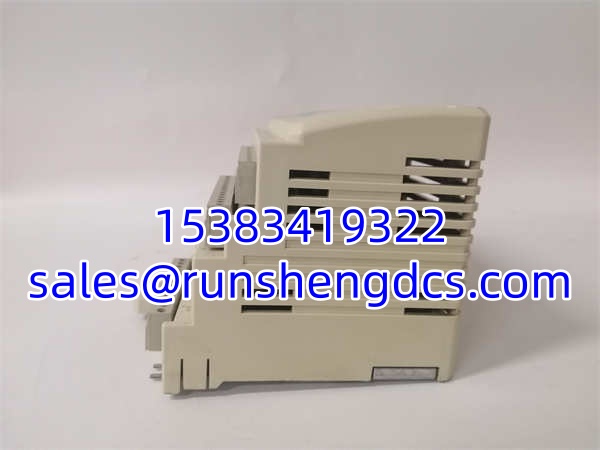
ABB PFEA113-20
Application Scenarios
- Lithium Battery Electrode Coating: Where coating thickness tolerance is ±1μm, the ’s 4-channel averaging eliminates substrate waviness errors that single sensors miss.
- High-Speed Printing & Converting: At 600m/min, web flutter kills registration. The ’s fast filter settings and analog outputs drive dancer rollers with <10ms response to dampen harmonics.
- Metal Foil Rolling: Handling 7-280kN loads requires the ’s robust excitation and noise filtering to prevent false trips during mill chatter.
- Real-World Failure & Resolution: A film extruder kept snapping web during roll changes. The old single-channel controller couldn’t handle the transient spike. We installed a , wired two load cells in sum mode, and enabled the “Dynamic Gain Switch” via digital input. The controller now automatically stiffens the loop during acceleration, reducing breaks by 80% in the first month.
FAQ
No. It requires ABB PFCL or PFTL series Pressductor sensors. These are electromagnetic, not resistive strain gauges. Standard load cells will not work.
Mechanically, yes. Functionally, no. The has 4 inputs and PROFIBUS; the 111/112 have 2 inputs and limited comms. You can drop a 113-20 into a 111 slot, but you must configure it for 2-sensor mode in the menu.
The -20 is IP20, DIN rail mount, for clean cabinets. The -65 is IP65, NEMA 4, enclosed in a sealed box for wet/washdown environments. Internally, they are identical.
Does it support Ethernet/IP or PROFINET?
Native? No. It has PROFIBUS-DP and RS232. For Ethernet, you need a protocol gateway (like HMS Anybus) or a PLC with PROFIBUS master. Don’t try to hack the RS232 port for high-speed control.
My display is blank, but power LED is on.
Check the contrast pot on the front. After 10 years, the LCD contrast often drifts. If that fails, it’s likely a failed backlight inverter or ribbon cable. Blunt warning: Don’t pry the front bezel off unless you have replacement ribbons. They tear easily.
No. Each unit is a PROFIBUS slave. You can put up to 3 units on the same bus segment (12 sensors total), but they don’t daisy-chain sensor-to-sensor. Each needs its own wiring back to the controller.