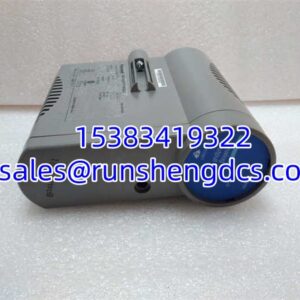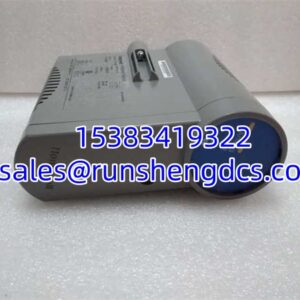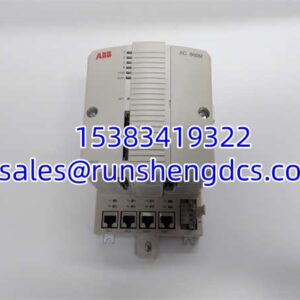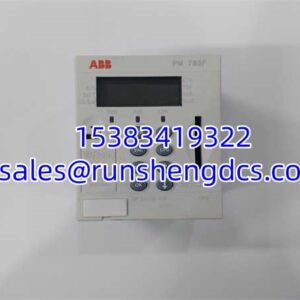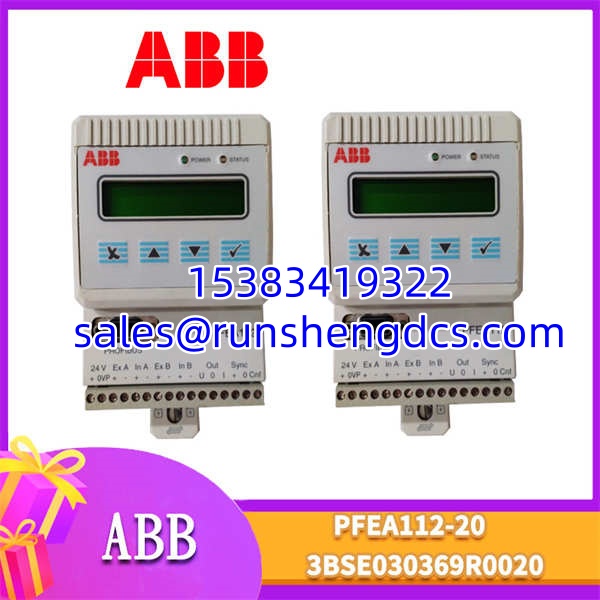

Description
Key Technical Specifications
- Power Supply: DC 24V (18–36V range)
- Power Consumption: 8W at 24V
- Number of Load Cell Channels: 2
- Load Cell Excitation Current: 0.5 A RMS at 330 Hz
- Max Load Cell Cable Resistance: 2 load cells + 5 Ω cable resistance
- Analog Outputs: 1 × (-5 to +11V, max 5 mA); 1 × (0–21 mA, max 550 Ω)
- Fieldbus Communication: PROFIBUS-DP (standard on PFEA112)
- Alarm via PROFIBUS: Yes
- Display: Multi-language interactive 2×16 character display
- Selectable Tension Units: N, kN, kg, lbs, N/m, kN/m, kg/m, pli
- Step Response (0–90%): Configurable per output — 15, 30, 75, 250, 750, 1500 ms
- Self-Diagnostics: LED status (green/red); continuous parameter supervision
- Load Memory: Resettable maximum load value storage
- Zero Offset Memory: Yes
- Scaling Function: Individual scaling and filtering per analog output
- Mounting: DIN-rail (IP20)
- Compatible Sensors: ABB PFCL 201/301, PFTL 101/201/301E, PFRL series
Product Introduction
You’re running a paper machine or a metal strip line, and your load cells are putting out millivolt-level signals that need to survive EMI from nearby VFDs before reaching your PLC. The PFEA112-20 sits between the ABB PFCL/PFTL load cells and your control system, doing the heavy lifting of signal conditioning, amplification, and filtering so your tension loop doesn’t oscillate every time a motor ramps up. It’s not a PLC. It’s not a drive. It’s a dedicated tension electronics module that does one thing — and it does it fast enough to keep a moving web from snapping.
The PFEA112-20 handles two load cell channels simultaneously, excites them at 330 Hz, and delivers a scaled analog output with configurable step response down to 15 ms. That’s fast enough for most web handling applications without introducing noise-induced instability. The built-in PROFIBUS-DP interface means you can pull tension values and diagnostics straight into your DCS or PLC without burning an analog input card. The interactive menu walks you through commissioning — nominal load entry, zero offset, wrap angle gain — so you’re not guessing at parameters. Bottom line: if you’re running ABB load cells on a web line, this is the native electronics box.
Troubleshooting Quick Reference
| Fault | Cause | Probability | Quick Check | Fix |
|---|---|---|---|---|
| Tension reading erratic / noisy | Mechanical vibration or EMI on sensor cable | 50% | Check step response filter setting; inspect shield grounding at load cell end | Increase filter time constant (75–250 ms); verify cable shield grounded at one end only |
| Negative tension display | Load cell signal polarity reversed | 35% | Apply known downward force; observe sign on display | Swap wires 2 and 4 on the affected load cell channel |
| No communication on PROFIBUS | Wrong GSD file or address mismatch | 30% | Verify GSD file ABB_0716.GSD loaded in PLC config; check node address in PFEA menu | Load correct GSD; match PROFIBUS address in PFEA112 to PLC hardware config |
| “Sensor Fault” alarm | Open circuit or short on load cell wiring | 25% | Measure resistance between excitation terminals (should be ~tens of ohms); check for shorts | Repair cable; verify load cell coil integrity per ABB sensor datasheet |
| Tension value doesn’t match expected | Nominal Load parameter mismatch | 20% | Compare Nominal Load setting to load cell nameplate rating | Enter correct Nominal Load value via PFEA112 menu |
| Zero drift after web threading | Zero offset not cleared after mechanical changes | 15% | Check if SetZero was executed after last maintenance | Execute SetZero with web unloaded and rollers stationary |
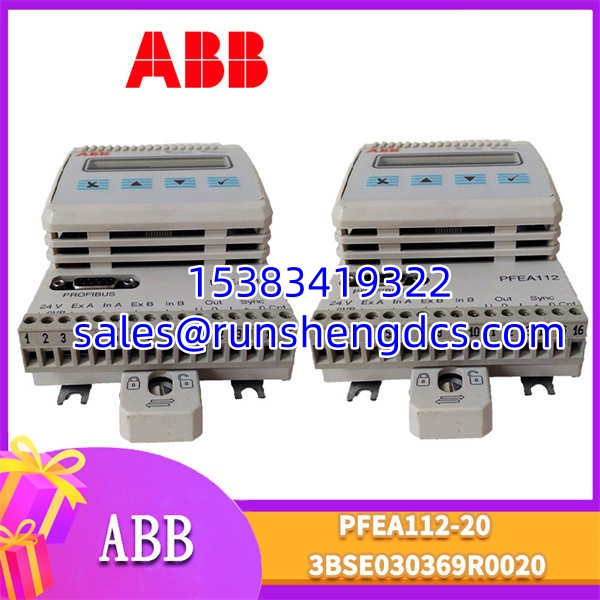
ABB PFEA112-20 3BSE030369R0020
Application Scenarios & Pain Points
Paper Machine Rewinder: Maintaining constant tension across a paper web as roll diameter changes from empty core to full roll. The PFEA112-20 processes dual load cell signals from the dancer roller assembly and feeds a 0–21 mA output to the drive’s speed reference. Pain point: if the wrap angle gain isn’t set correctly for the actual web path geometry, the tension reading will be systematically off — sometimes by 30% or more. The ‘s interactive menu calculates this, but only if you enter the correct angle.
Metal Strip Processing Line (Cold Rolling): ABB PFCL load cells mounted under the bridle rolls measure strip tension in the 7–280 kN range. The -20’s 15 ms step response keeps up with rapid tension transients during acceleration. Pain point: mechanical shock from strip threading can overload the load cells. The ‘s resettable load memory captures peak events, which is useful for post-incident analysis — but if you don’t check it regularly, you’ll miss evidence of repeated overloads that degrade sensor accuracy over time.
Film Coating Line: Thin polymer film (20–50 μm) is extremely sensitive to tension variation. The -20’s digital filtering suppresses vibration from coating rollers while maintaining enough bandwidth for closed-loop control. Pain point: the analog output scaling must match the PLC’s input range exactly. A mismatch between the ‘s 0–21 mA output scaling and the PLC’s 4–20 mA input configuration creates a dead zone at low tension — exactly where you need the most precision.