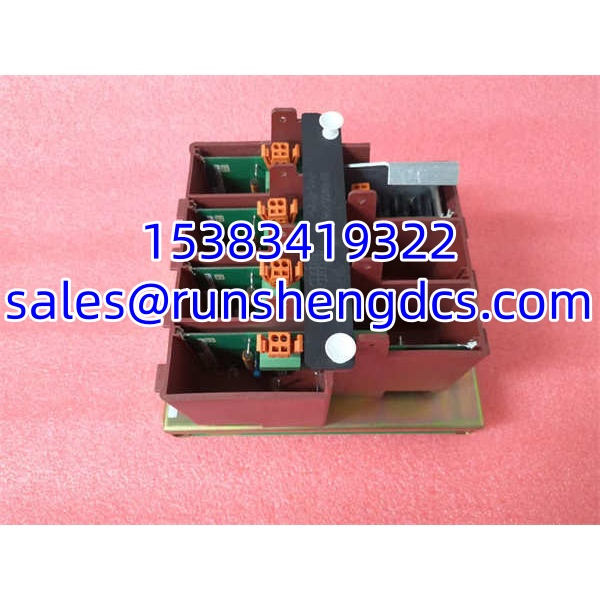
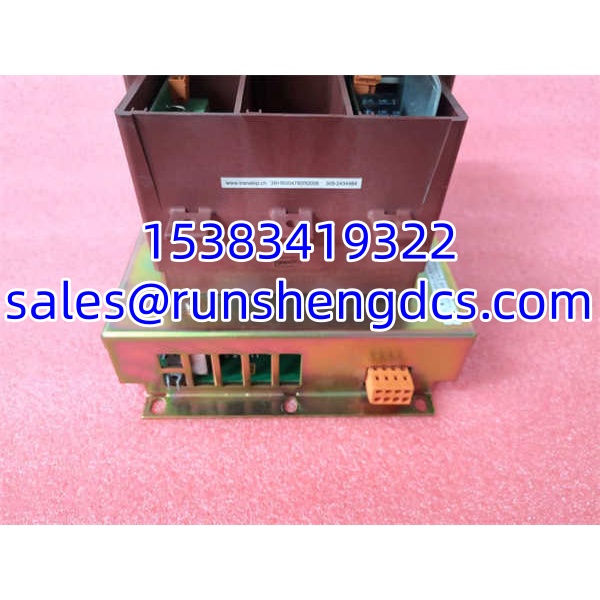

Description
Key Technical Specifications
| Parameter | Specification |
|---|---|
| Manufacturer | ABB |
| Order Code | KUC755AE106 |
| Article Number | 3BHB005243R0106 |
| Product Type | Excitation control unit / exciter controller |
| Primary Function | Generator field excitation control (ECS/AVR) |
| Control Objective | Maintain generator terminal voltage within set limits |
| Limiting Functions | Over-excitation limit (OEL), under-excitation limit (UEL), field current limit |
| Protection | Generator excitation protection; system interlocks with power bridge |
| Typical Host Systems | ABB Unitrol / ECS excitation systems |
| Compatible Power Stage | ABB thyristor/IGBT field bridges (system-dependent) |
| Application Domain | Power generation, marine, oil & gas, traction, mining |
| Availability | Primarily surplus/refurbished; verify firmware and compatibility |
Product Introduction
Excitation control modules do not fail gracefully. When a generator’s AVR/ECS controller trips or drifts, the symptoms show up at the grid connection point — unstable terminal voltage, reactive power swings, or a hard protection trip. The KUC755AE106 (3BHB005243R0106) is the kind of board you want verified before it goes back into a live generator cabinet, not after.
This unit is an ABB excitation control module used within ABB excitation control systems (ECS) and associated Unitrol-family AVR platforms for synchronous machines. Its job is to regulate the generator field current so that terminal voltage stays on setpoint, while enforcing OEL, UEL, and field-current limits. It typically interfaces with ABB thyristor or IGBT power bridges and upstream protection relays. Because revision-level differences (R0105 vs R0106 vs R0117) can change firmware, I/O mapping, or compatibility with specific power stages, treat the full article number as the real part number — not just “KUC755.”
QA/QC Transparency SOP
- Intake & Origin Verification — Verify the label reads KUC755AE106 / 3BHB005243R0106. Photograph the nameplate, PCB revision, and any daughter-card labels. Check for heat damage around power-stage interfaces, swollen capacitors, or corrosion on backplane connectors.
- Live Functional Testing — Install in a compatible ABB ECS/Unitrol test rack with the correct backplane and power bridge simulator. Apply auxiliary supply and verify boot sequence, LED diagnostics, and communication with the operator interface or上位 HMI. Confirm the controller accepts setpoints and reports status without fault.
- Electrical Parameter Tests — Measure auxiliary supply rails (+5 V, +15 V, −15 V, +24 V as applicable) with a Fluke 87V. Check insulation resistance between power and signal sections. Verify continuity on field-firing output circuits and interlock inputs.
- Firmware/Config Verification — Read back firmware revision and parameter set via the ABB configuration tool or service interface. Compare against the site’s existing unit. Back up parameters, limiter settings (OEL/UEL curves), and PID gains before shipping.
- Final QC & Packaging — Document article number, firmware revision, test results, and any parameter deviations. Fit connector covers, apply anti-static bag with desiccant, and ship in rigid packaging to prevent backplane-pin damage.
Field Engineer Gotchas
- R0105 vs R0106 vs R0117 Are Not Automatically Interchangeable — The 3BHB005243R010x family shares a common platform, but suffix changes can affect firmware, I/O assignment, or power-bridge compatibility. Solution: Match the full article number and firmware revision to the existing unit. If substitution is unavoidable, have an ABB commissioning engineer reload and validate the parameter set.
- Wrong Host System Assumption — This is not an AC 800M CPU or a general-purpose drive card. Dropping it into a DCS rack or servo cabinet will accomplish nothing. Verify: It belongs in an ABB excitation/ECS/Unitrol system controlling a synchronous generator field.
- Parameter Mismatch After Swap — Even with the correct hardware revision, limiter curves (OEL/UEL), voltage setpoints, and PID gains must match the generator’s commissioning data. A default-loaded unit can allow unsafe field conditions. War story: A hydro unit tripped on loss-of-field after a controller swap because the UEL curve had not been restored from backup. The hardware was fine; the parameters were not.
- Power Bridge Compatibility — The KUC755 controller must match the thyristor/IGBT bridge type, firing scheme, and feedback scaling. Mixing a controller revision with an incompatible bridge can cause firing errors or unbalanced field current. Check: Bridge type code and controller compatibility matrix before energizing.
- Grounding and Noise — Excitation cabinets sit near high-current field circuits. Poor grounding or unshielded feedback wiring can inject noise into the voltage measurement channel, causing the AVR to hunt. Fix: Verify single-point grounding, shield termination, and VT feedback integrity before tuning.
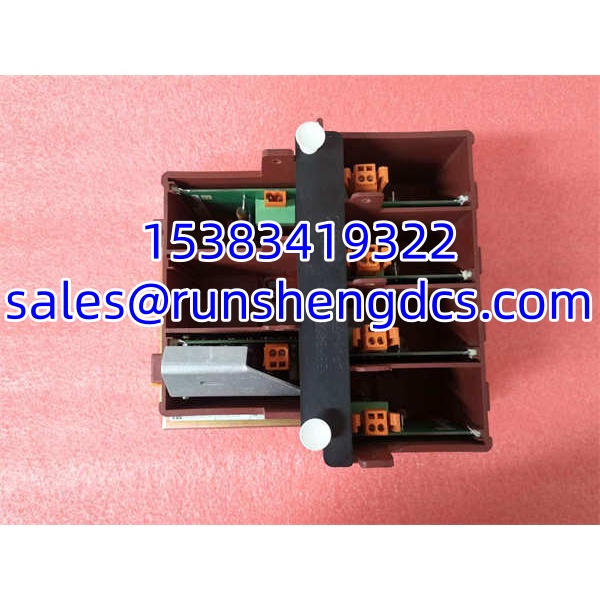
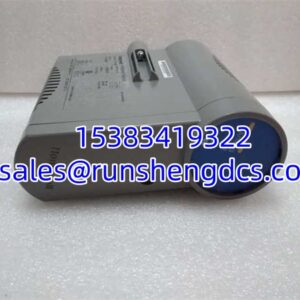
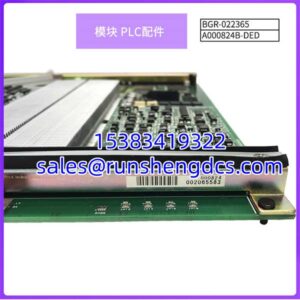
ABB KUC755AE106 3BHB005243R0106
Application Scenarios
- Hydro generator voltage regulation — A run-of-river plant uses the KUC755AE106 within an ABB ECS to maintain terminal voltage during load changes and grid disturbances. OEL/UEL limiters protect the rotor and stator end-region heating limits.
- Marine generator excitation — On a vessel with multiple synchronous generators, the excitation controller maintains bus voltage stability during large motor starts and load transfers. Fast field-current limiting prevents AVR overshoot during sudden load rejection.
- Oil & gas turbine-generator sets — A gas-turbine-driven generator relies on the ECS controller for automatic voltage regulation and reactive power sharing. The unit interfaces with the plant protection relay for field-failure and over-excitation trips.
FAQ
Q: Is KUC755AE106 the same as 3BHB005243R0105?
A: No. They are different revisions in the same family. Hardware may look similar, but firmware, parameter sets, or power-bridge compatibility can differ. Match the full article number to your existing unit.
Q: Can I use this in an ABB AC 800M DCS rack?
A: No. The is an excitation control unit for ABB ECS/Unitrol systems, not an AC 800M CPU or I/O module.
Q: What system does this belong to?
A: ABB excitation control systems (ECS) and associated Unitrol-family AVR platforms for synchronous generators. Confirm the exact host system model before ordering.
Q: Does it include the thyristor power bridge?
A: No. This is the control unit. The power bridge (thyristor/IGBT field rectifier) is a separate assembly. Verify compatibility between controller revision and bridge type.
Q: Can I swap R0106 for R0117?
A: Not without verification. Different revisions may require firmware updates, parameter migration, or may be incompatible with your existing power bridge. Consult ABB documentation or a qualified commissioning engineer.
Q: Is this available new from ABB?
A: Many KUC755 variants are legacy/surplus items. Availability depends on the specific revision and region. Surplus and refurbished units are common; insist on full article number, firmware revision, and test records.
Q: What parameters must be backed up before replacement?
A: Voltage setpoint, PID gains, OEL/UEL curves, field current limits, soft-start ramp, protection trip settings, and communication addresses. Without these, the replacement unit is just hardware — not a commissioned controller.