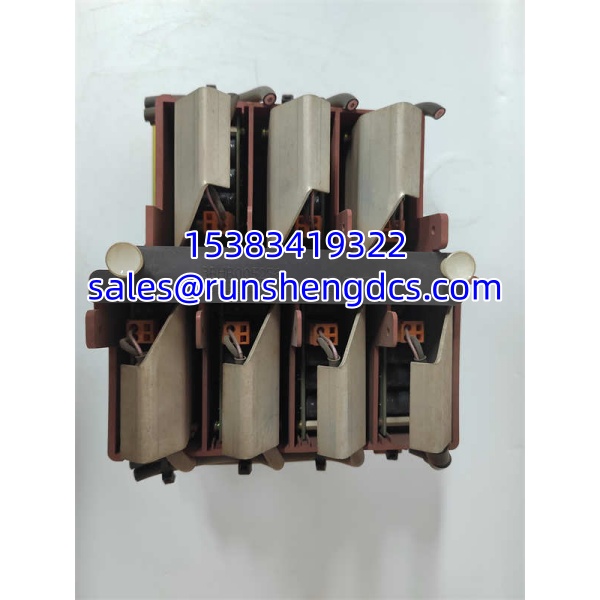

Description
Key Technical Specifications
| Parameter | Specification |
|---|---|
| Product Type | Excitation Control Unit (KUC711AE family) |
| Order Code | 3BHB004661R0001 (R0001 revision) |
| Primary Application | Synchronous generator / motor excitation control |
| Control Modes | AUTO (terminal voltage regulator) and MAN (field current control) |
| Voltage Regulation Accuracy | ±0.5% (AUTO mode, per vendor data) |
| Excitation Current Range | 20 A to 12,000 A (system-dependent) |
| Communication | Modbus TCP Ethernet (remote monitoring and parameter access) |
| Isolation | I/O isolation up to 1,500 V (per vendor data) |
| Operating Temperature | −10 °C to +50 °C typical; some versions rated to +85 °C |
| Humidity | Up to 90% RH, non-condensing |
| Typical Systems | ABB ACS 6000 excitation systems; hydro, combined-cycle, pumped-storage plants |
| Status | Legacy / Surplus |
Product Introduction
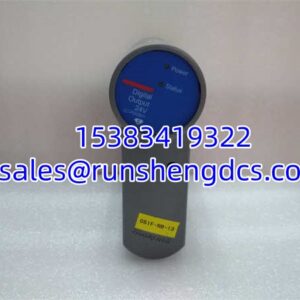
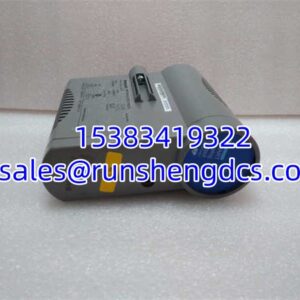
When a generator’s AVR trips during a grid disturbance, the excitation controller is the first board you check. The KUC711AE01 (3BHB004661R0001) is ABB’s excitation control unit for synchronous machines — it sits in the exciter cabinet and regulates field current to hold terminal voltage steady or control motor power factor.
It operates in two modes: AUTO mode uses PT feedback to regulate terminal voltage with ±0.5% accuracy, while MAN mode provides a fallback that controls directly from field current feedback if the PT or automatic loop fails. The unit supports Modbus TCP Ethernet for remote monitoring and parameter access, and is rated for excitation current ranges from 20 A to 12,000 A depending on the power stage it drives. It is commonly found in hydro, combined-cycle, and pumped-storage power plants as part of ABB’s ACS 6000 excitation systems.
Critical distinction: the R0001 revision (3BHB004661R0001) is not the same as the R0101 revision (KUC711AE101, 3BHB004661R0101). The R0101 variant is frequently described as a gate-unit power / exciter controller with fiber-optic IGBT triggering and different electrical characteristics. Always verify the exact revision code on the nameplate before ordering a replacement.
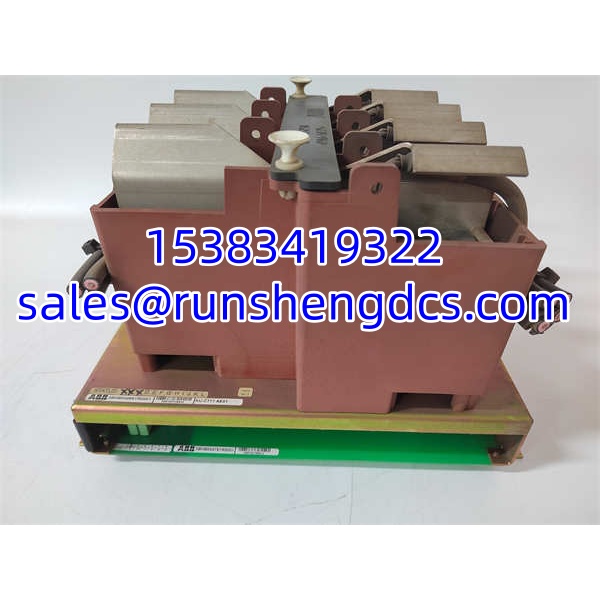
ABB KUC711AE01 3BHB004661R0001
QA/QC Transparency SOP
- Intake & Origin Verification
Confirm full order code 3BHB004661R0001 and revision KUC711AE01. Photograph all nameplates, connector labels, and LED indicators. Verify the revision matches the OEM documentation for the target exciter cabinet. - Live Functional Testing
Install in a compatible ABB exciter test setup or known-good cabinet. Verify power-up sequence, LED status indicators, and successful communication over Modbus TCP. Confirm AUTO and MAN mode switching functions correctly. - Electrical Parameter Tests
Check auxiliary power input and 24 VDC outputs if applicable. Verify I/O isolation withstand per vendor specification. Test analog input channels (PT/CT signals) and digital I/O for correct response. - Firmware/Config Verification
Read firmware revision via Modbus TCP or local interface. Verify control parameters (voltage setpoint, PID gains, mode selection) match the OEM configuration backup. Record all parameter values before and after testing. - Final QC & Anti-Static Packaging
Perform final visual inspection for corrosion, damaged connectors, or swollen capacitors. Label with test date, firmware revision, and revision code. Pack in anti-static shielding with connectors protected.
Field Engineer Gotchas
- R0001 vs. R0101 revision trap
Risk: Ordering 3BHB004661R0101 (KUC711AE101) when you need 3BHB004661R0001 (KUC711AE01). The R0101 is a different variant often used as a gate-unit power controller with fiber-optic IGBT triggering.
Solution: Match the exact revision code on the failed unit’s nameplate. Do not substitute R0101 for R0001 without OEM confirmation.
Warning: I have seen a crew install an R0101 in an R0001 slot and spend a day chasing communication faults that were simply a revision mismatch. - AUTO/MAN mode confusion during troubleshooting
Risk: After a replacement, the unit may default to MAN mode, causing unexpected voltage behavior.
Solution: Verify the active control mode and parameter set after installation. Compare against the OEM configuration backup.
Warning: A generator running in MAN mode with incorrect field current settings can over-excite or under-excite, risking equipment damage. - PT circuit failure masking as controller fault
Risk: A failed PT or broken PT wiring can cause the AUTO loop to malfunction, leading technicians to replace the KUC711AE01 unnecessarily.
Solution: Check PT secondary voltage and wiring before condemning the controller. Switch to MAN mode to verify the controller itself is functional.
Warning: Replacing the controller without checking the PT circuit means the new unit will exhibit the same fault. - Modbus TCP network configuration
Risk: After replacement, the unit may have a different IP address or Modbus node ID, causing SCADA communication loss.
Solution: Record the original network settings before removal. Restore them on the replacement unit.
Warning: A wrong IP address on an excitation controller can isolate it from the plant control system — you will have no remote visibility into generator excitation status. - Excitation current range mismatch
Risk: The KUC711AE01 supports 20 A to 12,000 A excitation current, but the actual range depends on the power stage (thyristor bridge) it drives.
Solution: Verify the power stage rating matches the controller’s configuration. Do not assume any KUC711AE unit is interchangeable across different exciter cabinet sizes.
Warning: A controller configured for a 500 A exciter will not correctly regulate a 5,000 A system without reconfiguration.
Application Scenarios
- Hydro generator AVR failure during grid disturbance
A hydro plant’s generator loses voltage regulation after a grid fault. The KUC711AE01 is checked for AUTO mode operation, PT feedback integrity, and Modbus TCP communication. The failed unit is replaced with a verified R0001 revision spare. - Combined-cycle plant exciter maintenance outage
During a scheduled outage, the excitation controller is replaced proactively. The new is configured with the OEM parameter backup, AUTO/MAN mode switching is tested, and Modbus TCP communication is verified with the DCS. - Synchronous motor power factor correction fault
A large synchronous motor in a mining operation shows unstable power factor. The is checked for correct MAN mode operation and field current feedback. A wiring fault in the CT circuit is identified and corrected. - Pumped-storage plant commissioning
A new pumped-storage unit is commissioned with an ABB ACS 6000 excitation system. The is configured for AUTO mode voltage regulation, PID parameters are tuned, and Modbus TCP integration with the plant control system is validated.
FAQ
The () is an excitation control unit for synchronous machines. The R0101 (KUC711AE101) is a different variant often described as a gate-unit power / exciter controller with fiber-optic IGBT triggering and different electrical characteristics. They are not directly interchangeable — always match the exact revision code.
Can I use this module with any ABB exciter cabinet?
No. The is designed for specific ABB excitation systems (typically ACS 6000 family). Verify compatibility with your exciter cabinet’s OEM documentation before ordering.
What communication protocol does it support?
Modbus TCP Ethernet for remote monitoring and parameter access. Verify the exact communication options for your specific revision and system integration.
What happens if the PT fails?
In AUTO mode, a PT failure causes loss of voltage feedback. The controller should switch to MAN mode (field current control) as a fallback. Verify the PT circuit and controller mode after any voltage regulation anomaly.
Is this unit still supported by ABB?
The KUC711AE family is a legacy product. ABB has transitioned to newer excitation control platforms. Units are available through surplus and refurbished channels. No new OEM support should be assumed — confirm with ABB or an authorized service provider.
Can I configure the control parameters remotely?
Yes, via Modbus TCP Ethernet if the network connection is properly configured. Always back up the existing configuration before making changes.
What is the excitation current range?
The supports excitation current ranges from 20 A to 12,000 A depending on the power stage it drives. The actual range is determined by the thyristor bridge or other power electronics in the exciter cabinet.