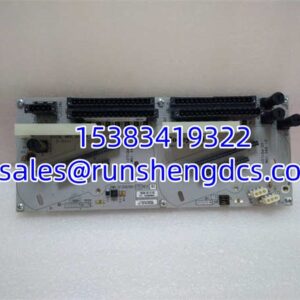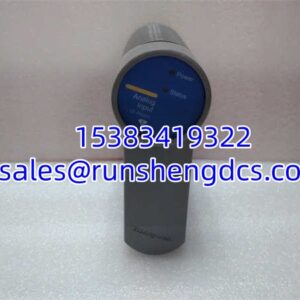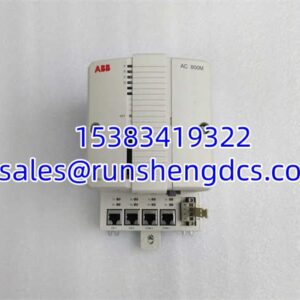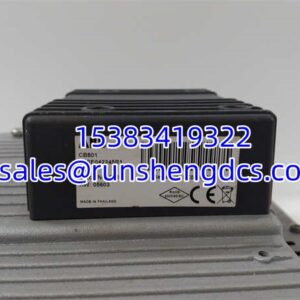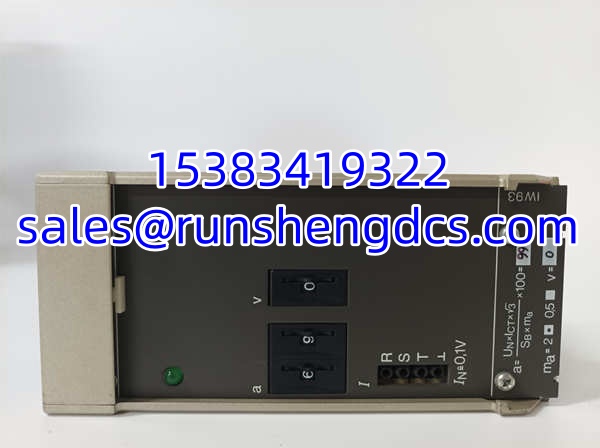

Description
Key Technical Specifications
| Parameter | Value |
|---|---|
| Product Model | IW93-2 |
| Alternate Part Numbers | HESG440356R1, HESG216678B |
| Manufacturer | ABB |
| Product Type | Industrial Control PCB / Processor Module |
| Circuit Design | High-speed digital and analog circuits |
| Architecture | Modular design for easy maintenance and upgrade |
| Communication Interfaces | Serial port, Ethernet |
| Form Factor | Compact, designed for easy integration into industrial control systems |
| Protection Rating | Industrial-grade waterproof and dustproof protection |
| Compliance | Meets international and domestic industrial standards |
| Processing Capability | Real-time control logic execution, data acquisition, and monitoring |
| Programmability | User-programmable control logic and algorithms |
| Data Handling | Capable of processing and recording operational data for analysis and troubleshooting |
| Redundancy | Designed for high availability with redundancy support |
| Security | Built-in security functions to prevent unauthorized access |
Product Introduction
A failed control board in an industrial automation system doesn’t just lose processing power — it disrupts the entire control loop: sensor data acquisition, logic execution, actuator command output, and communication with upstream systems all come to a halt. The ABB IW93-2 (HESG440356R1 / HESG216678B) sits at the core of ABB’s industrial control architecture, serving as the processing and communication hub that keeps automated processes running reliably in demanding industrial environments.
This is ABB’s industrial control printed circuit board, designed for automation systems across power generation, process industry, robotics, and transportation applications. The IW93-2 functions as a processor module that executes control logic, acquires and processes I/O data from field devices, and coordinates communication with other controllers and supervisory systems. Its high-speed digital and analog circuit design enables fast response to process changes — critical for applications where milliseconds matter, such as turbine governor control, robotic motion sequencing, or protective relay coordination.
The module features a modular architecture that simplifies maintenance and upgrades. Individual functional blocks can be replaced or expanded without swapping the entire board, reducing downtime and spare parts inventory costs. Communication interfaces include serial ports and Ethernet, enabling seamless integration with existing control networks, HMIs, and plant-wide data systems. The compact form factor minimizes panel space requirements and simplifies wiring layout.
Built for harsh industrial environments, the IW93-2 incorporates industrial-grade protection against dust, moisture, and temperature extremes. High-quality electronic components and rigorous testing ensure long-term reliability in continuous-operation applications. The module supports user-programmable control logic, allowing engineers to customize algorithms for specific process requirements. Built-in data recording capabilities capture operational parameters for performance analysis and fault diagnosis — invaluable for root-cause analysis after an unplanned shutdown.
Security features protect against unauthorized access to control parameters, a critical consideration for critical infrastructure applications. The module is designed for high availability, with redundancy options that ensure continuous operation even if a primary module fails. Bottom line — if your ABB control system has lost its processing module, the IW93-2 restores the computational core so automated processes can resume.
QA/QC Transparency SOP
- Intake & Origin Verification: Every ABB IW93-2 is verified against ABB part databases to confirm it’s a genuine industrial control module. We check the model number (), primary part number (HESG440356R1), and alternate part number (HESG216678B) before it enters the test queue.
- Visual & Mechanical Inspection: The board is inspected for physical damage, corrosion, burnt components, or cold solder joints. Edge connectors are examined for straightness and cleanliness. Communication ports (serial, Ethernet) are checked for intact pins and proper housing. Mounting hardware threads are verified.
- Power-On & POST Test: The module is installed in a verified ABB control rack with proper backplane power applied. We verify the module powers up correctly, completes its power-on self-test, and status indicators show normal operation (no fault LEDs illuminated).
- Communication Interface Test: Each communication interface is tested: Ethernet port for link establishment and data transmission at standard speeds, serial port for communication at configured baud rates. This ensures the module can communicate with HMIs, engineering workstations, and other system components.
- Processor Function & Logic Execution Test: The module’s processor is verified to execute control logic correctly. We load a test program and verify deterministic execution, proper I/O handling, and real-time response to simulated process events. Data recording functions are tested to confirm operational parameters are captured correctly.
- Modular Function Verification: Individual functional blocks on the board are tested independently to verify the modular architecture is intact. Any replaceable sub-modules are checked for proper electrical connection and signal routing.
- Final QC & Anti-Static Packaging: Passed modules are sealed in ESD-safe bags with desiccant, communication ports are capped to prevent contamination, and a QC sticker with test date, technician ID, and revision is applied.
Field Engineer Gotchas
- Revision Compatibility: The has multiple hardware revisions indicated by the HESG440356R1 and HESG216678B part numbers. Verify the revision of the failed module in your system before ordering — mixing revisions can cause compatibility issues or unexpected behavior. Check the label on your existing module and match the revision exactly.
- Firmware/Program Backup: A replacement may ship without the application-specific control program loaded. You’ll need to download the correct program from the engineering workstation using ABB’s configuration software before the module can execute your control logic. Have your program backup ready before starting the replacement.
- Communication Port Configuration: The serial port and Ethernet interface require proper configuration (IP address, baud rate, protocol settings) to match your existing network. Mismatched settings will prevent the module from communicating with other system components. Document your existing communication settings before removing the failed module.
- Backplane Power Verification: The module draws power from the control rack backplane. Verify the backplane power supply is functioning correctly before installing a replacement — a marginal power supply can cause the new module to fault repeatedly, making it appear defective when the real issue is upstream. Measure backplane voltage at the module slot before installation.
- Redundancy Synchronization: If your system uses redundant modules, verify that the replacement module is synchronized with the active module before enabling redundancy. A firmware or program mismatch between redundant modules can cause switchover failures or voting errors. Verify firmware and program versions across all redundant modules.
- Environmental Protection: The module’s industrial-grade protection depends on intact port caps and proper panel sealing. If port caps are missing or the panel gasket is degraded, dust and moisture can infiltrate the module, causing intermittent failures. Always replace port caps when the module is not actively cabled and verify panel sealing.
- Data Recording Storage: If the module includes onboard data recording, verify the storage medium (EEPROM, flash memory) is functioning correctly. Corrupted storage can cause the module to fault during data write operations. Test data recording function after installation.
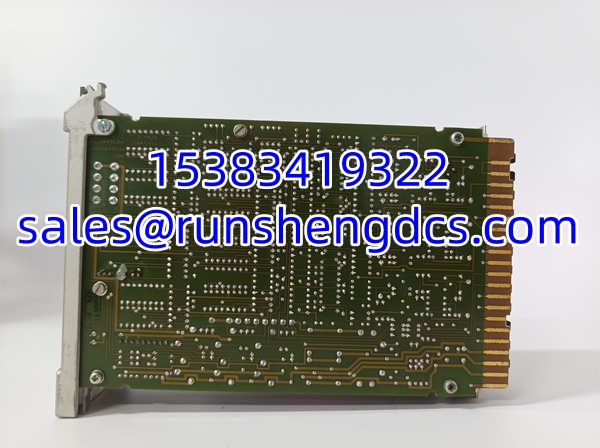
ABB IW93-2 HESG440356R1 HESG216678B
Application Scenarios
- Power Generation — Generator Control System: In a thermal power plant, the ABB serves as the processor module in the generator excitation control system. The module executes the automatic voltage regulator (AVR) algorithm, processing generator terminal voltage feedback and field current measurements to maintain stable output voltage. The Ethernet interface connects to the plant DCS for remote monitoring and setpoint adjustment, while the serial port interfaces with the generator protection relay for hardwired backup trip signaling. The module’s real-time processing capability ensures voltage regulation response within milliseconds, critical for grid stability during load changes. The data recording function captures voltage transients and fault events for post-incident analysis.
- Process Industry — Chemical Reactor Control: In a petrochemical plant, the controls a batch chemical reactor. The module executes the sequential control program that manages reactant addition, temperature ramping, agitation speed, and product discharge. Temperature sensors, pressure transmitters, and level switches connect to the module’s I/O channels. The Ethernet interface integrates with the plant-wide MES system for batch reporting and recipe management. The modular design allows the plant to add additional I/O expansion modules as the process is scaled up. The industrial-grade protection ensures reliable operation in the corrosive chemical plant environment.
- Robotics — Industrial Robot Controller: In an automotive assembly line, the functions as the processing module in an ABB industrial robot controller. The module executes the robot motion program, processing encoder feedback from each joint and computing servo commands for precise trajectory following. The Ethernet interface connects to the line PLC for coordination with other robots and conveyors. The high-speed digital circuit design enables the fast control loop rates required for smooth, accurate robot motion. The security features prevent unauthorized modification of the robot program, protecting against accidental or malicious changes that could cause equipment damage or safety hazards.
FAQ
A: The is an industrial control printed circuit board / processor module for ABB automation systems. It executes control logic, acquires I/O data, and manages communication in applications including power generation, process industry, robotics, and transportation.
Q: What communication interfaces does this module have?
A: The module includes serial port and Ethernet interfaces for communication with HMIs, engineering workstations, other controllers, and plant-wide data systems.
Q: Is this module programmable?
A: Yes. The supports user-programmable control logic and algorithms, allowing engineers to customize the module for specific process requirements using ABB’s configuration software.
Q: Can this module be used in a redundant configuration?
A: Yes. The module is designed for high availability and supports redundancy options to ensure continuous operation even if a primary module fails.
Q: What industries is this module used in?
A: The is used across industrial automation, power systems (generator control, grid monitoring), robotics (industrial robot controllers), process industry (chemical, petrochemical, pharmaceutical), and transportation (train control systems).
Q: Does this module include data recording capabilities?
A: Yes. The module can process and record operational data for performance analysis and fault diagnosis, providing valuable information for root-cause analysis after unplanned events.
Q: What protection rating does this module have?
A: The module incorporates industrial-grade waterproof and dustproof protection, enabling reliable operation in harsh industrial environments.
A: The is a discontinued spare part. Surplus stock is available from secondary suppliers. For new installations or major upgrades, verify ABB’s current automation platform offerings as a long-term replacement strategy.
Q: What’s the lead time for a replacement?
A: Surplus stock is typically available for 1-3 day shipment. Since the is the processing core of the control system and a failed module can halt automated processes, we strongly recommend keeping a verified spare on the shelf — especially for single-module (non-redundant) configurations.