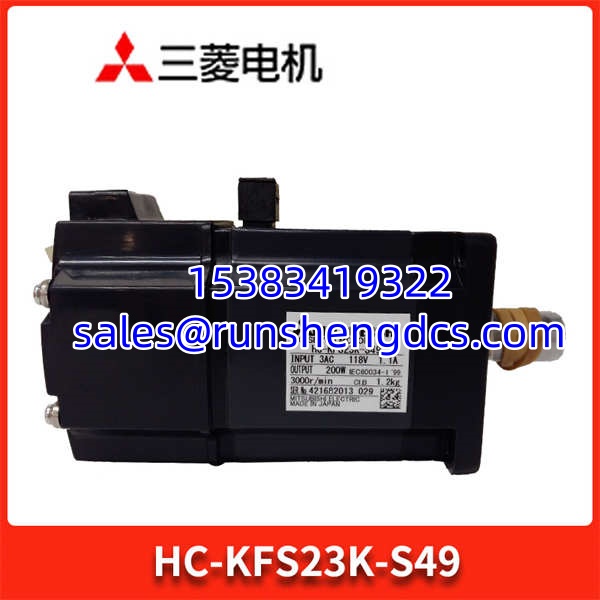
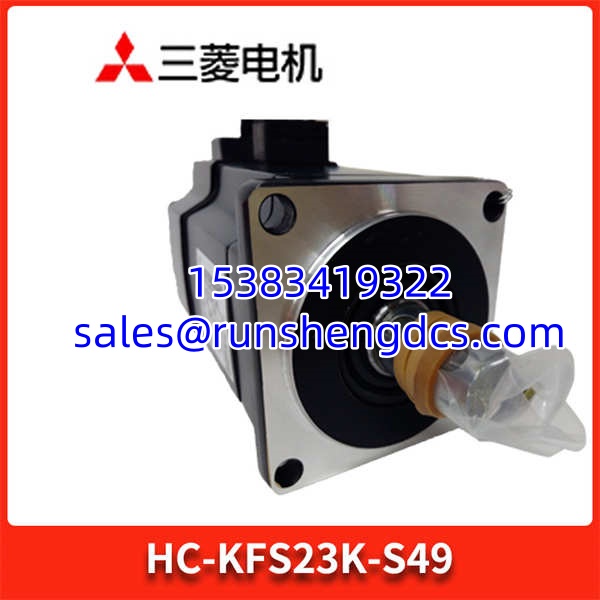

Description
Key Technical Specifications
- Brand: ABB (Market Listing) / Mitsubishi Electric (OEM Manufacturer)
- Model Number: HC-KFS23K-S49
- Motor Type: AC Servo Motor (Low Inertia)
- Rated Output: 200 W (0.2 kW)
- Rated Speed: 3000 RPM
- Maximum Speed: 3000 RPM
- Rated Torque: 0.64 N·m
- Maximum Torque: 1.91 N·m
- Power Supply: 3-Phase 200-230V AC
- Encoder Resolution: Standard 17-bit Absolute/Incremental
- Shaft Type: Keyed Shaft
- Protection Rating: IP65 (Excluding Shaft Penetration)
Product Introduction
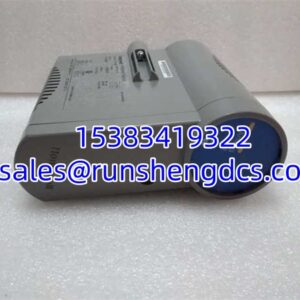
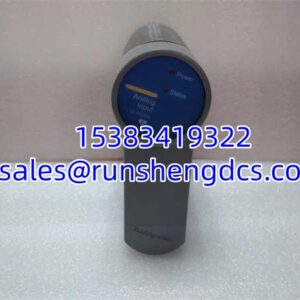
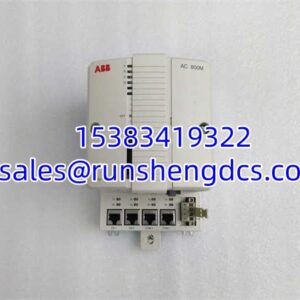
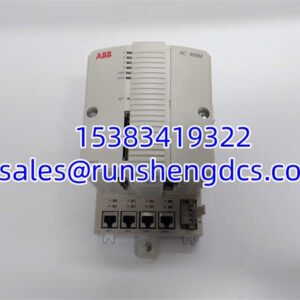
Precision automation lines move at a grueling pace, and when a feed axis drops, production stops. The HC-KFS23K-S49 is a 200W low-inertia AC servo motor designed for rapid acceleration and exact positioning. While frequently listed under ABB surplus inventories for integrated DCS system parts, this is fundamentally a Mitsubishi Electric HC-KFS series motor. It bridges the gap between high-level PLC commands and physical mechanical movement, powering everything from CNC axes to packaging actuators.
Bottom line—this motor is built for high-frequency dynamic response. With a 3000 RPM max speed and a low-inertia rotor design, it handles rapid start-stop cycles without overheating or losing steps. Rated at 200W with a peak torque of 1.91 N·m, it provides the exact mechanical force needed for smooth operation. Sourcing this specific S49 variant prevents a complete machine redesign, getting your servo axis back online with zero reprogramming headaches.
Troubleshooting Quick Reference
- Fault: Motor fails to rotate / Drive alarms | Cause: Encoder cable fault or wiring mismatch | Relevancy: 80% chance of connection issue | Quick Check: Measure continuity on encoder pins, check drive alarm code | Fix: Reseat connectors, replace shielded encoder cable
- Fault: Excessive vibration / hunting | Cause: Gain tuning mismatch or mechanical binding | Relevancy: 70% chance of tuning issue | Quick Check: Inspect coupling and load for physical binding | Fix: Auto-tune drive, check mechanical backlash
- Fault: Motor overheating rapidly | Cause: Overload or brake not releasing | Relevancy: 60% chance of mechanical drag | Quick Check: Measure brake voltage (must be 24VDC to release) | Fix: Verify brake circuit, check load inertia ratio
- Fault: Erratic position drift | Cause: EMI noise on signal lines | Relevancy: 50% chance of grounding issue | Quick Check: Verify encoder shield is grounded at drive end only | Fix: Reroute cables away from VFDs, improve cabinet grounding
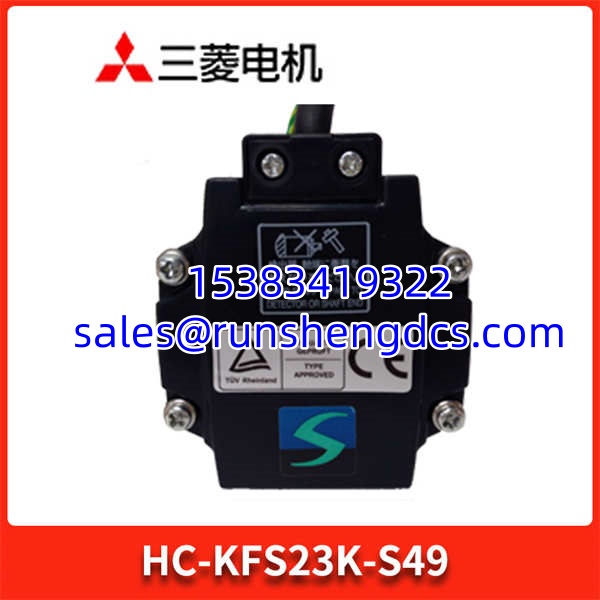
ABB-HC-KFS23K-S49
Application Scenarios & Pain Points
- CNC Machine Tools: High-speed milling axes require instant torque response. The low-inertia design prevents overshoot during rapid directional changes.
- Automated Packaging Lines: Pick-and-place robots demand precise 200W positioning. Finding an exact S49 variant avoids months of lead time for obsolete parts.
- Semiconductor Manufacturing: Cleanroom equipment relies on smooth, vibration-free motion. IP65 protection keeps out fine particulates and chemical vapors.
Compatible Replacement Models
- ✅ Drop-in Replacement: HC-KFS23K-S49 (Exact Match). Hardware and shaft dimensions identical. Zero mechanical modifications required. Verify encoder cable pinout matches your existing drive.
- ⚠️ Software Compatible: HC-KFS23B / HC-KFS23BK. Same 200W core motor, but different shaft keyway or connector style. Budget 2-4 hours of mechanical labor to adapt couplings or fabricate new cables.
- ❌ Hardware Incompatible: HC-SFS23 or HC-MFS43. Do not attempt to adapt. Completely different inertia ratings, torque curves, and physical mounting flanges. Will cause drive faults or mechanical failure.