
Description
Key Technical Specifications
| Parameter | Typical Value / Note |
|---|---|
| Product type | Bus extender board / bus extension module |
| Model | DSBC176 |
| Order number | 3BSE019216R1 |
| Typical platform | ABB Advant / 800xA DCS systems |
| Primary function | Extend controller I/O bus distance and connect remote I/O sub-racks |
| Interface role | Local backplane bus to extension bus / remote I/O bus interface |
| Mounting form | VME-style rack card installation |
| Protection class | IP20, cabinet-mounted |
| Approximate weight | 0.4 kg |
| Approximate dimensions | 324 × 234 × 22.5 mm (listed by multiple suppliers; verify against physical unit) |
| Condition | Discontinued; surplus/refurbished supply typical |
| Warranty | Supplier-dependent; commonly 12 months for tested surplus |
Product Introduction
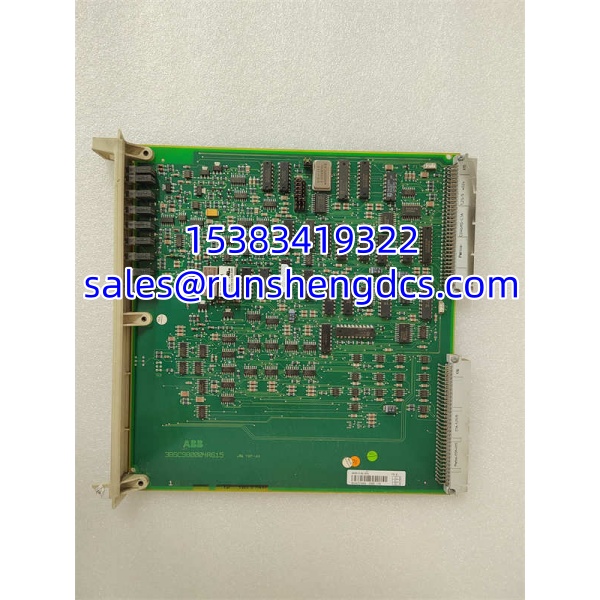
In legacy ABB DCS installations, the DSBC176 is not a general-purpose fieldbus gateway. It is a bus extender board used to carry the controller I/O bus from a local rack to remote I/O stations, improving signal integrity over longer cabinet-to-cabinet runs and allowing additional I/O segments to be added without redesigning the entire backplane layout.
The ABB DSBC176 3BSE019216R1 is typically found in older Advant and early 800xA environments where remote I/O expansion is required. Because it is discontinued, most available units come from decommissioned plants or refurbished inventory. For procurement and commissioning, the important checks are hardware revision, connector condition, slot compatibility, and whether the module is configured for the specific bus segment it will serve. Some third-party listings describe it as supporting PROFIBUS DP, PROFINET, or EtherCAT, but those protocol claims are not consistently verified by primary ABB documentation; treat it first as an ABB DCS bus extender unless the nameplate and system manual confirm otherwise.
QA/QC Transparency SOP
- Intake & Origin Verification — Confirm ABB branding, DSBC176 model marking, full order number 3BSE019216R1, serial number, and hardware revision. Reject units with bent backplane pins, cracked connectors, or corrosion.
- Visual & Mechanical Inspection — Check the card-edge connector, front-panel labeling, mounting hardware, and any option jumpers. Verify the physical dimensions match a VME-style rack card.
- Power & Bus Registration Test — Install in a compatible ABB DCS rack, apply power, and verify that the module powers up without fault indication. Confirm the controller recognizes the board on the local bus.
- Remote I/O Extension Test — Where a test rack is available, verify communication to a remote I/O segment through the extender. Check for bus timeouts, CRC errors, or intermittent dropouts.
- Firmware/Configuration Check — Record any firmware, dip-switch, or jumper settings. Compare with the existing system configuration to avoid address or segment mismatches.
- Final QC & Anti-Static Packaging — Document serial number, revision, test results, and physical condition. Pack in anti-static material with moisture protection and include photos of nameplate, connectors, and card-edge contacts.
Field Engineer Gotchas
- Do not treat it as a universal fieldbus gateway — DSBC176 is primarily an ABB DCS bus extender. Claims that it natively supports PROFIBUS DP, PROFINET, or EtherCAT should be verified against the actual module label and OEM manual before design decisions are made.
- Slot and rack compatibility — This is a VME-style card for specific ABB DCS racks. It will not fit standard DIN-rail PLC slots without the correct subrack.
- Bus termination and segment length — Incorrect termination or excessive cable length between local and remote racks can cause intermittent I/O faults that appear as CPU or power issues.
- Hardware revision mismatch — Surplus units may carry different revisions. A physically identical card may have different bus mapping or firmware behavior.
- Connector wear on legacy cards — Card-edge connectors and backplane pins degrade over time. Clean contacts and inspect for oxidation before assuming a bus fault is software-related.
- Remote I/O address conflicts — Adding a new extender or remote rack without verifying node addresses can cause duplicate addresses or lost I/O scans.
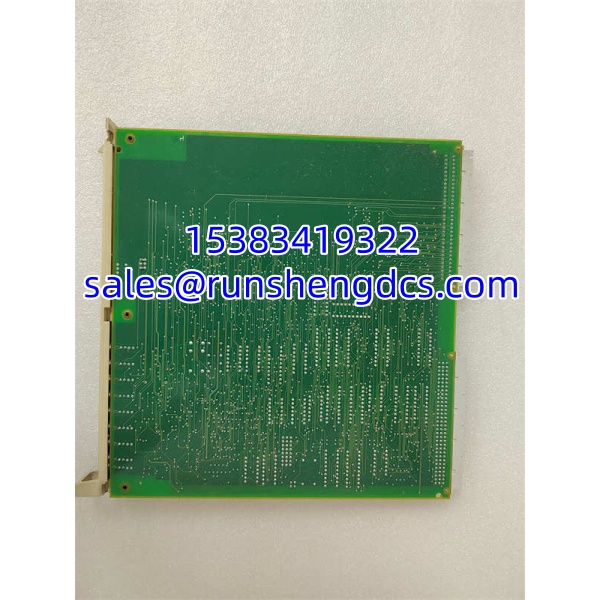
ABB DSBC176 3BSE019216R1
Application Scenarios
- Remote I/O expansion in power plant DCS — Extending the controller bus from a main cabinet to a remote I/O cabinet where additional analog and digital signals are required.
- Legacy Advant system maintenance — Replacing a failed bus extender card in an existing ABB DCS rack to restore communication to remote I/O stations.
- Brownfield migration support — Keeping remote I/O segments operational during phased migration from Advant to 800xA or newer architectures.
- Long-distance cabinet interconnection — Improving bus signal integrity between control room cabinets and field-side I/O racks.
FAQ
It is an ABB DCS bus extender board, typically used in Advant / 800xA environments, not a standard DIN-rail PLC module.
Does it support PROFIBUS DP, PROFINET, or EtherCAT?
Some third-party listings claim multi-protocol support, but this is not reliably confirmed by primary ABB documentation. Treat it as an ABB DCS bus extender unless the nameplate and system manual explicitly confirm a fieldbus protocol.
Can I install it in any ABB rack?
No. It requires a compatible ABB DCS subrack with the correct VME-style slot and bus architecture. Verify the rack type before ordering.
Is this module still available new from ABB?
No. 3BSE019216R1 is discontinued. Supply is mainly surplus, refurbished, or removed-from-service stock.
What should I check before purchasing?
Verify model, order number, hardware revision, connector condition, card-edge contact condition, and compatibility with the target DCS rack and bus segment.
Can it replace other DSBC modules directly?
Not automatically. DSBC series modules may look similar but serve different bus roles. Confirm the exact part number against the system documentation before substitution.
Is it suitable for new projects?
Only for maintaining existing ABB DCS installations. For new projects, confirm current ABB-recommended replacements and remote I/O architecture with the OEM.