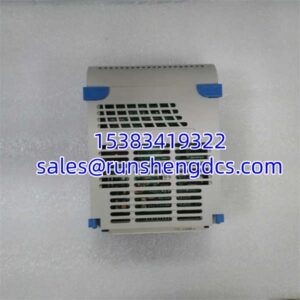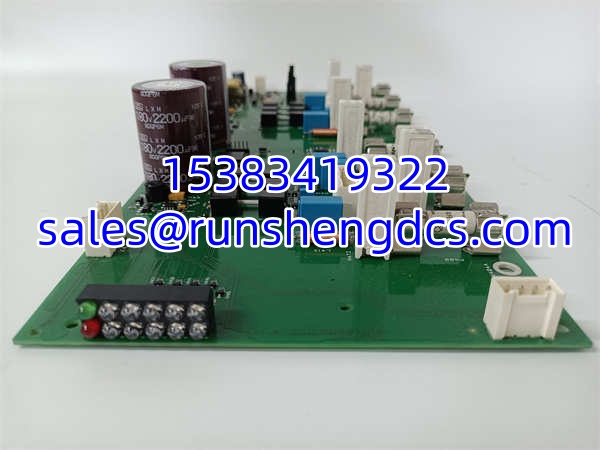
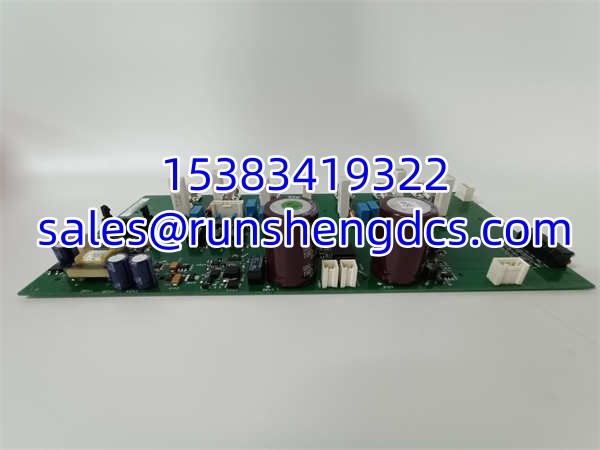

Description
Key Technical Specifications
- Product Model: DSAB-01C
- Manufacturer: ABB
- Product Type: Diode Rectifier Attachment Board
- Compatible System: ACS800 Industrial Drives
- Function: Rectifier Bridge Control & Firing
- Mounting: Internal Drive Chassis
- Interface: Internal Ribbon/Fiber Connection
- Application: AC Variable Speed Drives
- Condition: Tested Surplus / New Old Stock
- Warranty: 12 Months Functional
Product Introduction
The rectifier section is the front door of any ACS800 drive, and when it fails, the entire production line stops. The ABB DSAB-01C is the specific control brain for that section, managing the precise timing and monitoring required for the diode bridge to convert AC to DC cleanly. Without a functioning DSAB-01C, the drive cannot regulate input current or manage pre-charge sequences correctly. It is not just a passive board; it is the gatekeeper of DC bus stability.
Sourcing the DSAB-01C is usually an emergency maintenance task, not a planned upgrade. These boards are prone to failure from voltage spikes, heat cycling, or simply age-related capacitor degradation. Because the ACS800 platform is mature, OEM lead times can stretch into months. A verified, tested DSAB-01C from surplus stock is often the only way to get a machine back online within 24 hours. Bottom line — keep one on the shelf if you run critical ACS800 rectifiers.
QA/QC Transparency SOP
- Intake & Origin Verification: We inspect the DSAB-01C for physical damage, specifically checking for cracked solder joints near the heavy ribbon cables and verifying the label matches the PCB silkscreen.
- Live Functional Testing: Boards are tested on a live ACS800 test bench to verify firing pulse output and rectifier control logic under simulated load conditions.
- Electrical Parameter Tests: Technicians check for shorted gate driver outputs and verify isolation resistance between the control side and the high-voltage rectifier interface.
- Firmware/Config Verification: We read the onboard EEPROM to ensure the firmware revision matches the target ACS800 drive generation to prevent communication faults.
- Final QC & Anti-Static Packaging: After passing all tests, the is sealed in an ESD-safe bag with foam corner protectors to prevent connector damage during shipping.
Field Engineer Gotchas
- Ribbon Cable Damage: The flat ribbon cables connecting the to the rectifier bridge are fragile. If you pinch or crease them during installation, you will create intermittent faults that are a nightmare to diagnose. Handle with extreme care.
- Firmware Mismatch: Not all boards are identical internally. A board pulled from an older might not talk to a newer DDCS link. Always verify the firmware suffix or test on the bench before racking.
- Pre-charge Resistor Check: If the keeps blowing fuses or tripping on DC bus faults, check the pre-charge resistors and contactors first. A bad pre-charge circuit will kill a new in seconds.
- Thermal Paste/Grease: Some versions of the interface with heat sinks. Ensure thermal compound is applied correctly if required by your specific frame size. Overheating is a silent killer.
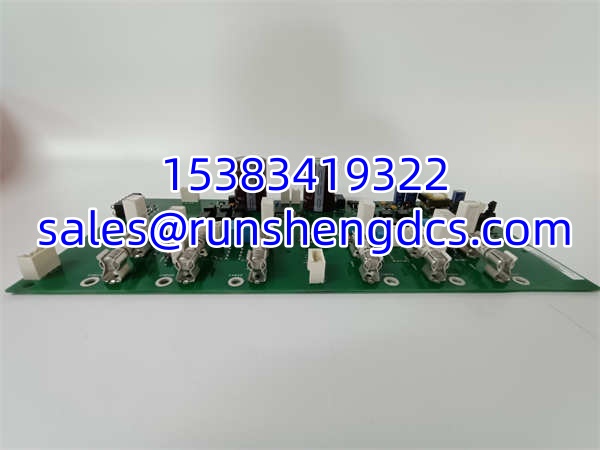
ABB DSAB-01C
Application Scenarios
- Cement Mill Drives: High-inertia loads that stress the rectifier during start-up; the manages the soft-charge and current limiting.
- Marine Propulsion: Harsh vibration and salt air environments where connector integrity on the is critical for reliability.
- Mining Conveyor Systems: Long cable runs causing voltage dips; the ensures the rectifier doesn’t misfire during brownout conditions.
- Case Study: A steel rolling mill had a recurring “Rectifier Overcurrent” fault on an -04. They replaced the IGBTs twice. We swapped in a known-good , and the fault vanished. The original board had a degraded current sensor amplifier that only drifted under high heat. Saved them a $15k motor rewind.
FAQ
- Can I use a DSMB-01C instead?
No. The DSMB-01C is typically for the inverter or supply unit control, while the is specifically for the diode rectifier attachment. They are not interchangeable. - Does this board need firmware updates?
Generally no, the firmware is static. However, it must be compatible with your main control board (e.g., RMIO, RDCU). Check your compatibility matrix. - Look for “Rectifier Bridge Fault,” “Pre-charge Fault,” or “DC Undervoltage” alarms that persist after checking fuses and pre-charge resistors. Visual inspection for burnt components is also key.
- Is this hot-swappable?
Absolutely not. The interfaces with high-voltage DC. Power down, wait for capacitor discharge, and lock out/tag out before touching this board. - What is the typical lead time for new OEM?
Often 12-20 weeks for a new from ABB. Surplus is usually 24-48 hours. Plan your spare parts strategy accordingly.