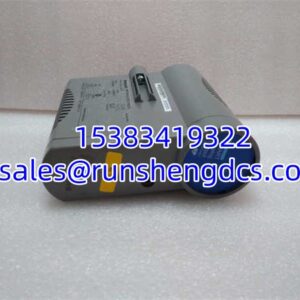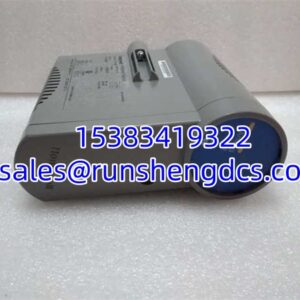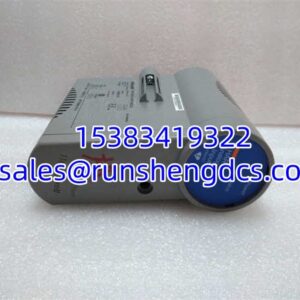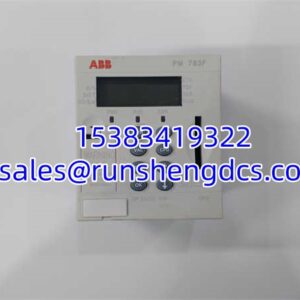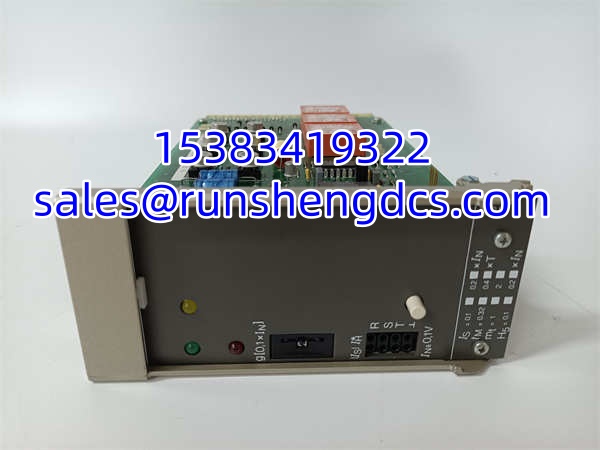

Description
Key Technical Specifications
| Parameter | Specification | Field Note |
|---|---|---|
| Part Number | HESG440355R3 | Core ABB identifier |
| Module Type | DI93A | Digital Input / Automation Processor |
| Core Function | Data Acquisition & Control Logic | Executes monitoring and I/O tasks |
| Interface | Digital Inputs | For field sensor integration |
| Connectivity | Multi-pin / Backplane | For system data exchange |
| Dimensions | Standard Rack Module | Verify mechanical footprint |
| Weight | Standard Industrial | Lightweight electronics |
| Status | Obsolete / Legacy | No new OEM support |
| Condition | Refurbished | Tested on ABB test bench |
| Warranty | 12 Months | Standard surplus warranty |
| Origin | ABB | Original manufacturer |
Product Introduction
Tracking down an ABB DI93A HESG440355R3 usually means your control panel is running on borrowed time. This isn’t a modern plug-and-play I/O card; it’s a legacy digital input and automation processor module designed for specific ABB control architectures. The ABB DI93A HESG440355R3 handles the grunt work: acquiring field data, executing control logic, and keeping the monitoring system alive.
You spec the ABB DI93A HESG440355R3 because the mechanicals are fine but the OEM stopped making these years ago. This module keeps your existing infrastructure running without a $100k panel retrofit. Expect aging components; the input optocouplers and backplane connectors are the usual suspects after 20+ years. It’s not about new features anymore; it’s about keeping the process stable until the next capital project. Bottom line — it works, but treat it like a vintage control card.
QA/QC Transparency SOP
- Intake & Origin Verification: We verify the ABB DI93A HESG440355R3 serial number and HESG440355R3 identifier against known production batches to identify revision-specific issues, specifically checking for aging input filtering components.
- Live Functional Testing: Units are powered up on an ABB test bench with simulated digital inputs. We verify the ABB DI93A HESG440355R3 can correctly register state changes and communicate across the backplane without dropping packets.
- Electrical Parameter Tests: All DC rails and input circuits are checked with a Fluke 87V for proper voltage levels and isolation. We verify the input thresholds match the specifications.
- Firmware/Config Verification: Internal jumpers and DIP switches are documented. We verify the configuration matches common factory defaults to prevent “Comm Fault” or “Input Fail” errors on install.
- Final QC & Anti-Static Packaging: Connectors are inspected for pin damage, conformal coating is checked for moisture, and the is sealed in static-shielding bags with desiccant.
Field Engineer Gotchas
- Backplane Connector Wear: The edge connectors wear out after decades of insertion cycles. Risk: Intermittent comm faults that come and go with temperature. Fix: Inspect the gold fingers before installing. If they’re worn thin, clean with contact cleaner or replace the card.
- Input Threshold Drift: The input circuits on the can drift over time. Risk: A 24V signal reads as “off” or noise triggers false “on” states. Fix: Test each input channel with a calibrated 24V source before commissioning. Don’t trust the LED indicators blindly.
- Jumper Configuration Hell: The often has internal jumpers for input filtering, sink/source selection, or addressing. Risk: Swapping a card from Panel A to Panel B without checking jumpers = wrong input behavior. Fix: Photograph the old card’s jumpers BEFORE pulling it. Label everything.
- Power Supply Sag: The is sensitive to 24VDC quality. Risk: Card resets or misreads inputs during motor starts. Fix: Check the 24V supply with an oscilloscope. If ripple exceeds 5%, add a filter cap or upgrade the PSU.
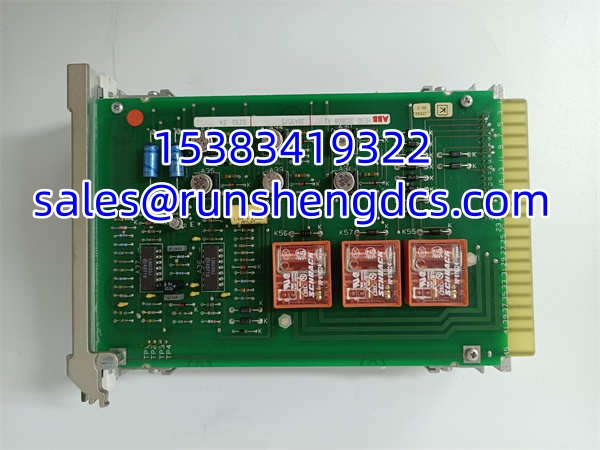
ABB DI93a HESG440355R3
Application Scenarios
- Legacy Manufacturing Lines: Automotive or packaging plants where the original ABB control panel is still running. The provides the exact digital input behavior the 20-year-old ladder logic expects.
- Power Generation Control: Older turbine or boiler control systems. The handles critical safety interlock inputs where retrofitting isn’t an option during a short outage window.
- Water/Wastewater SCADA: Municipal pump stations with aging ABB RTUs. The keeps the digital status reporting alive until the next SCADA upgrade project.
FAQ
Technically yes, but practically no. The uses a proprietary backplane protocol. Retrofitting would require replacing the entire rack and rewriting the control program. For most legacy systems, the engineering cost exceeds the machine’s value.
Usually, but verify the revision. ABB changed some input filtering in later revisions. If your control panel is pre-2000, confirm the hardware revision matches your system’s age.
Does this module support hot-swapping?
Absolutely not. The backplane is not designed for live insertion. Pulling the while powered can corrupt the backplane bus. LOTO first, power down the rack.
These are older input circuits. The optocouplers and filtering caps degrade with age. If you’re getting phantom inputs, check the field wiring for moisture first, then test the card’s input thresholds. Don’t assume the card is bad until you verify the field.
Can you repair the original board instead of replacing it?
Yes, but lead times are 3-6 weeks for obsolete components. A refurbished from stock gets you running in 24-48 hours. For critical processes, buy the spare now and send the old one for repair later.
Typically 24VDC nominal, but verify the exact spec on your card’s label. The may have different thresholds depending on the revision. Don’t assume 24V without checking.
We provide a pinout sheet with every shipment. Don’t trust internet PDFs; ABB changed pin assignments between revisions. Verify against the physical label and jumper settings on your .