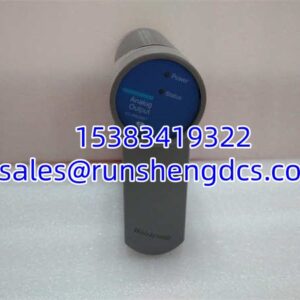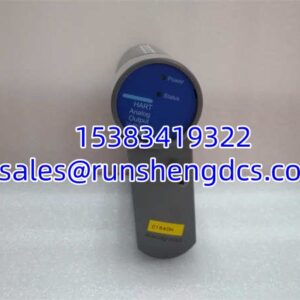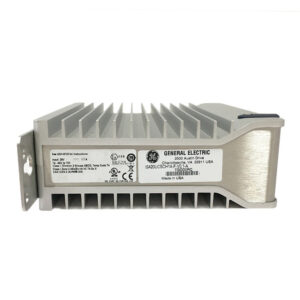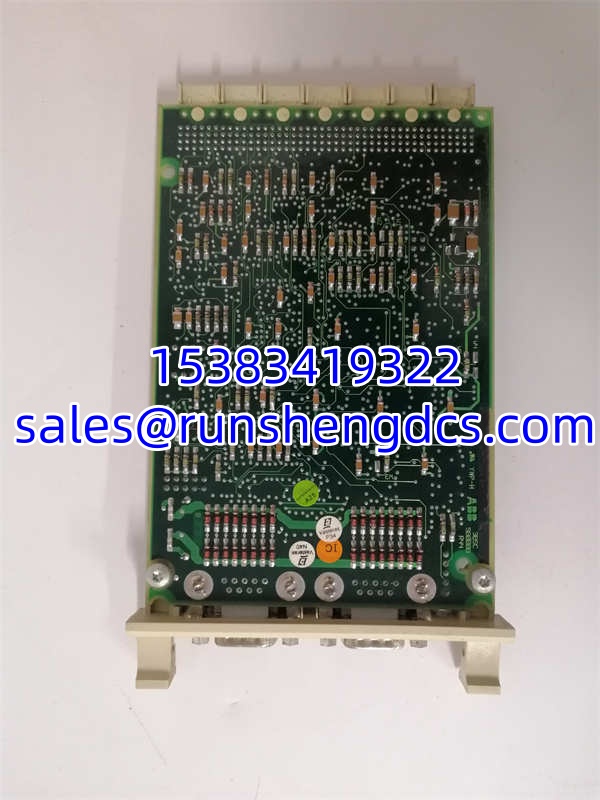

Description
Key Technical Specifications
| Parameter Name | Parameter Value |
|---|---|
| Product Model | CI534V02 3BSE010700R1 |
| Manufacturer | ABB |
| Product Series | Advant OCS / S800 I/O |
| Protocol Support | Modbus RTU / ASCII |
| Physical Interface | 2x RS-485 (Isolated) |
| Max Baud Rate | 115.2 kbps |
| Power Supply | 24V DC (Backplane or External) |
| Operating Temp | 0°C to +60°C |
| Humidity | 5% – 95% (Non-Condensing) |
| Dimensions | 108mm x 27mm x 238.5mm |
| Weight | 0.155 kg |
| Mounting | DIN Rail / S800 Bus |
Product Introduction
Integrating legacy S800 I/O with modern SCADA usually requires expensive protocol gateways, but the ABB CI534V02 3BSE010700R1 cuts that hardware out of the loop. It plugs directly into the S800 bus and provides two isolated RS-485 ports, acting as a native Modbus slave for your field data. It’s not a router; it’s a direct translation layer that keeps your old I/O talking to new systems without adding latency.
Engineers keep these in stock because the S800 bus is still everywhere, and finding clean comms modules is getting harder. With a 0°C to +60°C operating range, it handles unconditioned electrical rooms better than most modern IoT gateways. Bottom line: if your Modbus polling is timing out or dropping packets, this module is usually the first suspect or the first fix.
QA/QC Transparency SOP
We don’t trust “tested” stickers from surplus brokers. Every CI534V02 3BSE010700R1 undergoes a rigorous five-step validation to ensure it won’t orphan your I/O modules:
- Intake & Origin Verification: We trace the serial number against ABB production batches to filter out high-quality counterfeits. Visual inspection checks for cracked RS-485 terminal blocks or corroded bus connectors.
- Live Functional Testing: Module is mounted on a live S800 test rack with an AC800M controller. We force a Modbus poll (Function Code 03 & 16) and verify data integrity across both channels.
- Electrical Parameter Tests: Fluke 115 verifies the 24V DC rail stability and checks for continuity on all backplane pins. No open circuits or voltage drops under load.
- Firmware/Config Verification: We read the internal EEPROM to ensure no hidden fault flags or corrupted boot sectors exist from previous deployments. Firmware version is logged and matched to your spec.
- Final QC & Anti-Static Packaging: Module is sealed in ESD-safe shielding with a printed test report. No bare PCBs in bubble wrap.
Field Engineer Gotchas
- Termination Resistor Confusion: The CI534V02 has internal termination, but it’s not always enabled by default. Risk: Leaving termination off on a long run causes CRC errors; leaving it on at both ends causes signal reflection. Fix: Measure resistance across A/B with power off. You should see 60Ω (two 120Ω in parallel) if both ends are terminated, or 120Ω if only one end is. I’ve seen a tech spend 4 hours chasing “noise” that was just missing termination at the far end.
- Ground Loop Noise: RS-485 is differential, but ground potential differences still kill transceivers. Risk: Connecting the shield to signal ground at both ends creates a ground loop that fries the PHY. Fix: Ground the shield at one end only (usually the controller side). Use the dedicated shield terminal, not the signal common.
- Baud Rate Mismatch: The module doesn’t auto-negotiate baud rate. Risk: If the DIP switch or config doesn’t match the master, you get silence, not errors. Fix: Verify the hardware DIP switch settings and the software configuration. I once swapped a module that was set to 9.6k via DIP, but the config said 19.2k. It took 20 minutes to realize the hardware won over the software.
- Bus Power Draw: This module draws current from the bus. Risk: Overloading the power supply with too many comms modules causes brownouts and random I/O drops. Fix: Check the power budget in the hardware configuration. If you’re near the limit, add an external 24V supply to the CI534V02.
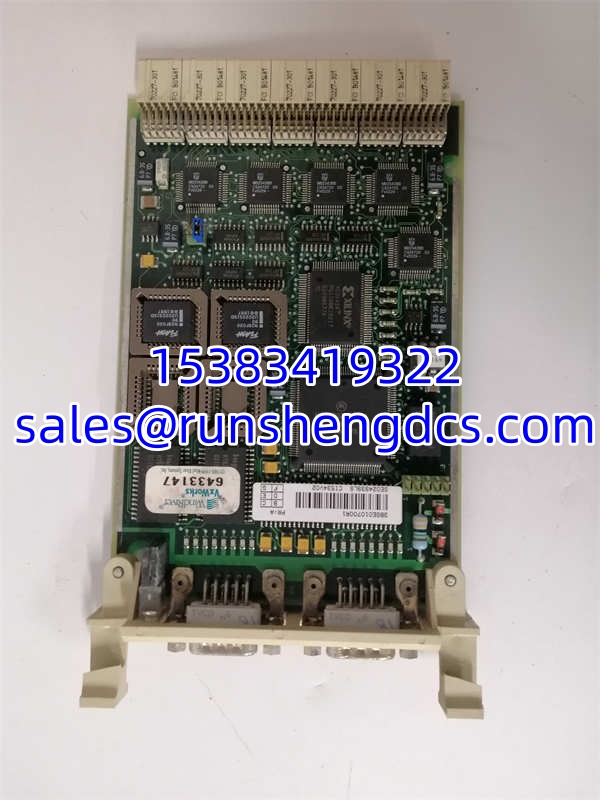
ABB CI534V02 3BSE010700R1
Application Scenarios
- Water/Wastewater SCADA: Connecting remote lift station I/O to a central Modbus TCP master, using the CI534V02’s isolated ports to survive ground loops in wet pits.
- Legacy Manufacturing Lines: Bridging 20-year-old Advant OCS controllers to new MES systems without replacing field wiring or I/O racks.
- Energy Management Systems: Polling power meter data from I/O modules where the acts as the single point of aggregation for multiple meters.
FAQ
Is this module hot-swappable?
The bus supports hot-swap, but the ’s internal capacitors can cause a voltage dip on the backplane. I’ve seen it reboot neighboring I/O modules. Shut down the bus. It takes 30 seconds and saves you a headache.
Can I use this for Modbus TCP?
No. The is strictly serial RTU/ASCII. For TCP, you need a CI535 or an external serial-to-Ethernet converter. Don’t try to hack it; the firmware doesn’t support it.
What’s the max cable length?
1200 meters at 9.6k baud. At 115.2k, keep it under 200 meters. If you’re pushing 500m at high speed, drop the baud rate or add a repeater. Physics doesn’t care about your schedule.
Does it support ASCII mode?
Yes, but verify the configuration. Most installations use RTU. If you switch to ASCII, the frame delay and character timeout settings change. Check the manual for the exact timing parameters.
How do I verify the firmware version?
Connect via the bus using the hardware configuration tool. The “Product Information” dialog will show the exact firmware revision. Match this to your controller’s OS version before swapping.
Is the 3BSE010700R1 the same as 3BSE010700R2?
Mechanically, yes. Electrically, usually. But firmware compatibility can vary. Always verify the exact suffix on your failed unit. We test for cross-revision compatibility, but your specific application might have unique constraints.
Do I need to terminate both ends of the bus?
Yes. Always. 120 ohms at the first and last device. The has a DIP switch for internal termination on some revisions, but I prefer external resistors for reliability. Internal switches corrode over 20 years.