
Description
Key Technical Specifications
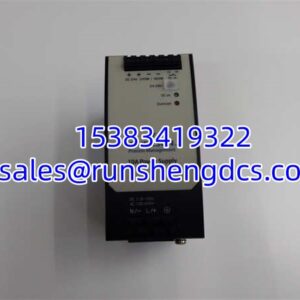
- Product Model: 3BSE008062R1 PM633
- Manufacturer: ABB
- Product Type: CPU / Processor Module
- System Platform: AC 800M
- RAM Memory: 16 MB
- Battery Backup RAM: 2 MB
- Redundancy: Supported (Redundant Pair)
- I/O Interface: S800 I/O via TP830/TP840
- Communication: 2 x Ethernet (RJ45), 1 x Serial (RS-232)
- Mounting: DIN Rail (Base Unit PM633)
- Dimensions: 50mm (W) x 125mm (H) x 110mm (D)
- Weight: ~0.6 kg
Product Introduction
The CPU is the brain, but it’s also the single point of failure if you don’t plan for it. The ABB 3BSE008062R1 PM633 is the workhorse processor for the AC 800M platform, designed to run control logic, manage redundancy, and talk to S800 I/O modules without breaking a sweat. It’s not the newest chip on the block, but in industrial automation, “new” often means “untested in the field.” This unit has been running refineries and power plants for decades for a reason.
Engineers trust the ABB 3BSE008062R1 PM633 because it’s a known quantity. With 16 MB of RAM and 2 MB of battery-backed memory, it handles complex control strategies and retains data through power cycles. The real value is in the redundancy support; when paired with another PM633 and the correct base unit, it provides hot standby protection with bumpless transfer. Bottom line — it’s the standard for a reason, and finding a verified spare is critical for keeping legacy AC 800M systems alive.
QA/QC Transparency SOP
A CPU isn’t just a circuit board; it’s the entire control strategy. We don’t ship blind. Here’s the protocol for every ABB 3BSE008062R1 PM633:
- Intake & Origin Verification: We trace the lot code and sourcing history. If it came from a flooded site, a fire, or an unverified liquidation, it’s scrapped. No exceptions.
- Live Functional Testing: Mounted on a live AC 800M test rack. We load a test project, verify logic execution, and run it for 24 hours under load. We check for thermal issues and memory leaks.
- Electrical Parameter Tests: Fluke 115 checks on 24VDC input and internal voltage rails. We verify the battery backup circuit holds voltage and the “Battery Low” LED functions correctly.
- Firmware/Config Verification: We read the firmware version and hardware revision via the serial port. We verify the redundancy sync works with a test partner CPU. Critical: We log the exact revision to prevent mismatch issues.
- Final QC & Anti-Static Packaging: Functional test sticker with date, firmware version, and test results. Sealed in ESD-safe bag with desiccant.
Field Engineer Gotchas
Redundancy Sync Failures:
Don’t assume two PM633s will just sync. They must be the exact hardware revision and firmware version. A “Rev A” and a “Rev B” will refuse to sync or cause constant switchover storms. Fix: Check the label on the side of the module. Match the suffix and FW version exactly. War Story: Saw a plant with “redundant” CPUs that kept fighting each other because one was a factory-refurbished unit with a different internal ROM. Verify everything.
Battery Backup Reality:
The 2 MB backup RAM relies on an internal capacitor/battery combo. If the unit has been sitting on a shelf for 5 years, that cap is likely dead. You’ll get “Battery Low” alarms the moment you power it up, and you’ll lose your program on power loss. Fix: Always replace the backup battery/capacitor kit during installation, regardless of “New Surplus” status.
S800 I/O Communication:
The talks to S800 I/O via the TP830/TP840 terminal base. If you’re getting “I/O Bus Fault,” check the TP830 first. The is rarely the problem; it’s usually a dirty connector or a failed TP830. Fix: Reseat the CPU and TP830. Clean the backplane pins with contact cleaner. Don’t blame the CPU until you’ve ruled out the base.
Firmware Compatibility:
The supports specific firmware versions. Don’t try to flash a with firmware meant for a PM866. You’ll brick it. Fix: Use the official ABB Firmware Update Tool and verify the target model in the software before starting.
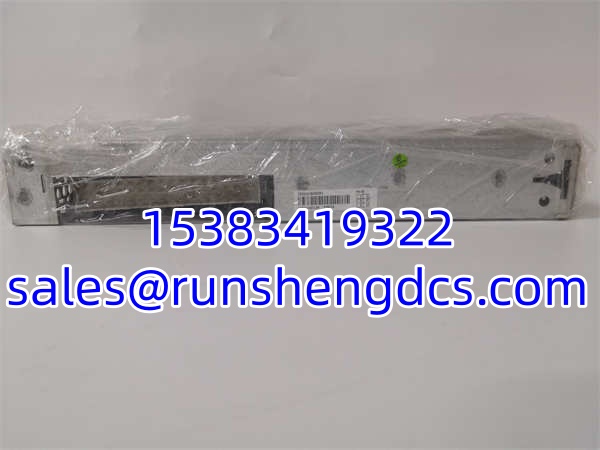
ABB 3BSE008062R1 PM633
Application Scenarios
Power Generation Turbine Control:
The is the standard CPU for steam and gas turbine control systems. Its 16 MB RAM handles the complex PID loops, valve sequencing, and safety interlocks required for turbine protection. The redundancy feature is non-negotiable here; a single CPU failure cannot trip the turbine.
Oil & Gas Process Control:
In refineries and LNG plants, the manages distillation columns, compressors, and flare systems. Its ability to handle large I/O counts via S800 modules and maintain data integrity during power glitches makes it ideal for continuous process applications.
Water & Wastewater Treatment:
Large municipal plants use the for SCADA and local control. The battery backup RAM is critical here for retaining pump runtimes, alarm logs, and flow totals during unexpected outages.
Case Study: A chemical plant had a fail after a lightning strike. The replacement was a “New Surplus” unit with a different firmware revision. The system refused to go redundant, and the plant ran single-CPU for 3 months until a second failure caused a 4-hour shutdown. Lesson: Always verify firmware and hardware revision before installing a spare.
FAQ
Can I hot-swap this CPU?
No. The is not hot-swappable. You must power down the rack, replace the CPU, and power up. The redundancy switchover is automatic, but physical replacement requires a shutdown.
is the older, 16 MB RAM CPU. PM866 is the newer, 64 MB RAM CPU with faster processing. They are not pin-compatible. You cannot swap a for a PM866 without changing the base unit and potentially the entire I/O configuration.
Does it support Ethernet/IP?
No. The has native ABB Ethernet (for Controller-to-Controller or OPC). For Ethernet/IP, you need a separate communication module like the CI854 or CI856.
Why is my “Redundancy” LED red?
Check the firmware and hardware revision. If they match, check the sync cable (if using external sync). If the cable is good, one CPU has a hardware fault. Fix: Swap the CPUs one at a time to isolate the bad unit.
Can I use this with S800 I/O?
Yes, but you need the correct terminal base. The mounts on a base unit (like -1) and connects to I/O via the TP830/TP840. Don’t try to plug I/O directly into the CPU.
What happens if the battery dies?
You lose the 2 MB backup RAM. Your program, configuration, and historical data will be wiped on power loss. Fix: Replace the battery/capacitor kit immediately. Don’t wait for the alarm.
Is this CPU still supported by ABB?
The is discontinued. ABB supports it with spare parts and firmware updates, but no new features. For new projects, use the PM866 or AC 800M High-Performance CPU.