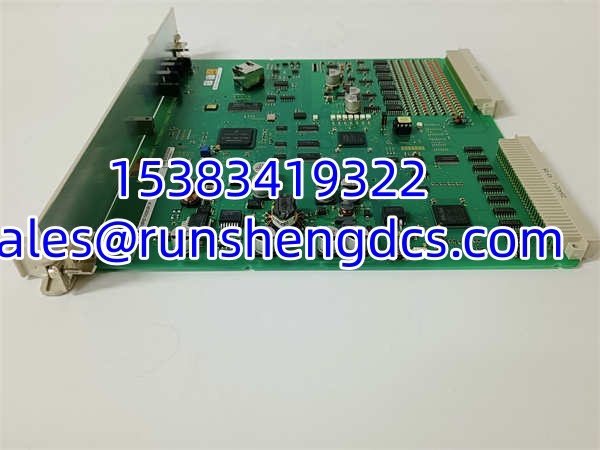

Description
Key Technical Specifications
| Parameter | Value / Notes |
|---|---|
| Product Type | Digital Input Module |
| Model | 216EA62 |
| Channel Count | 16 channels |
| Input Voltage | 24VDC |
| Output Voltage | 24VDC |
| Rated Input Current | 2A |
| Power Consumption | <15W (verify with OEM datasheet) |
| Efficiency | >90% (per supplier listing) |
| Protection | Overload, short-circuit |
| Indicators | LED status indicators per channel |
| Dimensions | Approx. 100mm × 65mm × 25mm |
| Weight | Approx. 250g |
| Standards | IEC 60950-1, UL 508, CE (per supplier listing) |
| Related P/Ns | 1MRB150083R1F, 1MRB178066R1F |
Product Introduction
You pull a faulted DI card out of a running control cabinet and the process is sitting there blind — no status on 16 critical interlock signals. That is the exact scenario where having a known-good replacement on the shelf matters. The ABB 216EA62 is a 16-channel digital input module that reads discrete field signals (limit switches, proximity sensors, relay contacts, interlock statuses) and converts them into clean 24VDC logic levels that the controller can scan and act on.
The module handles signal conditioning, isolation, and basic protection in a compact form factor. With overload and short-circuit protection built in, it shields the controller backplane from field-side faults — a blown field wire should not take down the entire I/O rack. The 1MRB150083R1F and 1MRB178066R1F part numbers appear alongside 216EA62 in surplus listings, likely representing different revision levels or ordering configurations. The key point: verify that the full part number on the replacement matches what your controller firmware expects, because a revision mismatch can cause channel mapping errors or communication timeouts.
QA/QC Transparency SOP
A reputable surplus supplier should run this sequence before shipping a DI module:
- Intake & Origin Verification — Confirm the model marking reads 216EA62 on the PCB or enclosure label. Check for ABB branding, the full part number (1MRB150083R1F or 1MRB178066R1F), and any revision or date codes. Inspect the board for physical damage, cold solder joints, or burnt traces.
- Visual & Mechanical Inspection — Examine all terminal blocks for cracked housings, corroded pins, or loose connections. Verify the board mounts cleanly into the target backplane slot without binding. Check that LED indicators are intact and not cracked.
- Live Functional Testing — Apply rated 24VDC power. Verify the module powers up without fault indicators. Inject a known 24VDC signal into each of the 16 channels individually and confirm the corresponding LED illuminates and the controller registers the correct bit state. Test all 16 channels — do not spot-check.
- Protection Verification — Briefly short each channel input to ground and verify the module does not latch up or damage the power supply. Confirm the short-circuit protection resets cleanly after the fault is removed.
- Final QC & Anti-Static Packaging — Clear any stored configuration to factory defaults. Package in ESD-safe bag with foam padding to protect terminal blocks during transit. Include a test report documenting channel-by-channel pass/fail results.
Field Engineer Gotchas
Gotcha #1: Revision mismatch between 1MRB150083R1F and 1MRB178066R1F.
These two numbers show up together in surplus listings, but they may represent different hardware revisions with different firmware expectations. A controller running V3.x firmware might reject a module with a newer or older revision code. Check your controller’s hardware compatibility list before ordering.
Gotcha #2: Assuming 2A rated input current means per-channel.
The 2A rating listed in supplier specs likely refers to the total module input current budget, not per-channel capacity. Each DI channel typically handles much less — usually in the milliamp range for standard 24VDC logic signals. Do not wire a 2A load directly through a single DI channel expecting it to handle that current.
Gotcha #3: Backplane power sequencing.
Some ABB controller platforms require the I/O modules to be powered in a specific sequence relative to the CPU. Installing or removing a DI module while the backplane is energized can cause bus communication errors or corrupt the I/O configuration table. Power down the rack before swapping modules unless the platform explicitly supports hot-swap.
Gotcha #4: Floating inputs causing phantom states.
Unused DI channels left unconnected can float and register random on/off states, triggering false alarms in the controller. Tie all unused channels to a defined logic level (typically ground for a “0” state) through pull-down resistors, or configure the controller software to mask unused channels.
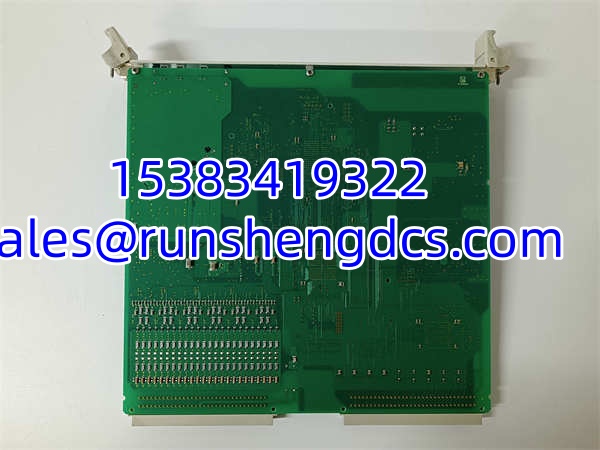
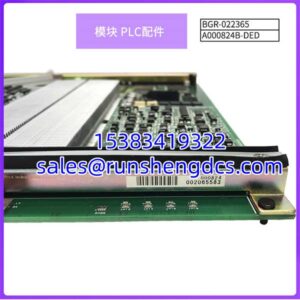
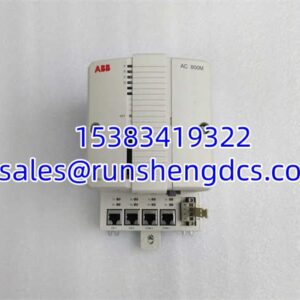
ABB 216EA62 1MRB150083R1F 1MRB178066R1F
Application Scenarios
- Power plant turbine protection systems — The 216EA62 reads discrete trip signals from vibration sensors, lube oil pressure switches, and overspeed detectors, feeding status into the turbine control system for automated shutdown logic.
- Manufacturing line safety interlocks — Emergency stop buttons, guard door switches, and light curtain outputs wired through the DI module to the safety PLC, ensuring the controller knows the exact state of every safety device on the line.
- Water treatment plant valve status monitoring — Open/close limit switches on motorized valves across clarifiers, filter banks, and chemical dosing systems report back through the DI module to the SCADA system.
- Substation auxiliary monitoring — Breaker position indicators, alarm relay contacts, and ground fault detection signals fed into the substation automation controller via the DI module.
Case Study (Anonymized): A food processing plant in the Midwest had an ABB controller system running their packaging line. A DI module (216EA62) started showing intermittent faults — channel 7 would randomly toggle between on and off states, causing the controller to think a safety guard door was opening and closing. The maintenance team swapped in a surplus replacement module. The phantom fault disappeared immediately. Root cause: the original module had a degraded input buffer IC on channel 7, likely damaged by a voltage spike from a nearby contactor switching event. The fix included adding a transient suppression diode across the field wiring for that channel to prevent recurrence.
FAQ
Are 1MRB150083R1F and 1MRB178066R1F interchangeable?
Not confirmed. Both appear in listings alongside 216EA62, but without ABB’s official cross-reference documentation, I cannot guarantee they are functionally identical. They may differ in firmware revision, channel configuration, or backplane interface. Check your controller’s hardware configuration tool — if it accepts both part numbers, you are safe. If it only recognizes one, match that one exactly.
How many channels does this module have?
16 digital input channels, per supplier specifications. Each channel accepts a 24VDC discrete signal and reports its state to the controller.
What voltage does this module operate at?
24VDC for both input signals and module power supply. Do not apply AC voltage or voltages outside the 24VDC nominal range without verifying the acceptable tolerance band in the OEM manual.
Does this module support hot-swapping?
That depends entirely on the controller platform it plugs into, not the module itself. Some ABB controller backplanes allow hot-swap of I/O modules; others do not. Check your controller documentation before attempting a live swap.
What protection does this module provide?
Overload and short-circuit protection on the input channels, per supplier specs. This means a field wiring short should not destroy the module or propagate damage back to the controller backplane. It does not replace proper field-side fusing or isolation.
Is this module still manufactured by ABB?
The fact that it circulates primarily through surplus channels suggests it may be in a mature product lifecycle phase. Contact ABB directly with the full part number to confirm current production status and any recommended replacements.