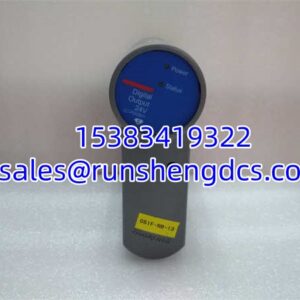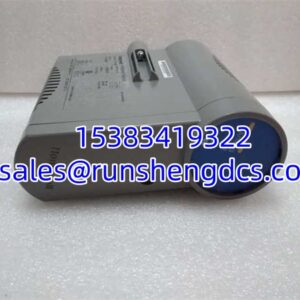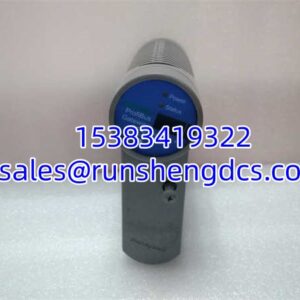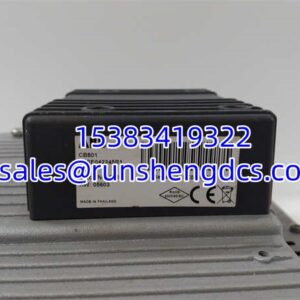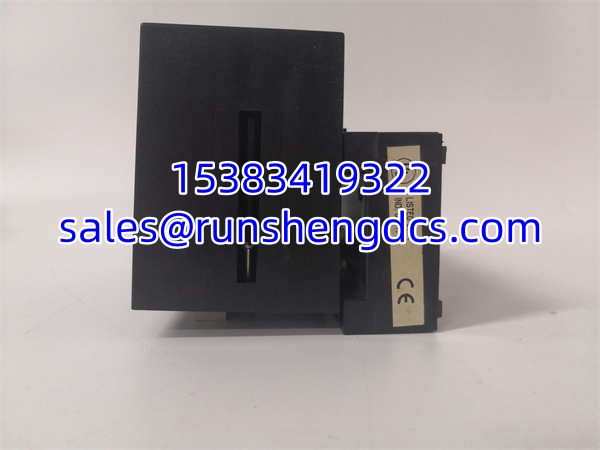

Description
Key Technical Specifications
| Parameter | Specification |
|---|---|
| Product Type | Programmable Processor Unit (Central Unit) |
| System Platform | ABB Procontic CS31 / FK3 |
| Bus System | CS31 bus (proprietary fieldbus for distributed I/O) |
| Function | Central controller — executes logic, manages remote I/O, handles diagnostics |
| Diagnostic Access | Memory address SEG:0h / OFFSET:8660h (function block COPY) |
| Error Reporting | FK3 error number 17d (units produced after April 1996, Index J+) |
| Mounting | Control room panel / module-style rack |
| Remote Unit Support | Works with 07KT31, 07KR91, 07KT92, 07KT93 remote units |
| Bus Fault Detection | Detects open circuit and short circuit on CS31 bus segments |
| LED Indicators | ERRORS “IN” / “OUT” indicators for bus segment status |
| Related Models | 07KT31 (remote unit), 07KR91, 07KR51 |
Product Introduction
The Procontic CS31 was ABB’s distributed I/O control architecture back when most plants still ran on hardwired relay logic or early PLCs. The 07KR31 sits at the top of that hierarchy as the central unit — the brain that scans the CS31 bus, polls remote I/O racks, executes the control program, and reports faults back to the operator. It’s not a standalone PLC in the modern sense. It’s a bus master controller that depends on its remote units (07KT31, 07KR91, etc.) for field I/O.
This unit has been out of production for a long time. You’ll find it in older steel mills, pulp and paper plants, and water treatment facilities that were built around the Procontic ecosystem. The FPR36000227R1202-S suffix indicates a specific hardware revision. Units manufactured after April 1996 (Index J and later) added improved diagnostic reporting — specifically FK3 error number 17d for bus faults — which older index versions lack. That distinction matters when you’re troubleshooting or swapping units in an existing installation.
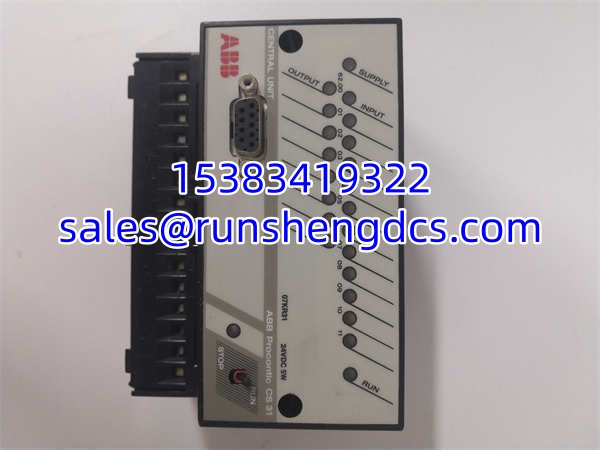
ABB 07KR31 FPR36000227R1202-S
QA/QC Transparency SOP
- Intake & Origin Verification: Confirm the full model number 07KR31 and the suffix FPR36000227R1202-S are legible on the module label. Check the index letter (e.g., J, K, etc.) — this determines diagnostic capability. Inspect for physical damage: bent pins on the backplane connector, cracked housing, corrosion on contact edges.
- Live Functional Testing: Mount the unit on a compatible CS31 backplane or test rack. Apply rated supply voltage. Verify the unit boots, the status LED illuminates, and the bus initializes. Connect a known-good remote unit (07KT31) and confirm the central unit polls it without bus errors.
- Electrical Parameter Tests: Measure supply current draw against the datasheet specification. Check insulation resistance between power input and signal bus connections. Verify backplane connector pin continuity — a single bent or corroded pin can cause intermittent bus faults that are maddening to chase.
- Firmware/Config Verification: If the unit has onboard memory or configuration storage, read out the contents using the appropriate ABB programming tool. Compare the firmware version against what the existing system expects. A mismatch can cause the central unit to fail to recognize remote units or to misinterpret diagnostic codes.
- Final QC & Anti-Static Packaging: Clear any site-specific configuration data unless the buyer requests retention. Package in anti-static shielding with connector protectors installed. Include a test record documenting power-on self-test results, bus initialization status, and remote unit communication verification.
Field Engineer Gotchas
Index Version Determines Diagnostic Capability
Units produced before April 1996 (pre-Index J) report bus faults differently than later versions. The older units require you to read memory address SEG:0h / OFFSET:8660h using the COPY function block — if the value reads 2Ah, a bus fault exists. Later units (Index J+) report it as FK3 error 17d. If you drop a pre-J unit into a system that was programmed to read error 17d, the diagnostics won’t work. Check the index stamp on the label before installing.
Bus Segment Isolation After a Fault
When the 07KR31 detects an open or short circuit on the bus, it isolates the faulted segment. The segment above the fault continues running. The segment below goes dead. This is by design — but if your maintenance team doesn’t understand this behavior, they’ll spend hours chasing a “dead” remote unit that’s actually just isolated by the central unit’s fault protection. Read the ERRORS IN/OUT LEDs first. They tell you which side of the break is affected.
Backplane Connector Is the Weak Point
These modules are 25+ years old. The edge connector that mates with the backplane corrodes, especially in humid control rooms. Intermittent communication faults that come and go with temperature changes almost always trace back to dirty or oxidized connector contacts. Clean the edge connector with isopropyl alcohol and a lint-free swab before installation. Don’t use abrasive cleaners.
Don’t Mix 07KR31 and 07KR91 Without Checking
The 07KR91 uses a completely different diagnostic memory map (SEG:C000h / OFFSET:0100h). They’re not drop-in replacements for each other. The physical form factor may look similar, but the bus protocol handling and diagnostic addressing differ. Verify your system documentation specifies 07KR31 before ordering.
Application Scenarios
- Steel mill continuous casting lines: Older casting machines in European and Asian steel plants used Procontic systems with 07KR31 central units managing dozens of remote I/O racks along the casting line. The central unit coordinates mold level control, withdrawal speed, and cooling water flow.
- Pulp and paper machine drives: Paper machines with section drives controlled via Procontic systems rely on the 07KR31 to coordinate speed references across multiple drive sections, maintaining web tension and synchronization.
- Water treatment plant SCADA front-ends: Municipal water plants built in the 1990s used systems as the local control layer beneath SCADA. The 07KR31 manages pump sequencing, valve control, and level monitoring across remote well sites.
Field Case (Anonymized): A cement plant in Eastern Europe had a Procontic system controlling their raw mill feed system. The 07KR31 central unit started reporting intermittent bus faults — the ERRORS LED would flash, then clear itself within seconds. Maintenance replaced the unit twice with surplus 07KR31 modules, but the faults persisted. A field engineer finally traced the issue to a corroded bus cable connector at a remote unit junction box near the mill motor. The intermittent corrosion-induced open circuit was causing the central unit to repeatedly isolate and rejoin bus segments. Cleaning and resealing the connector eliminated the fault. The lesson: the 07KR31 diagnostic system works correctly — but you have to look at the physical bus, not just the central unit, to find the root cause.
FAQ
Is the 07KR31 still supported by ABB?
No. The Procontic platform is a legacy product line that has been discontinued for years. ABB’s current automation platforms (AC800M, AC500) do not natively support bus modules. If you need long-term support, plan a migration to a modern platform. The 07KR31 is only available through surplus and third-party channels.
Can I substitute a 07KR51 for a 07KR31?
Not without verifying system compatibility. The 07KR51 is a related model in the Procontic family, but differences in bus handling, memory map, and firmware may prevent a direct swap. Check your system documentation and compare the hardware manuals for both units before attempting substitution.
What programming tool do I need for the 07KR31?
The Procontic system uses ABB’s legacy programming environment specific to the FK3/ platform. This is not the same as the tools used for AC800M or AC500 systems. You’ll need the original programming software and a compatible interface cable. These tools are increasingly difficult to source — check with ABB service partners who maintain legacy system support.
How do I reset a bus fault on the 07KR31?
For units before Index J: use the COPY function block to write 0 to memory address SEG:0h / OFFSET:8660h. For Index J and later: the fault may auto-clear once the physical bus fault is resolved, or you may need to acknowledge it through the FK3 error handling routine (error 17d). In both cases, fix the physical fault first — resetting without addressing the root cause just puts you back where you started.
What’s the difference between the 07KR31 and 07KT31?
The 07KR31 is the central unit (bus master/controller). The 07KT31 is a remote unit (I/O expansion module). They work together — the 07KR31 manages the bus and executes control logic, while the 07KT31 provides field I/O points at a remote location. You need at least one 07KR31 to run a system, and typically multiple 07KT31 units distributed around the plant.
Can I run the 07KR31 without any remote units connected?
Technically, the central unit will power up and run its own internal diagnostics without remote units. But without remote I/O, it has no field inputs or outputs to work with. It’s like a brain with no hands. The unit exists to manage remote I/O — running it standalone defeats its purpose.