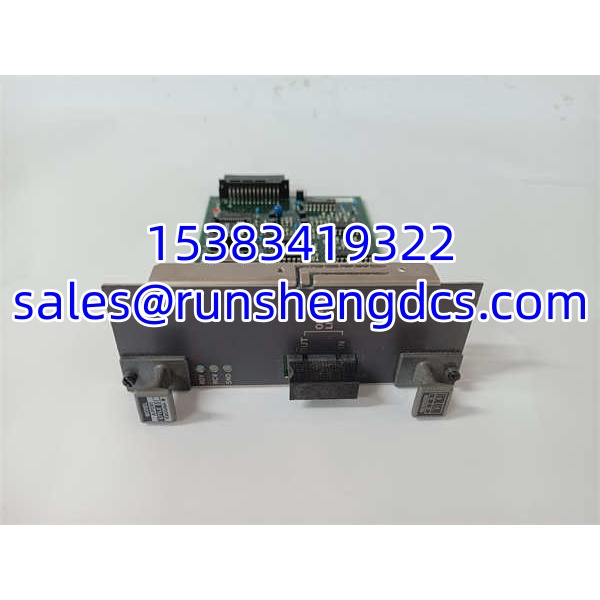

Description
Key Technical Specifications
| Parameter | Value |
|---|---|
| Model | AIP591 |
| Manufacturer | YOKOGAWA |
| Product Type | Optical transceiver / fiber optic communication module |
| System Platform | YOKOGAWA CENTUM / CENTUM VP DCS family |
| Primary Function | Converts electrical signals to optical signals and optical signals to electrical signals for DCS communication |
| Signal Processing | High-speed digital signal processing with advanced modulation for low bit-error-rate transmission |
| Interface | Fiber optic port (connector type and wavelength to be verified against physical label) |
| Supported Rates/Distances | Multiple rates and distances supported per product family; confirm against label and OEM datasheet |
| Hot Swap | System-dependent; follow OEM CENTUM VP maintenance procedures |
| Supply Voltage | Derived from host DCS rack/backplane; verify installed chassis configuration |
| Operating Temperature | Verify against installed CENTUM VP hardware datasheet |
| Certification | System-level certifications per installed CENTUM VP configuration |
Product Introduction
In a CENTUM VP architecture, fiber-optic links carry control network traffic between controllers, I/O subsystems, and operator stations. The AIP591 sits at the physical layer of that communication chain — it is the optical transceiver that converts electrical signals from the DCS backplane into optical signals for fiber transmission, and converts incoming optical signals back into electrical form.
This is not a general-purpose I/O module or a standalone PLC. It is a communication-layer component specific to Yokogawa DCS hardware. Because this part is no longer actively marketed by Yokogawa, procurement should be treated as legacy spare acquisition. The critical verification points are the label match (AIP591), physical condition of the fiber optic connector and electrical contacts, and compatibility with the installed CENTUM VP rack generation.
QA/QC Transparency SOP
- Intake & Origin Verification: Confirm YOKOGAWA labeling, model AIP591, serial number, and hardware revision. Reject units with cracked housings, damaged fiber optic connectors, corroded electrical contacts, or missing mounting hardware.
- Visual & Mechanical Inspection: Inspect the fiber optic port for contamination, scratches, or physical damage. Verify the electrical connector pins are straight and free of corrosion. Check for signs of forced insertion or connector misalignment.
- Optical Port Verification: Inspect fiber optic connector end-face for contamination using appropriate inspection equipment. Verify the connector type matches the installed system (e.g., ST, SC, LC — confirm against label).
- Functional Testing: Install the module into a compatible CENTUM VP test rack. Power up and verify the module is recognized by the system. Confirm link status indicators show normal operation when connected to a known-good fiber link.
- Final QC & Anti-Static Packaging: Photograph labels, fiber optic port, electrical connector, and PCB condition. Pack in anti-static bag with rigid foam support and fiber optic port dust caps installed. Include test summary, model number, and observed operating status.
Field Engineer Gotchas
- Label verification is critical. Third-party listings vary in how they describe this part. Always verify the physical label reads AIP591 and matches the Yokogawa part numbering convention before procurement.
- Fiber optic connector hygiene. Contaminated or scratched fiber optic connectors are the most common cause of intermittent DCS communication faults. Always install dust caps when the module is not connected and clean connectors with proper fiber optic cleaning tools before mating.
- Wavelength and rate compatibility. Optical transceivers must match the wavelength and data rate of the linked equipment. A mismatched transceiver will not establish a link. Verify specifications against both ends of the fiber link.
- Rack generation compatibility. CENTUM VP hardware has evolved across multiple generations. An from one generation may not be mechanically or electrically compatible with a different rack generation. Confirm the rack model and slot type before ordering.
- Do not confuse with I/O modules. The AIP prefix in Yokogawa nomenclature covers various module types. The is a communication/transceiver module, not an analog or digital I/O card. Ordering it expecting I/O channels will result in a non-functional installation.
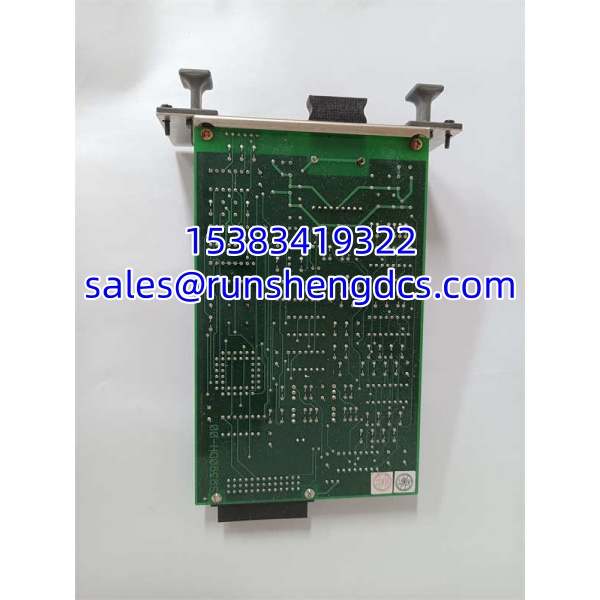
YOKOGAWA AIP591
Application Scenarios
- CENTUM VP controller-to-controller communication: Provides fiber-optic connectivity between redundant controller pairs or between controllers in different racks.
- DCS network extension: Enables long-distance communication between control room and remote I/O stations via fiber optic cable, leveraging the noise immunity and distance capabilities of optical transmission.
- Legacy system maintenance: Replacement for failed or degraded optical transceivers on existing CENTUM VP installations where fiber optic links have developed communication errors.
- Commissioning and troubleshooting: Used during system commissioning to verify fiber optic link integrity and isolate communication faults between DCS nodes.
FAQ
It is a Yokogawa optical transceiver module for CENTUM / CENTUM VP DCS systems, converting electrical signals to optical signals and vice versa for fiber-optic communication.
What system does it belong to?
YOKOGAWA CENTUM / CENTUM VP DCS family.
Is it an I/O module?
No. It is a communication-layer optical transceiver, not an analog or digital I/O card.
Can I use any fiber optic cable with it?
The fiber type (single-mode vs. multi-mode), connector type, and wavelength must match the transceiver specifications and the linked equipment. Verify against the physical label and OEM documentation.
Is this still available new from Yokogawa?
Treat it as legacy/discontinued. Most supply comes from surplus or verified used stock. Confirm label, connector condition, and compatibility before purchase.
How do I verify it is functional?
Install it in a compatible CENTUM VP test rack, connect to a known-good fiber link, power up, and verify link status indicators and system recognition.