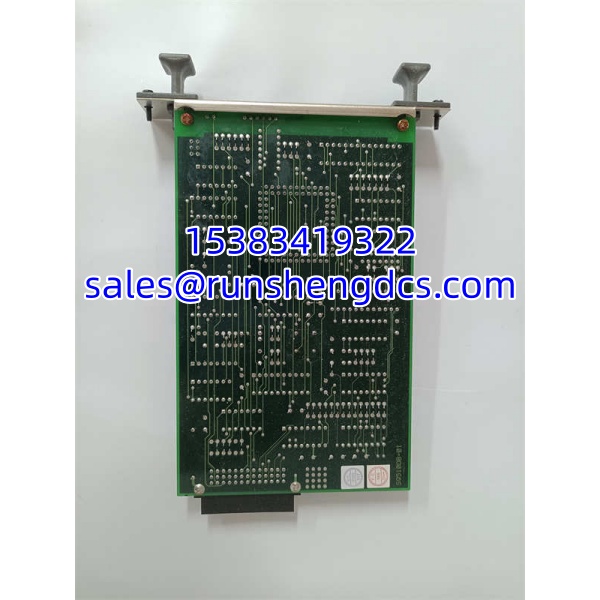

Description
Key Technical Specifications
| Parameter | Typical / Verified Value |
|---|---|
| Manufacturer | YOKOGAWA |
| Part Number | AIP171 |
| Module Type | Transceiver control module |
| System Association | CENTUM CS 3000 DCS; V net repeater systems |
| Primary Function | Controls/manages transceivers in V net communication links |
| Fiber Type | Single-mode fiber (per available listings) |
| Wavelength | 1310 nm (per available listings) |
| Transmission Distance | Up to 15 km (per available listings) |
| Data Rate | Up to 10 Mbps (per available listings) |
| Power Supply | 24 VDC (per available listings) |
| Transceiver Capacity | Up to 16 transceivers (per available listings) |
| Documentation Status | No verified OEM datasheet located |
Product Introduction
Communication faults on older Yokogawa DCS networks are easy to misdiagnose. A bad V net link can look like a controller problem, an I/O fault, or even a grounding issue until you trace it back to the repeater/transceiver hardware.
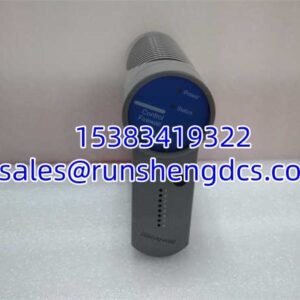
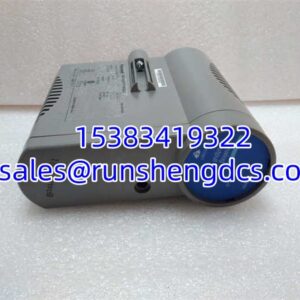
The YOKOGAWA AIP171 is described in available sources as a transceiver control module associated with CENTUM CS 3000 and V net repeater systems. Its job is to manage transceiver operation so that DCS communication links — especially long-distance fiber runs — remain stable. Some listings cite single-mode fiber, 1310 nm wavelength, up to 15 km reach, and up to 10 Mbps data rate. Others reference 24 VDC supply and support for up to 16 transceivers. None of these figures should be treated as confirmed OEM specifications without the original Yokogawa manual or nameplate data.
QA/QC Transparency SOP
- Intake & Origin Verification: Record full part number, revision label, serial number, and rack history. Reject units with damaged fiber ports, bent connector pins, or missing revision markings.
- Live Functional Testing: Install the module in a compatible Yokogawa V net repeater/communication rack. Verify link establishment, transceiver recognition, and stable communication with adjacent nodes.
- Electrical Parameter Tests: Measure 24 VDC supply current, input power stability, and terminal/connector continuity. Check for abnormal heat, voltage drop, or intermittent resets.
- Firmware/Config Verification: Capture hardware revision, firmware version if applicable, and any stored configuration data. Compare against the existing module before substitution.
- Final QC & Anti-Static Packaging: Seal in ESD packaging with desiccant. Include a test report with part number, revision, test date, and pass/fail results.
Field Engineer Gotchas
- Wrong module assumption: Some secondary listings describe AIP171 as an analog/digital I/O or HART module. That conflicts with Yokogawa DCS documentation patterns. Treat AIP171 as a communication/transceiver control module unless the OEM manual says otherwise.
- Fiber port contamination: Dust or oil on single-mode fiber connectors can kill link margins. Inspect and clean fiber ports before blaming the module.
- V net node addressing: Replacing a communication module without verifying node settings can disrupt the segment. Record existing DIP switch/jumper/address settings before removal.
- Revision mismatch: Yokogawa communication cards can have hardware revisions that affect compatibility. Do not swap revisions without checking the system manual.
- Surplus provenance risk: Many AIP171 listings come from non-OEM channels with generic photos. Require a clear nameplate photo and a functional communication test report.
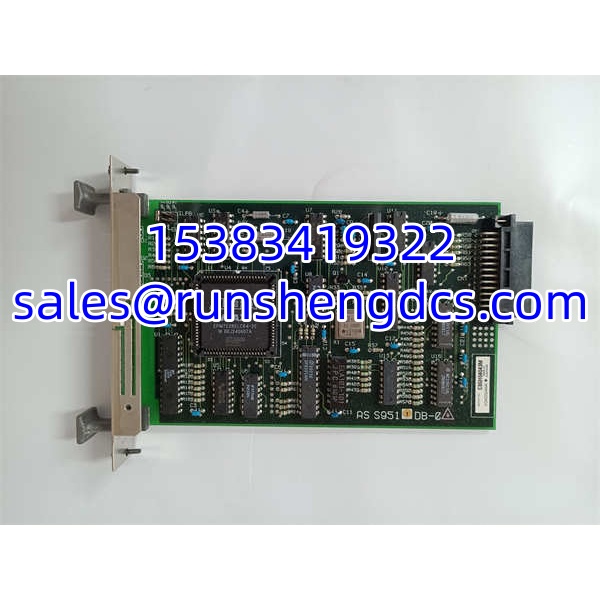
YOKOGAWA AIP171
Application Scenarios
- Long-distance DCS fiber link restoration: Replacing a failed transceiver control module in a CENTUM CS 3000 communication segment spanning multiple process areas.
- V net repeater maintenance: Keeping tested spares for older Yokogawa installations where OEM lead times are long.
- Refinery communication backbone: Supporting fiber-based DCS links between remote I/O stations and the central control room.
- Legacy system holdover: Maintaining communication hardware while planning a controlled migration to CENTUM VP or another DCS platform.
FAQ
No. Available Yokogawa DCS references describe it as a transceiver control module used in V net repeater/communication systems. Some secondary listings call it an I/O or HART module, but that conflicts with Yokogawa naming conventions. Verify with the OEM manual.
It is associated with CENTUM CS 3000 and V net repeater communication hardware. It is not a standard CENTUM VP I/O card.
Can I replace it hot?
Do not assume hot-swap is safe. Communication modules can disrupt V net segments if removed incorrectly. Follow the Yokogawa maintenance procedure and confirm with your system manual.
Does it support fiber and electrical transceivers?
Some listings state it supports both electrical and optical transceivers. Confirm against your specific rack configuration and OEM documentation.
Is it still available new from Yokogawa?
Unlikely for most legacy CENTUM CS 3000 hardware. Check directly with Yokogawa or an authorized distributor. Surplus/refurbished stock is common.
Match the full part number and revision, inspect fiber/electrical ports, verify 24 VDC supply, and confirm stable communication on a test rack before field installation.
Can I use it in CENTUM VP?
Not automatically. CENTUM VP uses different I/O and communication hardware families. Do not install in a CENTUM VP station without explicit OEM confirmation.