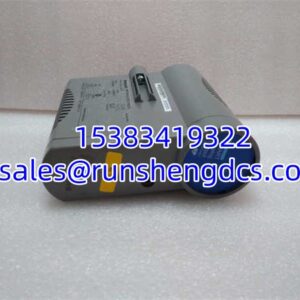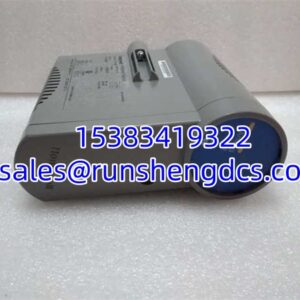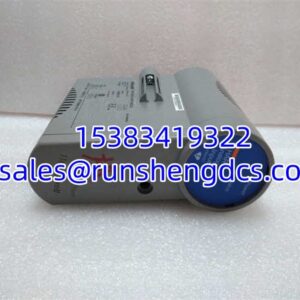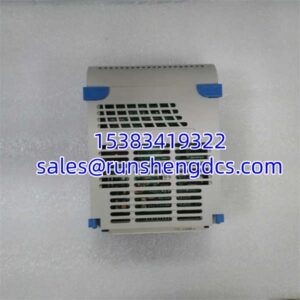

Description
Key Technical Specifications
| Parameter | Specification |
|---|---|
| Product Model | TRICONEX PI3381 |
| Manufacturer | TRICONEX (Schneider Electric) |
| Product Category | Pulse Input Module |
| Resolution | 16-bit |
| Max Frequency | 10 kHz |
| Redundancy | Triple Modular Redundant (TMR) with 2oo3 voting |
| Input Types | Dry/Wet Contacts, NAMUR, TTL/CMOS |
| Input Voltage | 5-30VDC (User Configurable) |
| Safety Rating | IEC 61508 SIL3 / ISA 84.00.01 |
| Operating Temp | -40°C to +75°C |
| Isolation | 2500VDC (Channel-to-Channel & Ground) |
| Installation | Plug-in I/O module via dedicated FTA |
Product Introduction
When you’re protecting a $5 million turbine from overspeed, standard PLC counters won’t cut it. The TRICONEX PI3381 is built specifically for high-integrity safety systems where a missed pulse or a false trip can cost millions. It uses a true TMR (Triple Modular Redundant) architecture, meaning three independent processors vote on every single pulse signal via a 2oo3 mechanism. If one channel fails, the PI3381 keeps running and triggers a diagnostic alarm without tripping the process.
The PI3381 handles up to 10kHz pulse signals with 16-bit resolution, making it precise enough for custody transfer flow metering and fast enough for turbomachinery protection. It accepts a wide range of inputs (dry/wet contacts, NAMUR, TTL/CMOS) at 5-30VDC, so you’re not fighting with signal conditioning at the field device. The 2500VDC isolation between channels means ground loops in one sensor won’t take out your entire safety system. Bottom line — it’s overkill for basic counting, but exactly what you need when the consequences of failure are catastrophic.
QA/QC Transparency SOP
- Intake & Origin Verification: We verify the PI3381 part number and inspect the TMR processor chips for physical damage. We check the FTA connector pins for corrosion or bending, as these are common failure points in field-pulled modules.
- Live Functional Testing: The PI3381 is mounted in a Tricon test chassis. We inject pulse signals at 1Hz, 1kHz, and 10kHz to verify the 16-bit counter accuracy and confirm the TMR voting logic is functioning correctly.
- Electrical Parameter Tests: Using a Fluke multimeter, we verify the 5-30VDC input threshold levels and measure the 2500VDC isolation resistance between channels. We also check the backplane power draw against spec.
- Firmware/Config Verification: We connect via TriStation 1131 to read the module’s firmware baseline and verify it matches the customer’s system revision. Mismatched firmware is a common cause of TMR voting faults.
- Final QC & Anti-Static Packaging: The is cleared of test configurations, inspected for clean FTA mating surfaces, and sealed in an ESD-safe bag with foam corner protection.
Field Engineer Gotchas
- FTA Wiring is Everything: The doesn’t have field wiring terminals; it relies entirely on the FTA. I’ve seen technicians blame the for signal dropouts when the real issue was a loose shield ground on the FTA. Always verify FTA wiring and shielding before pulling the module.
- Filter Time Configuration: Each channel has a configurable filter time (0.1ms to 100ms). If you’re seeing false trips on a noisy magnetic pickup, increase the filter time. But if you set it too high, you’ll miss legitimate overspeed pulses. Verify your filter setting matches your sensor’s pulse characteristics.
- TMR Voting Faults: If the is generating continuous “TMR Mismatch” alarms, one channel is likely seeing a different signal than the other two. Check all three FTA connections independently. A single bad wire on one channel will cause the 2oo3 vote to fail.
- Input Voltage Mismatch: The accepts 5-30VDC, but the configuration must match your field device. I’ve seen a tech wire a 24VDC NAMUR sensor to a channel configured for 5VDC TTL, frying the input circuit. Always verify the software configuration matches the hardware.
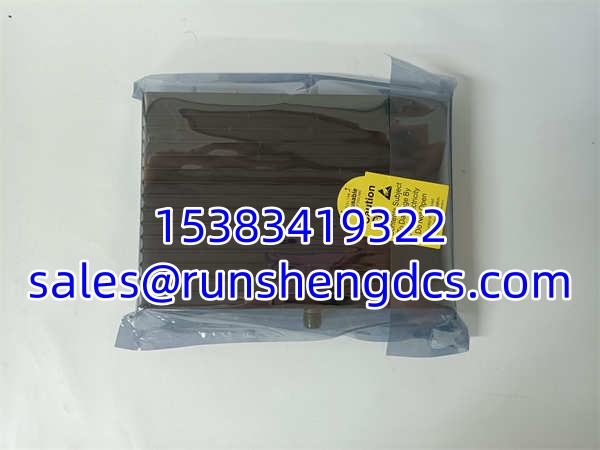
TRICONEX PI3381
Application Scenarios
- Turbomachinery Overspeed Protection: The monitors magnetic pickup signals from turbine shafts. When speed exceeds the safety limit, the TMR architecture ensures a reliable trip signal without false positives from electrical noise.
- Custody Transfer Flow Metering: Pulse outputs from turbine or positive displacement flowmeters feed the for high-accuracy totalization. The 16-bit resolution ensures precise volume measurement for billing.
- Burner Management Systems (BMS): Flame scanner pulse trains are monitored by the to verify burner ignition. The SIL3 rating is mandatory for these safety-critical permissives.
FAQ
Yes. The supports hot-replacement in the Tricon TMR architecture. The system will continue operating on the remaining good channels while you swap the module. Just ensure you’re using the correct FTA and that the replacement module’s firmware matches the system.
The PI3382 is an enhanced version with additional diagnostic features and potentially different input thresholds. They are not always drop-in compatible. Verify with your TriStation 1131 configuration and the OEM datasheet before substituting.
No. The communicates only via the Tricon backplane to the main processors. If you need Modbus or Profibus, you’ll need a separate communication module (like the 4351B) in the same chassis.
The has built-in open/short circuit detection. If the input impedance is outside the expected range, it triggers this alarm. Check the field wiring for broken conductors, corroded terminals, or a failed sensor. Also verify the FTA termination resistors are intact.
Yes. The supports frequencies from 0.1Hz to 10kHz. For very slow pulse rates, ensure your filter time is set appropriately (longer filter times can cause missed pulses at low frequencies). Verify the configuration in TriStation 1131.
The is a mature product with stable firmware baselines. While newer modules exist, the remains fully supported for spare parts and documentation. For new installations, verify current product lifecycle status with Schneider.