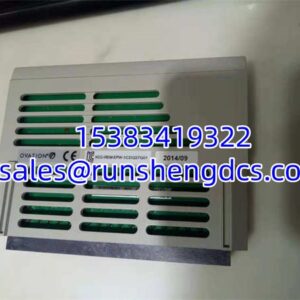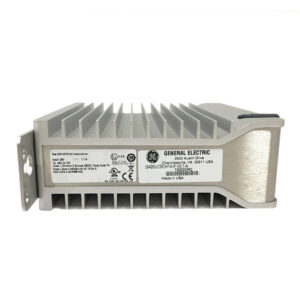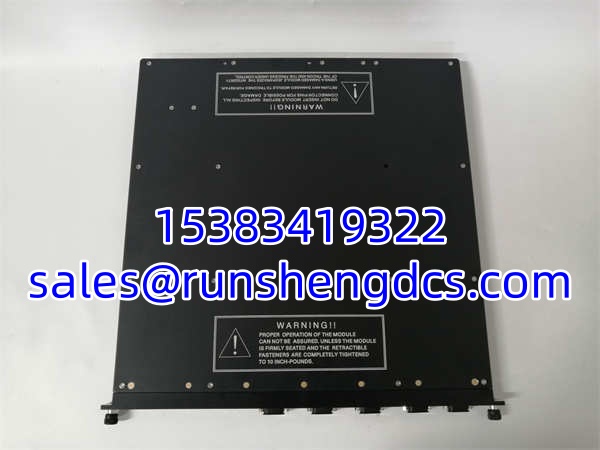

Description
Key Technical Specifications
- Port configuration: 4 DB‑9 serial (RS‑232/485 software selectable), 2 RJ45 10/100Base‑T auto‑negotiate
- Serial baud rate: Up to 115.2 kbps per channel
- Isolation: 500 VDC between external ports and TriBus backplane
- Supported protocols: Modbus RTU/ASCII Master/Slave, Modbus TCP, TriStation, SNTP, TSAA, ICMP, UDP peer‑to‑peer
- Backplane bus: Tricon proprietary TriBus
- Backplane supply: 5 VDC
- Typical power draw: 14 W; max 18 W
- Operating temperature: 0 °C to +60 °C
- Storage temperature: −40 °C to +85 °C
- Humidity: 5–95% non‑condensing
- Safety suitability: IEC 61508 SIL 3 when deployed within certified Tricon system
- Typical MTBF: 254,000 hours at 40 °C ambient
- Weight: 2.3 kg
Product Introduction
SIS integration teams run into this often. A failed TCM cuts all Modbus and HMI traffic to the safety rack, and no new factory 4351B units ship. Full migration needs planned outages spanning weeks, so sites keep spare communication modules on hand to bridge the gap. This TMR communication module attaches to the Tricon main chassis TriBus. It translates internal safety data into serial and Ethernet protocols for external hosts. It does not execute safety logic or scan hardwired I/O.
Network noise and improper cabling can trigger intermittent port resets that are hard to reproduce in the shop. Its isolated interfaces block ground‑loop currents crossing from external networks into the safety backplane. Under steady load, message latency stays below 8 ms for Modbus TCP requests. Bottom line — it works, but validate every protocol mapping before releasing to live operation.
QA/QC Transparency SOP
- Intake & Origin Verification. Match serial number against source documentation. Inspect PCB for bulging capacitors, trace burn marks, or corroded edge connector pins. Photograph labels and component side for traceability. Reject units showing liquid intrusion.
- Live Functional Testing (Comms, I/O, Load). Seat module in Tricon test chassis with active processor triplet. Apply backplane power. Open sessions on all four serial ports and both Ethernet ports. Cycle Modbus master/slave traffic continuously for minimum 4 hours. Inject cable fault simulation; verify FAULT LED triggers and remaining ports stay online.
- Electrical Parameter Tests (Megger, Continuity). De‑energize rack. Run 500 V Megger between each external port and chassis ground. Insulation resistance must exceed 100 MΩ. Verify TriBus edge‑pin continuity with a Fluke 87V.
- Firmware/Config Verification (Readout & Backup). Read onboard TCM firmware revision over TriBus. Archive binary firmware offline. Flag revisions known to cause Modbus timeouts or SNTP drift; cross‑reference against site’s system firmware matrix.
- Final QC & Anti‑Static Packaging. Recheck LED status indicators and connector retention. Place module inside conductive ESD bag, add foam edge protection, pack into rigid carton. Attach unique test report ID to outer packaging.
Field Engineer Gotchas
- Firmware Rev Mismatch. Risk: Mismatched TCM firmware versus main processor firmware creates silent communication stalls. DCS stops receiving SIS data without high‑priority rack faults. Solution: Cross‑check TCM firmware against the host’s compatibility matrix. One site swapped a 4351B without checking; they lost SIS‑to‑DCS telemetry for three hours.
- Mixed TCM model prohibition. Risk: You cannot mix 4351B alongside older 4351 or fiber 4352 series modules in one Tricon chassis. This causes TriBus contention and random module resets. Solution: Keep all TCMs in the rack matching part‑number family per Tricon system rules.
- ESD risk during hot‑swap. Risk: Tricon permits hot replacement, but static discharge can damage one of the TMR communication slices. The module may still run with reduced fault tolerance with no immediate alarm. Solution: Bond grounded wrist strap to rack chassis before touching the module.
- Serial port grounding errors. Risk: RS‑485 daisy‑chains without single‑point grounding introduce common‑mode noise. Modbus RTU readings flicker and drop randomly. Solution: Install one ground reference only at the far end of the serial trunk; do not ground every node.
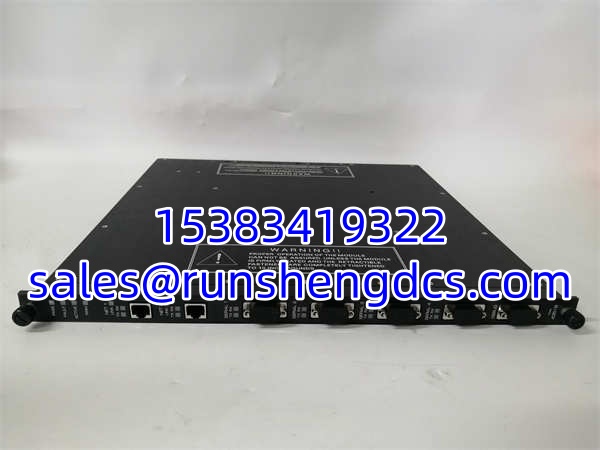
TRICONEX 4351B
Application Scenarios
Refinery ESD racks deploy 4351B to send SIS trip status and process values to the plant DCS over Modbus TCP. Isolation prevents control‑network faults from propagating into the safety domain. Offshore oil platforms use the four serial ports for Modbus RTU fire‑and‑gas detector arrays, consolidating alarm data into the Tricon safety logic. Combined‑cycle power plants run SNTP through 4351B to align time stamps across safety and BMS subsystems for post‑event sequence‑of‑events analysis.
Case study: A 150,000 bpd refinery saw sporadic Modbus TCP disconnects every 6–12 hours. Techs initially blamed the network switch. Bench testing revealed degraded onboard Ethernet PHY on one slice of the 4351B. Replacing the module cleared all drops; no network cabling changes required.
FAQ
Q: Does Triconex 4351B support hot‑swap? A: Mechanically hot removal and insertion are allowed. Other TCMs in the chassis maintain communications during swap. Transient TriBus bursts can briefly interrupt data polling; perform swaps during low‑risk windows.
Q: My Tricon system runs Tricon V9.5. Will this drop in? A: Compatibility ties directly to TCM firmware. Some newer 4351B firmware builds are not validated for V9.5 hosts. Request firmware revision before purchase. Verify with OEM datasheet before installation.
Q: Can I run Modbus TCP and Modbus RTU at the same time on one 4351B? A: Yes. Ethernet and serial ports operate independently. Each serial port can be set as master or slave without impacting the Ethernet stack.
Q: What lead time applies for tested surplus stock? A: Pre‑tested units ship 2–5 business days. Units requiring component rework and full multi‑protocol burn‑in take 10–14 days. No new factory builds exist.
Q: Are refurbished units tested with live Modbus traffic? A: Every unit passes continuous master/slave polling on all ports during QC. A test log records packet loss metrics. Site end‑to‑end validation with your DCS is still mandatory.
Q: Can multiple 4351B modules live in the same Tricon chassis? A: Up to four TCMs maximum, arranged into two logical slots. All TCMs must belong to the same model family; mixing with 4351/4352 is prohibited.
Q: Does 4351B execute safety interlock logic? A: No. It is only a communications gateway. Safety logic runs on the main UMP processors. The TCM does not vote or modify safety outputs.