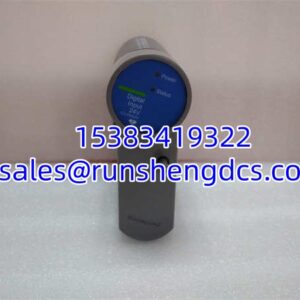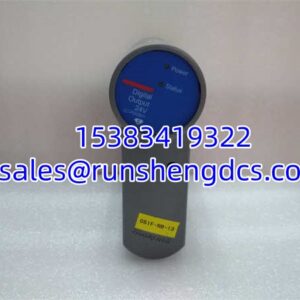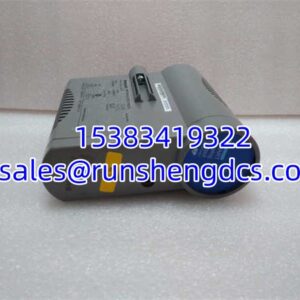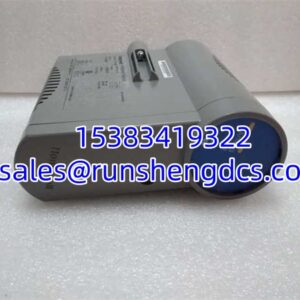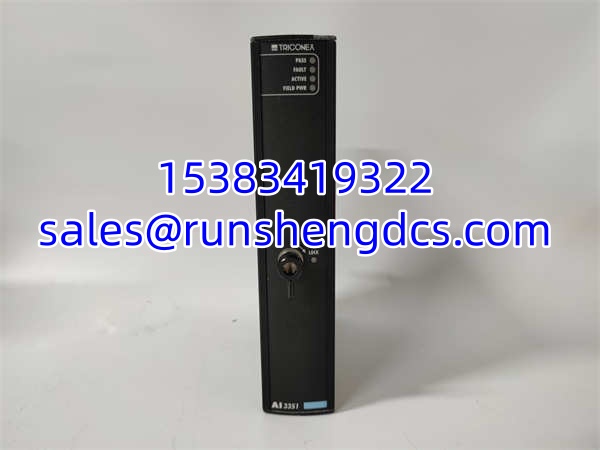

Description
Key Technical Specifications
- Product Family: TRICONEX 3351 — verify exact module prefix/suffix
- Brand: Triconex
- System Family: Tricon / Triconex TMR safety control system
- Module Type: Analog input or pulse/frequency input module, depending on variant
- Common Variants: AI3351, AI3351S2, PI3351
- Signal Types:
- AI variants: typically industrial analog signals such as 4–20 mA, process measurement signals, and possibly RTD/thermocouple or voltage inputs depending on configuration
- PI variants: pulse, frequency, contact closure, or open-collector style inputs
- Architecture: Tricon TMR I/O; typically installed as part of redundant/triplicated I/O legs
- Power: Supplied through Tricon backplane; field power and termination depend on module type
- Communication: Backplane interface to Tricon main processors; configuration typically handled through Triconex/TriStation engineering tools
- Diagnostics: Module-level diagnostics, channel health monitoring, and fault reporting typical of Tricon I/O
- Operating Temperature: Approximately 0°C to 60°C for typical Tricon I/O environments
- Installation: Plug-in Tricon I/O card form factor; slot assignment and termination must match the existing system
Product Introduction
On a Tricon safety cabinet, a “3351” module is not a general-purpose PLC card. It is a safety-system I/O interface that brings real-world process signals into the TMR controller. Depending on the exact part, that signal could be a 4–20 mA transmitter reading pressure, temperature, flow, or level — or it could be a pulse/frequency signal from a turbine meter, speed probe, or rotating equipment pickup.
That distinction is the whole procurement trap. AI3351/AI3351S2 and PI3351 may share the “3351” number in supplier listings, but they are not interchangeable. A replacement must match the failed module’s full marking, revision, signal type, termination arrangement, and Tricon chassis slot. Otherwise, you can end up with a physically compatible Triconex module that still gives the wrong measurement, fails diagnostics, or breaks a safety loop.
Troubleshooting Quick Reference
| Fault | Likely Cause | Quick Check | Fix |
|---|---|---|---|
| Channel shows bad/failed status | Field wiring, sensor fault, or wrong module type | Check field signal at the terminal; verify module prefix | Confirm AI vs PI; measure field signal; check Tricon diagnostics |
| No reading from analog input | 4–20 mA loop open, no loop power, or wiring fault | Measure loop current at the input terminal | Restore loop power; check sensor, fuse, wiring, and polarity |
| Erratic analog value | Ground loop, shield issue, or bad sensor | Check shielding, grounding, and signal stability | Separate shield ground; verify sensor; retest channel |
| Pulse/frequency input not counting | Wrong input type, wiring, or pickup fault | Confirm PI3351 application; check pulse source | Verify pickup wiring, power, signal shape, and input type |
| Module fits but fails diagnostics | Revision mismatch, slot mismatch, or firmware/config issue | Compare full module marking and revision | Match exact module; reseat; verify chassis slot and config |
| TMR mismatch or voting fault | One I/O leg different from the other two | Compare A/B/C leg modules and revisions | Replace with exact matching module; do not mix variants |
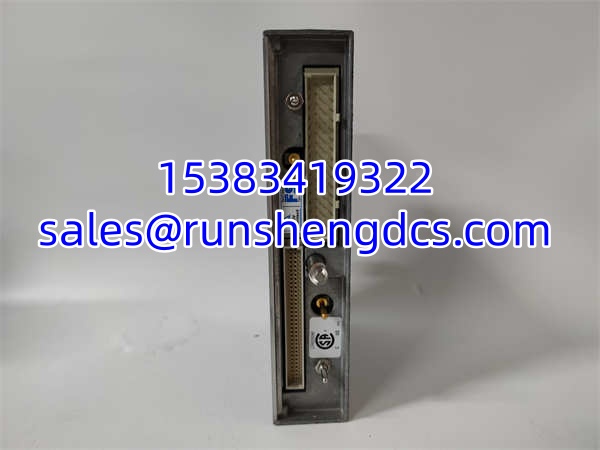
TRICONEX 3351
Application Scenarios & Pain Points
- Oil and gas process safety: AI3351/AI3351S2 may read pressure, temperature, flow, or level transmitters for ESD or safeguarding loops. Pain point: wrong analog range or termination can corrupt safety permissives.
- Turbine/compressor overspeed protection: PI3351 is the more relevant variant for pulse/frequency speed inputs. Pain point: substituting an analog input module for a pulse input module will not work.
- Chemical process safeguarding: Analog inputs are used for reactor, vessel, or heat-exchanger monitoring. Pain point: surplus modules may lack revision traceability or test history.
- Power generation balance-of-plant: Speed, flow totalization, or rotating-equipment feedback may use pulse input modules. Pain point: incorrect gear ratio, signal conditioning, or input type can cause false trips or missed trips.
- Aging Tricon system maintenance: Older cabinets often depend on specific Triconex I/O modules. Pain point: suppliers may list “3351” generically, hiding whether the unit is AI or PI.