
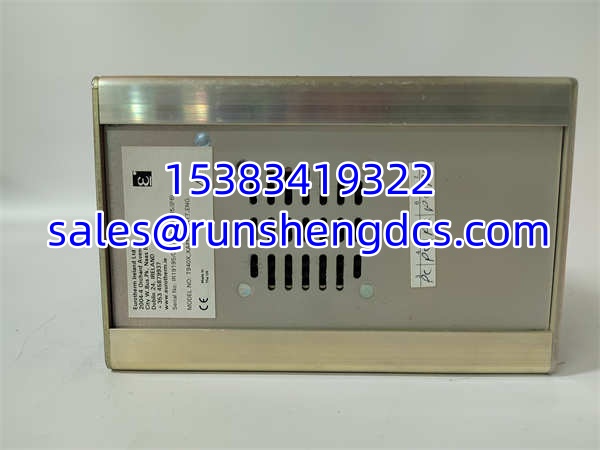

Description
Key Technical Specifications
- Product Model: T940X, XAPMM, BATT, ENG SUITE
- Product Type: DCS / FCS strategy engine or processor module
- Control Function: Continuous and sequential control algorithm execution
- Redundancy: Supports redundant processor modules with automatic disturbance-free switchover
- Maintenance Feature: Supports hot-swap replacement and automatic initialization of processor modules
- Control Network: ALIN control network for peer-to-peer and supervisory communication
- High-Speed Network: ELIN at 100 Mbps
- Fieldbus Support: Profibus DPV1 at up to 12 Mbps
- Additional Protocols: Modbus TCP/IP and Modbus RTU
- I/O Network Type: Open I/O network architecture
- Application Class: Large-scale DCS / FCS industrial process control
- Battery Reference: “BATT” suggests battery-backed memory or retention function — confirm on nameplate
Product Introduction
Open a DCS cabinet and this kind of module is usually the piece that actually runs the plant’s control logic — not just passing I/O, but executing continuous regulation, sequence control, redundancy management, and network synchronization. The T940X / XAPMM / BATT / ENG SUITE strategy engine is described as a programmable control unit built for DCS and FCS applications, with redundancy and hot-swap features aimed at keeping a control system running during processor-level maintenance or failure.
Why it matters in procurement: this is not a plug-and-play commodity part. Its value depends entirely on whether it matches the existing DCS platform, firmware family, redundancy scheme, and network configuration. If the replacement processor cannot join the ALIN/ELIN network, cannot synchronize with the standby processor, or does not accept the existing strategy database, it is useless in the rack — even if the physical module looks correct.
Troubleshooting Quick Reference
| Fault | Likely Cause | Quick Check | Fix |
|---|---|---|---|
| Processor not recognized | Wrong module variant, backplane fault, firmware mismatch | Check module LEDs, rack status, and controller diagnostics | Confirm exact model; reseat module; verify DCS rack compatibility |
| Redundancy switchover fails | Standby processor not synchronized, battery/memory fault, configuration mismatch | Check redundancy status and sync alarms | Verify redundant processor pair; check battery; reload strategy if allowed |
| No communication on ALIN/ELIN | Network cable, node address, switch/port fault, duplicate ID | Ping/monitor ALIN/ELIN status; check connectors | Repair cabling; verify node IDs; check ELIN 100 Mbps link status |
| Profibus DPV1 fault | Baud rate mismatch, termination, addressing, GSD/configuration error | Measure Profibus wiring; check station address | Correct termination; verify 12 Mbps DPV1 settings and slave addresses |
| Strategy will not download | Firmware mismatch, engineering tool version wrong, memory fault | Check engineering station software version | Match engineering software/firmware; backup before download |
| Intermittent processor faults | Battery low, backplane contact issue, EMI, aging capacitors | Inspect battery, reseat module, check cabinet grounding | Replace battery if applicable; clean contacts; improve grounding |
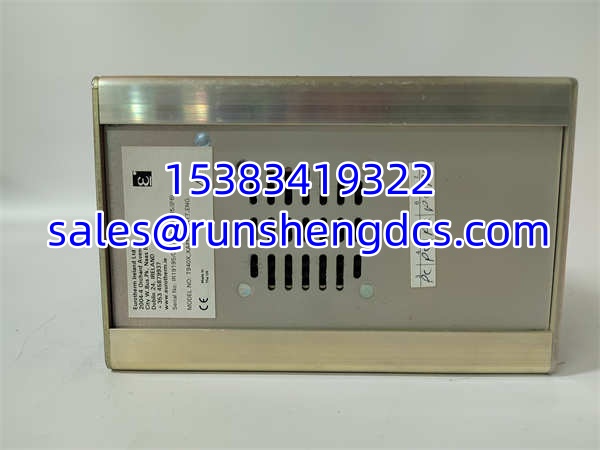
SUITE T940X,XAPMM,BATT,ENG
Application Scenarios & Pain Points
- Large DCS process control: Used where continuous control, sequence control, and redundant processors are required. Pain point: finding a replacement that matches the existing strategy database and redundancy behavior.
- FCS fieldbus control systems: Integrates Profibus DPV1, Modbus TCP/IP, and Modbus RTU at the control level. Pain point: mixing fieldbus devices without breaking scan timing or network stability.
- Legacy plant upgrades: Older control systems may need a matching processor module to avoid full DCS migration. Pain point: surplus modules often lack firmware documentation.
- Redundant processor maintenance: Hot-swap capability is useful during planned outages. Pain point: hot-swap only works if the standby processor is correctly initialized and synchronized.
- Surplus procurement risk: The combined model string is unclear. Pain point: buying a “T940X” that does not match the XAPMM/BATT/ENG configuration required by the system.