
Description
Key Technical Specifications
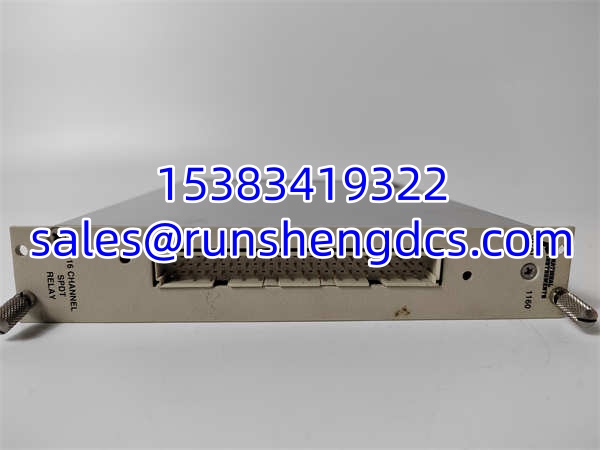
- Product Model: SCXI-1160
- Part Number: 776572-60
- Manufacturer: National Instruments (NI), USA
- Product Type: 16-Channel Universal Switch Module
- Relay Type: SPDT (Single Pole Double Throw), Form C, electromechanical latching relays
- Channel Count: 16 independent channels (each with NC, NO, and COM terminals)
- Switching Rate: Maximum 50 operations per second
- Relay Operate Time: 10 ms
- Offset Voltage: 3 µV
- On-Resistance: Very low (specific value not confirmed in available documentation — verify against NI datasheet)
- Switching Capacity: Medium-level signal switching, routing, and control (exact voltage/current ratings not confirmed in available documentation — verify against physical label or NI datasheet)
- Software Driver: NI-SWITCH driver, compatible with LabVIEW and LabWindows/CVI
- Compatible DAQ Boards: NI MIO-16 series; Lab-NB, Lab-PC, Lab-PC+, Lab-LC, PC-LPM-16; DIO-24, DIO-32F, DIO-96
- Chassis Compatibility: NI SCXI chassis (multiple modules can be cascaded for thousands of signal channels)
- Jumper Configuration: 5 jumpers (W1-W5) for backplane signal routing and DIO/MIO board selection
- Dimensions: 1.2 x 6.8 x 8.0 inches
- Origin: USA
Product Introduction
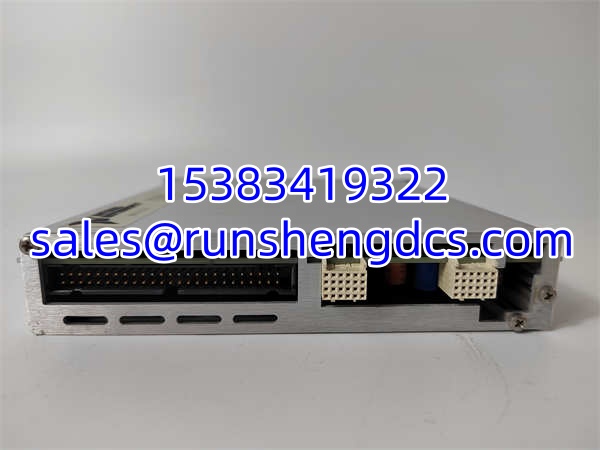
This is a signal routing workhorse, not a measurement device. The SCXI-1160 packs 16 independent SPDT latching relays into a single SCXI slot — each relay gives you a normally open, normally closed, and common terminal, letting you physically route signals between different test points, instruments, or DUTs without touching a cable. The relays are electromechanical and latching, meaning they hold their state without continuous coil power, which matters when you’re running long-duration test sequences and don’t want a power glitch to scramble your signal matrix.
In a production test or lab automation setup, you’d use this to multiplex a single precision instrument (a DMM, a scope, a spectrum analyzer) across dozens or hundreds of test points by cascading multiple SCXI-1160 modules in one or more SCXI chassis. The 50 ops/sec switching rate means you’re not doing high-speed switching — this is for functional test, continuity checks, signal routing between instruments, or reconfiguring a test setup under software control. The 3 µV offset voltage is low enough that it won’t corrupt most mid-level analog measurements, but if you’re doing microvolt-level work, you’d want a reed relay module instead.
Troubleshooting Quick Reference
| Fault | Likely Cause | Probability | Quick Check | Fix |
|---|---|---|---|---|
| Relay not switching — channel state unchanged | Driver not loaded or software configuration error | ~30% | Open NI MAX; verify SCXI-1160 appears in device tree; check NI-SWITCH driver installation | Reinstall NI-SWITCH driver. Verify module is recognized in MAX. |
| Intermittent contact — resistance fluctuating | Relay contact oxidation or wear from high cycle count | ~25% | Measure contact resistance across switched channel with DMM; compare to known-good channel | If resistance is high or unstable, relay is worn. Replace module. |
| Module not recognized in SCXI chassis | Backplane connection failure or chassis communication fault | ~20% | Reseat module in chassis slot; verify chassis power and communication to host PC | Reseat firmly. Try adjacent slot. Check SCXI chassis cabling to DAQ device. |
| Wrong channel switching — cross-talk between channels | Jumper configuration mismatch (W2/W3/W4) | ~15% | Verify W2/W3/W4 jumper settings match your connected DAQ board type (DIO vs MIO) | Reconfigure jumpers per NI documentation for your DAQ board. |
| Relay chattering or failing to latch | Coil drive voltage insufficient or relay mechanical failure | ~10% | Check SCXI chassis power supply voltages; listen for audible relay click during switching | If chassis power is good and relay doesn’t click, module is faulty. Replace. |
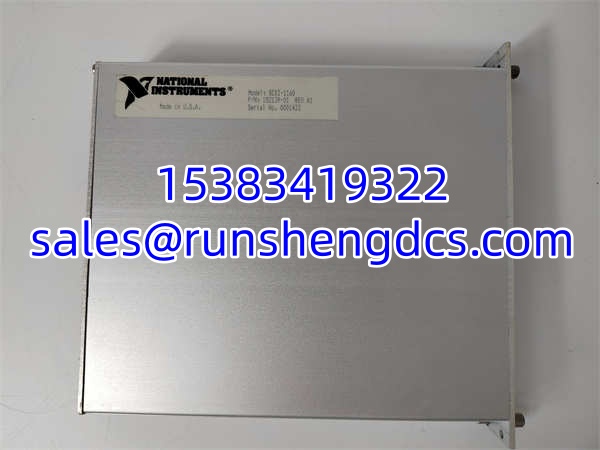
NI SCXI-1160
Application Scenarios & Pain Points
Production test fixture signal routing
In an automated test equipment (ATE) setup, the SCXI-1160 routes a single DMM across 16 test points on a PCB under test, then cascades to additional modules for hundreds of points. Pain point: electromechanical relays have a finite cycle life — typically in the millions of operations, but in a high-throughput production environment running 24/7, you’ll hit that limit faster than expected. When a relay starts sticking open, the test fixture starts failing good boards, and you won’t know until your first-pass yield drops.
Laboratory multi-instrument switching matrix
A research lab uses the SCXI-1160 to route signals from multiple sensors to a single precision measurement instrument, saving the cost of buying one instrument per channel. Pain point: the latching relay design means the module holds state through power cycles — which is great for reliability but a nightmare if your test script crashes mid-sequence and leaves relays in an unknown state. You need a known initialization routine that resets all channels to a safe default before every test run.
Industrial process monitoring signal selection
In a process control environment, the module routes analog signals from multiple field transmitters to a single monitoring input for periodic scanning. Pain point: the SCXI platform was designed for lab and test environments, not harsh industrial floors. Temperature cycling, vibration, and EMI in a factory setting can accelerate relay contact degradation — and NI’s documentation doesn’t spell out derating curves for industrial ambient conditions.
Real-world case: An engineer at an electronics contract manufacturer running an in-circuit test (ICT) fixture had an start producing intermittent test failures on a specific channel. The relay had cycled approximately 2 million times over 18 months of production. Contact resistance on the faulty channel measured 5 ohms versus <100 mΩ on healthy channels — classic contact oxidation from high cycle count. Swapped in a surplus unit, recalibrated the fixture, and was back online in under an hour. The manufacturer then added relay cycle counting to their preventive maintenance schedule and stocked two spare modules after discovering lead times from surplus vendors had stretched to 4-6 weeks.