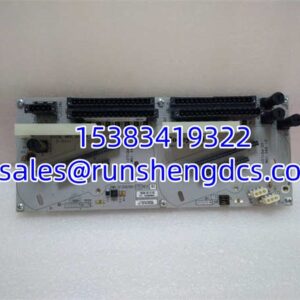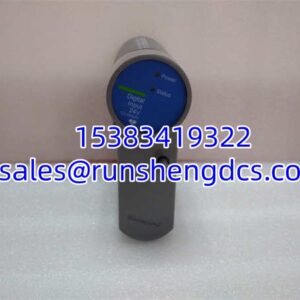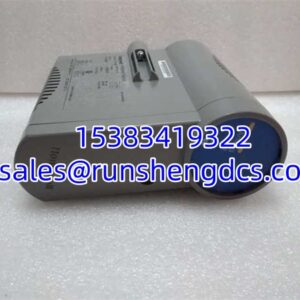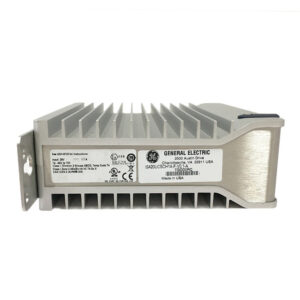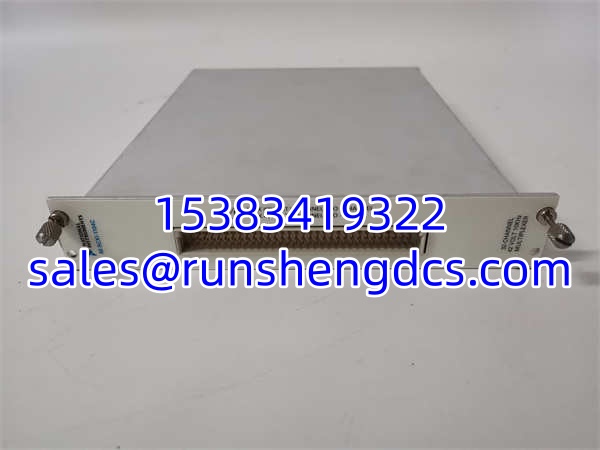

Description
Key Technical Specifications
- Product Model: SCXI-1104C
- Manufacturer: National Instruments (NI)
- Product Type: 32-Channel Differential Voltage Input Module
- System Compatibility: NI SCXI Chassis + NI DAQ Device
- Channel Count: 32 Differential Analog Inputs
- Input Voltage Range: ±60 VDC, ±42 VAC peak, 30 VACrms
- Bandwidth: 10 kHz Low-Pass Filter (Hardware)
- Connectors: 96-pin DIN C (Front), 50-pin Ribbon (Rear)
- Isolation: Channel-to-channel and channel-to-earth
- Calibration: Software-calibrated via NI-DAQmx constants
- Operating Temp: 0°C to 50°C
- Warm-up Time: 20 Minutes (Recommended)
Product Introduction
High-voltage signals in industrial environments are noisy, dangerous, and prone to ground loops. If you try to feed ±60V directly into a standard DAQ card, you’ll fry the ADC or get garbage data. The NI SCXI-1104C exists to solve this. It’s a 32-channel differential signal conditioning module that sits between your field wiring and the DAQ, providing isolation, attenuation, and filtering before the signal ever hits the digitizer.
Bottom line — it protects your expensive DAQ hardware while cleaning up the signal. The SCXI-1104C features a hardware 10 kHz low-pass filter on every channel, which kills high-frequency noise before it can alias into your measurement. With 32 differential channels, you get massive density in a single slot. Just remember: the analog output on this module has no overvoltage protection. I’ve seen a tech back-feed 12V into the output connector and instantly kill the module. Treat the outputs like glass.
QA/QC Transparency SOP
- Intake & Origin Verification: We verify the 776572-04C part number and inspect the 96-pin DIN connector for bent pins or corrosion. Counterfeit SCXI modules exist; we check PCB silkscreen and component dates.
- Live Functional Testing: The SCXI-1104C is installed in a live SCXI chassis. We inject precision voltages (±1V, ±10V, ±50V) and verify the output matches the expected gain within spec.
- Electrical Parameter Tests: Using a Fluke 8845A, we measure channel-to-channel isolation resistance (>1 GΩ) and verify the 10 kHz filter roll-off using a function generator and oscilloscope.
- Firmware/Config Verification: We connect via NI-DAQmx and read the module’s EEPROM to confirm calibration constants are valid and the module ID matches SCXI-1104C.
- Final QC & Anti-Static Packaging: After passing, the SCXI-1104C is sealed in ESD-safe packaging with a test report showing actual gain error and filter verification.
Field Engineer Gotchas
- Analog Output Overvoltage: The analog output has no overvoltage protection. Back-feeding even 5V can destroy the output stage. Always disconnect the output before applying external signals. I’ve seen two modules killed in one week by techs who didn’t read the manual.
- Missing SCXI-1346 Adapter: If you’re using this in a multi-chassis ribbon cable system, you must use the SCXI-1346 adapter. Without it, the rear ribbon signals won’t route correctly. Don’t assume the cable alone is enough.
- Ground Loop via Pin 19: Pin 19 on the front connector can be linked to analog ground. If you’re measuring floating signals, leaving this pin connected can create a ground loop. Check your wiring diagram and isolate Pin 19 if needed.
- Warm-up Drift: The needs 20 minutes to reach thermal stability. If you’re doing high-precision measurements right after power-up, your readings will drift. Wait the full warm-up time or calibrate in software.
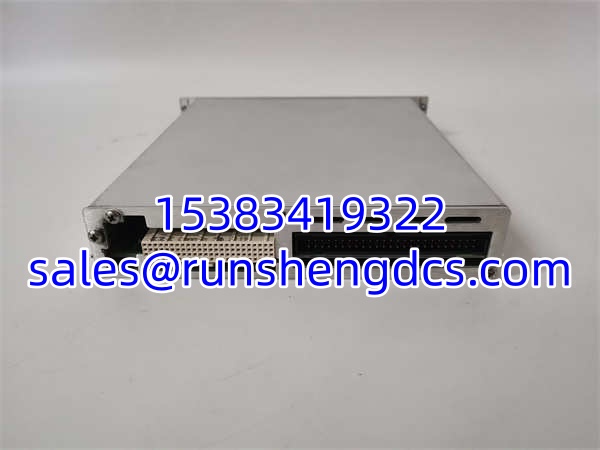
NI SCXI-1104C
Application Scenarios
- Power Grid Monitoring: High-voltage AC/DC signals from substations require isolation and filtering. The conditions ±60V signals for power quality analysis without risking the DAQ.
- Automotive Battery Testing: EV battery packs operate at 400V+ DC. The ’s 32 differential channels allow simultaneous monitoring of individual cell voltages with channel-to-channel isolation.
- Industrial Motor Drive Analysis: PWM-driven motors generate high-frequency noise. The ’s 10 kHz hardware filter removes switching noise before digitization, preventing aliasing.
FAQ
No. The is a signal conditioning module, not a standalone digitizer. It requires an NI SCXI chassis and a compatible NI DAQ device (PCI, PXI, or USB) to digitize the conditioned signal.
No. This is a voltage-only module. For current inputs, you need the SCXI-1102B (current) or add external shunt resistors and use the in voltage mode (verify shunt power rating).
What is the maximum common-mode voltage?
The provides channel-to-earth isolation, but the common-mode voltage is limited by the input range (±60V DC). Do not exceed this, even in differential mode.
Yes, via the 50-pin rear ribbon cable. For multi-chassis setups, use the SCXI-1346 adapter. Ensure your DAQ device supports the total channel count and scan rate.
Yes. Use NI-DAQmx drivers (version 6.5.1 or later). The module auto-calibrates using stored constants, so no manual scaling is needed in LabVIEW.
What happens if I exceed ±60VDC?
The module has overvoltage protection on the input, but sustained overvoltage can degrade components. The analog output has no protection. Stay within spec.
How often should I recalibrate?
NI recommends annual calibration, or immediately if operated outside 0-50°C. Use an 8.5-digit DMM and NI-DAQmx calibration routines.