
Description
Key Technical Specifications
| Parameter | Value |
|---|---|
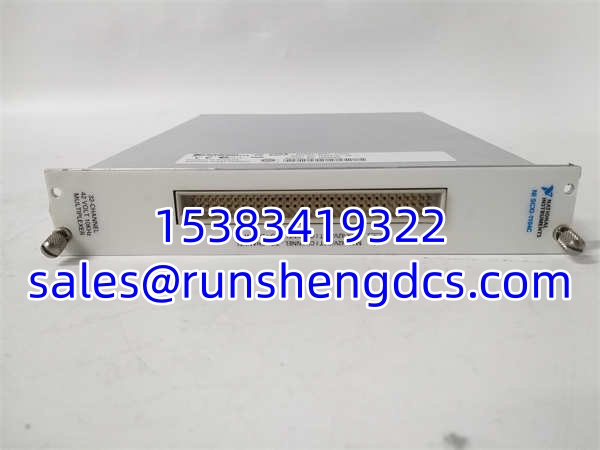
| Model | SCXI-1104C |
| Brand | National Instruments (NI) |
| Series | SCXI |
| Channel Configuration | 32 single-ended or 16 differential |
| Input Range (DC) | ±60 VDC |
| Input Range (AC) | ±42 VAC (rms: 30 VACrms) |
| Input Impedance | 1 MΩ (typical) |
| Operating Temperature | 0°C to 50°C (verify with OEM manual for C-rev specifics) |
| Storage Temperature | -55°C to +150°C |
| Relative Humidity | 5% to 90% non-condensing |
| Driver Support | NI-DAQmx / Traditional NI-DAQ (legacy) |
| Chassis Requirement | SCXI chassis or PXI/SCXI combo chassis |
Product Introduction
You need to measure voltages in the ±60V range across dozens of channels, and your DAQ card’s onboard inputs can’t handle the isolation or signal levels. That’s the exact gap the SCXI-1104C fills. It sits between your field wiring and the DAQ device inside an SCXI chassis, providing galvanic isolation and signal attenuation so the downstream digitizer sees clean, scaled-down voltages within its native input range.
This module is built for medium-voltage industrial measurements — think motor drive bus voltages, power supply rails, or line-side monitoring where signals sit well above what a typical DAQ input can tolerate. It is explicitly not designed for millivolt-level thermocouple or strain gauge work. NI’s own documentation states this clearly: if you need low-voltage precision, the SCXI-1102B/C is the correct module. The 1104C handles 32 single-ended or 16 differential channels per slot, which gives you high channel density in a single SCXI chassis position.
QA/QC Transparency SOP
For surplus or pulled SCXI-1104C modules, here’s what a responsible test process looks like:
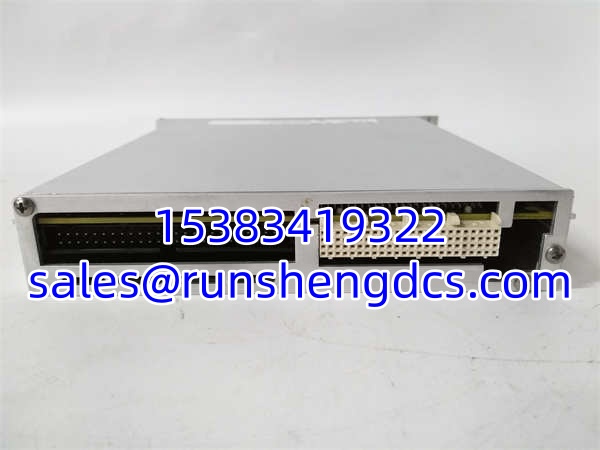
- Intake & Origin Verification. Confirm the module label reads “SCXI-1104C” with a visible revision suffix. Photograph the front connector, rear edge connector, and any calibration stickers. Check for physical damage — bent pins on the SCXI backplane connector are a common failure from rough handling during chassis insertion.
- Live Functional Testing. Seat the module in a known-good SCXI chassis connected to a verified DAQ device. Use NI MAX to enumerate the module. Run a loopback test: apply a known DC voltage (e.g., +10V, -10V, 0V) to individual channels and confirm the DAQ reads the expected scaled value within the module’s specified accuracy band.
- Electrical Parameter Tests. Perform insulation resistance testing between input channels and chassis ground using a megger at the appropriate test voltage. Verify continuity on the backplane edge connector pins. Check for shorted or open channels by sweeping all 32 inputs with terminals shorted (offset check) and with a known reference voltage applied (gain check).
- Firmware/Config Verification. Read the module’s EEPROM identification via NI-DAQmx to confirm the device ID matches the expected SCXI-1104C identifier. If calibration constants are stored on-module, back them up before any rework.
- Final QC & Anti-Static Packaging. Clean the edge connector contacts with isopropyl alcohol. Package in anti-static shielding with foam protection on the connector faces. Include a test report documenting channel count verification, offset/gain spot-checks, and insulation resistance readings.
Field Engineer Gotchas
- Don’t Use This for Thermocouples. The is optimized for medium-voltage DC/AC measurements. Its input range bottoms out at a level where millivolt-resolution thermocouple readings would be buried in noise and offset error. NI’s own FAQ says it plainly: use the SCXI-1102B/C for thermocouples. I’ve seen engineers try to force the 1104C into low-level measurement duty and then blame the DAQ system for “bad accuracy.” Wrong tool, wrong job.
- SCXI Chassis Slot Mapping Matters. The module’s channel addressing depends on its physical slot position in the SCXI chassis and the DAQ device it’s connected to. If you pull a module from slot 3 and drop it into slot 5 without updating your software channel mapping, your data goes to the wrong tags. Always verify the SCXI module-to-channel mapping in NI MAX after any physical reconfiguration.
- Driver Version Compatibility. This is a legacy SCXI module. NI-DAQmx support exists, but the driver version you need depends on your OS. Older Windows systems may require Traditional NI-DAQ instead. Check NI’s driver support matrix before building your software stack — a driver mismatch will cause the module to fail enumeration in MAX, and you’ll waste an hour chasing a wiring problem that doesn’t exist.
- Backplane Connector Damage. The SCXI edge connector has fine-pitch pins. Forcing a module into a chassis at an angle bends pins. A bent pin can cause intermittent channel failures that are maddening to debug because they only show up under vibration or thermal cycling. Always align the module squarely and seat it with even pressure.
NI SCXI-1104C
Application Scenarios
- Motor Drive Bus Voltage Monitoring. Variable frequency drives and servo drives operate with DC bus voltages in the hundreds of volts. The provides isolated, scaled-down representations of these bus voltages for logging and trending without loading the drive’s measurement circuits.
- Power Supply Rack Characterization. Test stations that validate multi-output power supplies need to simultaneously capture voltage levels across dozens of rails. The 32-channel density of this module fits that requirement in a single SCXI slot.
- Industrial Process Voltage Logging. Chemical processing and water treatment facilities monitor control voltages across distributed I/O panels. The provides the isolation barrier between field-side control voltages and the DAQ system in the control room.
Anonymized Case: A test lab was characterizing a bank of 24 DC-DC converters for a defense contractor. Each converter had input and output voltage test points that needed simultaneous logging at 1 kHz aggregate. The engineering team initially spec’d individual isolated DAQ cards per converter — expensive and rack-space-heavy. Switching to an SCXI chassis with two modules covered all 48 channels (24 input + 24 output) in two slots. The modules were calibrated at two points (-42V and +42V) per the NI manual procedure. System commissioning took one afternoon, and the lab saved roughly 60% on DAQ hardware cost compared to the original plan.
FAQ
No. NI explicitly states this module is optimized for medium-voltage measurements. At mV levels, accuracy degrades significantly. Use the SCXI-1102B/C for thermocouple or low-level DC measurements.
Q: What DAQ devices are compatible with this module?
Any NI DAQ device that supports SCXI and has the appropriate NI-DAQmx or Traditional NI-DAQ driver installed. The module connects through an SCXI chassis backplane to the DAQ device. Check NI’s driver support documentation for your specific DAQ hardware and OS combination.
This is a legacy SCXI product. NI has archived support documentation for it. Availability is primarily through surplus and secondary market channels. For new designs, evaluate NI’s current signal conditioning offerings.
Q: How many channels does it actually provide?
32 single-ended channels or 16 differential channels per module. The differential configuration uses paired inputs, which halves the channel count but provides better common-mode noise rejection.
The “C” suffix indicates a hardware revision. Core functionality is the same. Revision differences typically involve minor component updates or calibration adjustments. Verify calibration procedures against the specific revision’s manual.
Q: Do I need to calibrate this module before use?
For production measurements, yes. NI’s manual describes a two-point calibration procedure using -42V and +42V as calibration references. For one-point offset calibration, short the input terminals and run a zero-point calibration. Surplus modules should always be recalibrated before deployment.
Q: What chassis do I need?
Any standard NI SCXI chassis (e.g., SCXI-1340, SCXI-1345) or a PXI/SCXI combo chassis. The module plugs into a single SCXI slot and communicates through the chassis backplane to the DAQ device.