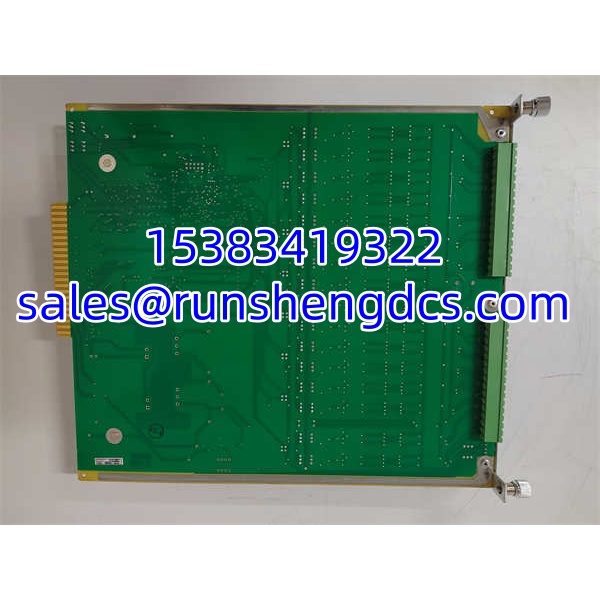
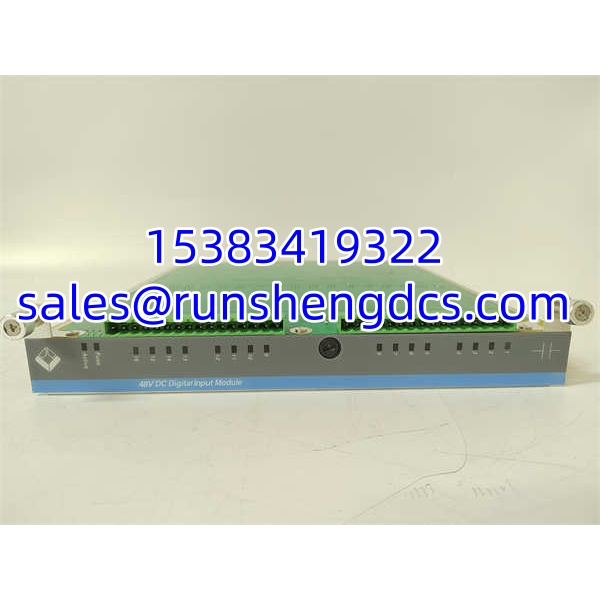

Description
Key Technical Specifications
| Parameter | Detail |
|---|---|
| Manufacturer | Metso (automation now Valmet) |
| Part Number | IOP331 |
| Product Type | I/O processor module for DCS |
| Typical Platform | Metso/Valmet DNA DCS |
| Signal Handling | Analog and digital I/O; supports voltage, current, and temperature-class signals per configuration |
| Isolation | Isolated I/O design to reduce ground-loop and noise interference |
| I/O Density | High I/O capacity reported by distributors; exact channel count varies by revision |
| Mounting | DCS rack / module slot mounting |
| Typical Applications | Pulp & paper, power, chemical, and process control systems |
| Documentation | Limited public OEM datasheet; confirm against Valmet/Metso DNA manuals |
Product Introduction
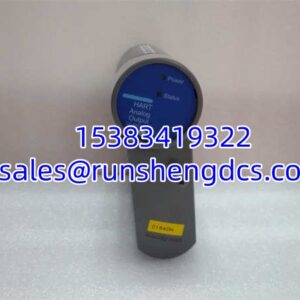
The IOP331 is positioned as an I/O processor rather than a simple passive I/O card. In Metso/Valmet DNA systems, this type of module typically handles a larger block of analog and digital channels, performs signal conditioning, and presents consolidated process data to the DCS controller. Distributor listings describe it as supporting analog output functions, isolated signal paths, and high I/O density, which makes it suitable for machines or process sections where many field signals must be acquired without adding excessive rack space.
From a field perspective, the IOP331 is more sensitive to configuration than a generic relay or terminal block. Its behavior depends on how the DCS project defines channel types, scaling, alarm handling, and failure modes. A surplus unit with the correct model number but the wrong firmware or channel map can appear healthy while driving incorrect outputs. Because Metso’s automation portfolio is now under Valmet, replacement decisions should be validated against current Valmet documentation and the installed DNA system generation.
QA/QC Transparency SOP
- Intake & Origin Verification: Record full model, hardware revision, serial number, and rack/slot position. Inspect backplane connectors, fuses, LEDs, and PCB for corrosion or burn marks.
- Live Functional Testing: Install in a compatible Metso/Valmet DNA rack or verified test fixture. Confirm power-up, module recognition, and absence of critical faults.
- Channel-by-Channel Verification: Test analog inputs/outputs with a calibrated source/load. Verify digital input status and digital output switching. Confirm isolation between channel groups.
- Configuration & Firmware Check: Compare firmware revision and channel configuration with the existing DCS project. Back up parameters before any change.
- Final QC & Packaging: Document tested channels, measured values, firmware revision, and any deviations. Pack with anti-static and shock protection.
Field Engineer Gotchas
- I/O Processor vs Simple I/O Card: The IOP331 is described as an I/O processor, so it may carry more configuration dependency than a basic I/O slice. Fix: Treat it as a configured device, not a plug-and-play terminal block.
- Channel Map Mismatch: Even if the module comes online, wrong channel definitions can cause incorrect valve positions or false alarms. Fix: Compare the replacement module’s configuration with the DCS database before closing loops.
- Analog Output Risk: Modules with analog output capability can move final control elements immediately upon enable. Fix: Force outputs to safe state and verify scaling before returning to automatic control.
- Isolation Does Not Mean Universal Compatibility: Isolated I/O reduces noise and ground-loop issues, but it does not guarantee cross-revision compatibility. Fix: Verify the exact revision and terminal assignment.
- Legacy Support Path: Metso automation is now Valmet. Fix: Confirm whether Valmet still supports the installed DNA generation and whether a direct replacement or migration path is recommended.
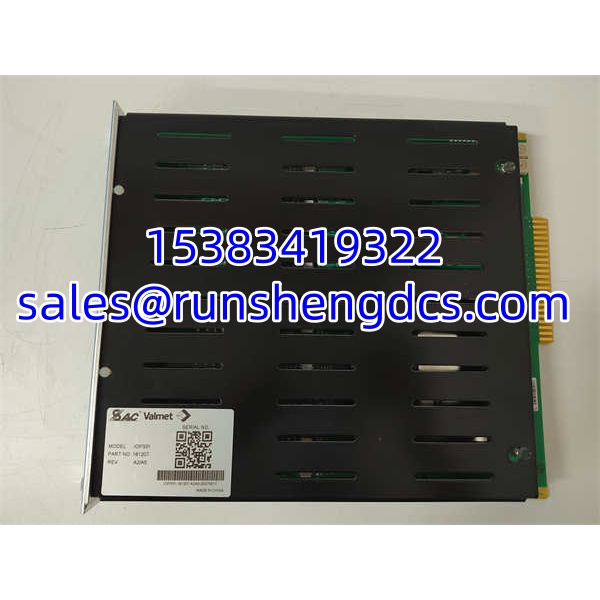
METSO IOP331
Application Scenarios
- Pulp and paper machine control: Handling large groups of analog and digital signals in dryer section, headbox, or reel area I/O racks.
- Power plant auxiliary control: Acquiring temperature, pressure, level, and status signals in DCS cabinets.
- Chemical/process plant upgrades: Replacing failed IOP331 units during brownfield maintenance while preserving existing wiring.
- DCS migration audits: Identifying IOP331 modules during system assessments before migrating to newer Valmet platforms.
FAQ
A: No. It is an I/O processor module for Metso/Valmet DCS systems, not a standalone PLC.
Q: What signals does it support?
A: Distributor descriptions indicate analog and digital I/O, including voltage, current, and temperature-class signals, but the exact channel mix depends on the specific revision.
A: Not automatically. Firmware, channel configuration, and hardware revision must match the installed DCS project.
Q: Is there an official datasheet?
A: No authoritative public datasheet with exact channel counts and wiring was found. Confirm against Valmet/Metso DNA documentation.
Q: What should I check before buying surplus?
A: Hardware revision, firmware version, channel configuration, physical condition, backplane connector integrity, and compatibility with the existing DNA rack.
Q: Can Valmet still support this module?
A: Support depends on the installed system generation. Confirm directly with Valmet or the current system integrator.