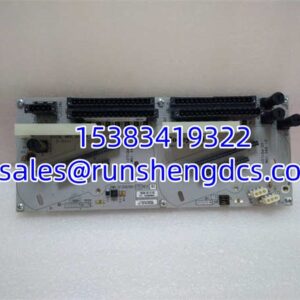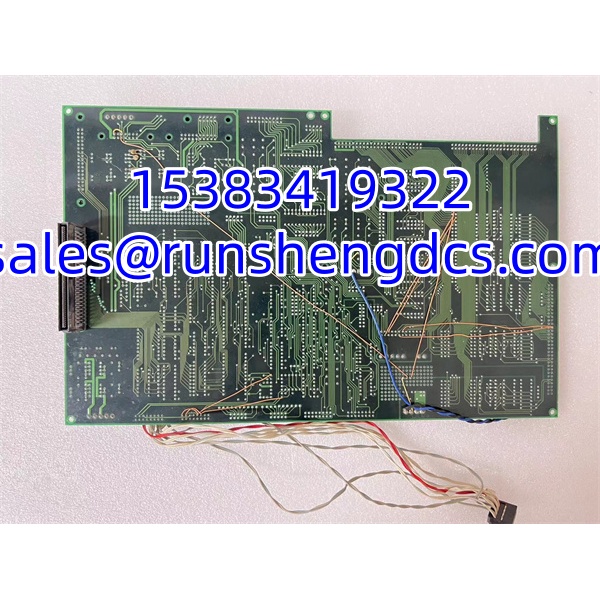

Description
Key Technical Specifications
| Parameter | Detail |
|---|---|
| Manufacturer | KOKUSAI |
| Part Number | BALEXT-SMP |
| Product Type | Interface board / signal isolation module |
| Power Supply | 24 VDC (power group) |
| Operating Temperature | -30°C to 65°C |
| Operating Humidity | 20% to 80% RH, non-condensing |
| Certification | UL |
| Weight | ~0.23 kg |
| Mounting | Control-room / panel mounting |
| Signal Handling | Digital/analog signal isolation via semiconductor and optical/magnetic isolation |
Product Introduction
Legacy interface boards are the kind of component that rarely causes trouble — until one fails and nobody can find the wiring diagram. The BALEXT-SMP fits that profile: a compact industrial interface module used for signal isolation and conditioning inside control panels.
Based on available distributor data, the BALEXT-SMP accepts field signals, modulates them through semiconductor devices, isolates them via optical or magnetic coupling, then demodulates them back to the original signal level while keeping signal, power, and ground electrically independent. That matters in noisy plant environments where ground loops can corrupt PLC logic or distort analog measurements. It runs on 24 VDC, carries UL certification, and is rated for -30°C to 65°C operation. The downside is documentation. Because this is not a mainstream PLC or DCS module from a widely cataloged vendor, buyers should verify the exact board revision and terminal assignments before committing.
QA/QC Transparency SOP
- Intake & Origin Verification: Record full model number, serial number, PCB revision, and supplier lot. Inspect for burnt components, cracked solder joints, corrosion, or replaced connectors.
- Live Functional Testing: Power the module from a regulated 24 VDC supply. Verify power LED, signal pass-through, and isolation behavior using a signal generator and multimeter or oscilloscope.
- Electrical Parameter Tests: Check input/output continuity, insulation resistance between isolated sections, and power draw under load. Confirm no short between signal ground and power ground.
- Firmware/Config Verification: If the board carries programmable elements, read and back up any firmware or configuration. Document board ID, revision, and any jumpers or DIP switch settings.
- Final QC & Anti-Static Packaging: Seal in ESD-safe packaging with desiccant. Include a test report listing measured values, revision, and condition grade.
Field Engineer Gotchas
- Unknown Board Revision: Surplus listings often omit PCB revision. A different revision can change pinouts or isolation topology. Fix: Photograph the nameplate and PCB silk screen before ordering. Do not assume “same model number” means drop-in compatible.
- Missing Wiring Diagram: Without the OEM diagram, terminal assignments are guesswork. Fix: Trace the existing installation before removal. Label every wire and take photos from multiple angles.
- Ground Loop Misdiagnosis: This board is meant to break ground loops, but incorrect wiring can defeat the isolation. Fix: Verify that signal ground and power ground remain separated per the board’s design. Mixing them on the terminal side removes the benefit.
- 24 VDC Polarity and Noise: Industrial 24 VDC supplies can carry switching noise or reverse-polarity risk. Fix: Confirm polarity before energizing. Use a clean, regulated supply during bench testing.
- Humidity and Condensation: The module is rated 20–80% RH non-condensing. Fix: If installed in unheated panels, condensation can bridge isolated circuits. Check enclosure heaters and seals.
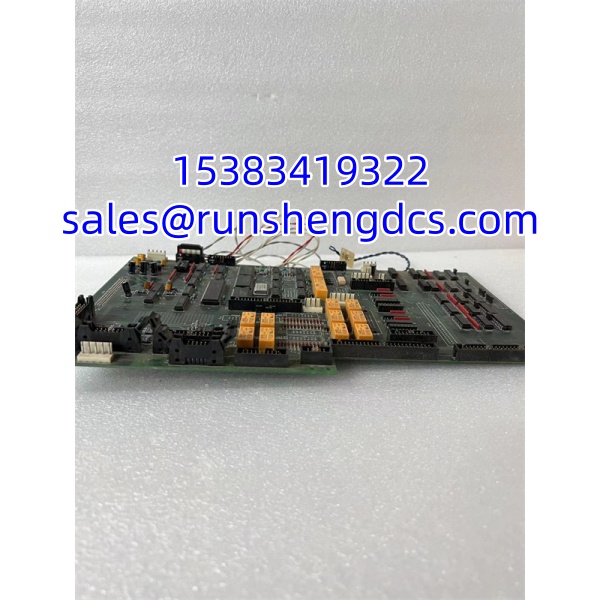
KOKUSAI BALEXT-SMP
Application Scenarios
- PLC signal isolation: Protecting PLC I/O from field-side ground loops, induced noise, or potential differences between equipment grounds.
- Analog signal conditioning: Isolating 4–20 mA or voltage signals where measurement accuracy degrades due to unequal ground potential.
- Legacy control panel maintenance: Replacing failed interface boards in older systems where the original OEM no longer provides direct support.
- Mixed-voltage interfacing: Separating field devices operating at different reference potentials from the control system backplane.
FAQ
Q: Is there an official KOKUSAI datasheet for BALEXT-SMP?
A: No publicly available OEM datasheet was found. Treat distributor specs as indicative and verify against the physical unit.
Q: What voltage does it run on?
A: 24 VDC, according to available listings. Confirm the exact terminal assignment before wiring.
Q: Can I substitute it with a generic isolator?
A: Possibly, but only after verifying signal type, channel count, isolation rating, and mechanical fit. Do not swap blindly.
Q: Is it hot-swappable?
A: Do not assume. Without OEM documentation, treat it as a non-hot-swappable module unless the existing panel procedure explicitly allows it.
Q: What does “SMP” mean in the model number?
A: The meaning is not confirmed in public documentation. It may indicate a board variant or series, but that should not be assumed.
Q: Is this a PLC CPU?
A: No. Available descriptions identify it as an interface or isolation board, not a processor.
Q: Where is it typically used?
A: Industrial control panels where signal isolation between field devices and control systems is required.