
Description
Key Technical Specifications
| Parameter Name | Parameter Value |
|---|---|
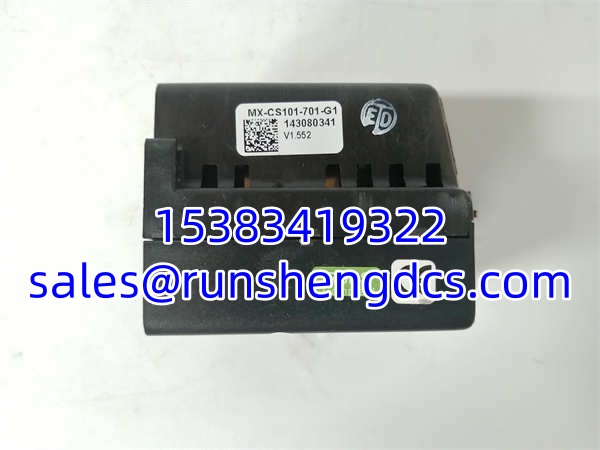
| Product Model | MX-CS101-701-G1 |
| Manufacturer | IMS (Integrated Motion Systems) |
| Product Type | Integrated Micro-Stepping Motor Controller |
| Input Voltage Range | +24V DC to +75V DC |
| Current Rating | 5A RMS / 7A Peak |
| Microstep Resolution | Up to 51200 steps/rev |
| Communication Interfaces | RS-232, RS-485 |
| Controller Type | Expandable Programmable Logic Controller |
| Motor Compatibility | Bipolar Stepper Motors |
| Mounting Style | Compact Panel-Mount Component |
| Expansion Capability | I/O Expansion Modules Supported |
| Protection Features | Over-current and Over-temperature Shutdown |
Product Introduction
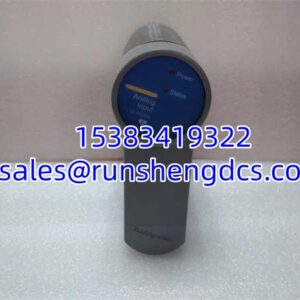
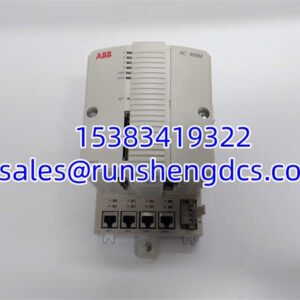
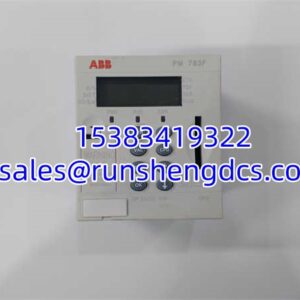
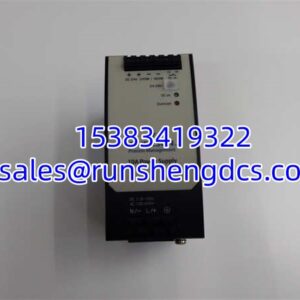
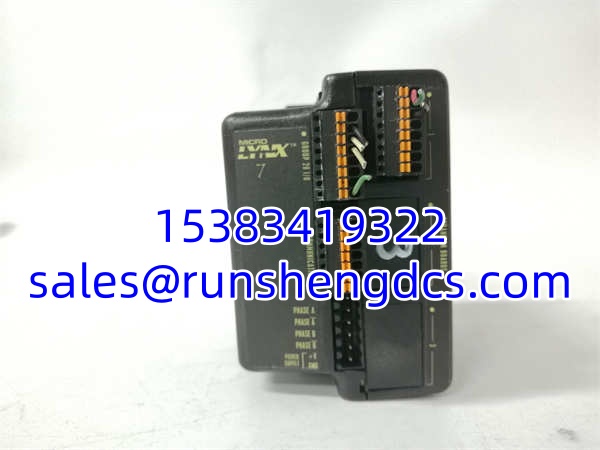
When you’re trying to fit precise motion control into a tight panel and don’t have space for a separate PLC and drive, the IMS MX-CS101-701-G1 is exactly what you need. Commonly known in the field as the MicroLYNX, this module crams a high-performance bipolar micro-stepping driver and an expandable programmable controller into one footprint. I’ve wired up these units on packaging machinery where saving a few inches of DIN rail space actually made the difference between fitting the enclosure and having to order a custom cabinet.
Engineers gravitate toward the MX-CS101-701-G1 because it genuinely simplifies system architecture. You get a massive 51200 microstep resolution for buttery-smooth motion, and it handles 5A RMS / 7A Peak current right out of the box. It talks over standard RS-232 or RS-485, making it easy to network. One practical note from the field: because it’s running both a drive and a brain in one package, it can get warm under continuous high-load operation. Make sure you aren’t stacking it right next to other heat-generating drives without adequate ventilation.
Quality SOP & Tech Pitfalls
The Lab Report (SOP):
Every MX-CS101-701-G1 gets pushed hard before it leaves our bench. We start with a visual inspection for damaged connectors or blown traces. Then, we mount it to a test fixture, apply 48V DC, and command a bipolar stepper motor through a full micro-stepping cycle to verify the 51200 resolution. We use a Fluke 115 to check the RS-485 termination and insulation resistance. Finally, we verify the over-current protection trips correctly and seal it in anti-static packaging.
The Engineer’s Warning (Pitfalls):
Ground loops are the absolute enemy of this module. I once spent two days chasing phantom micro-step errors on a medical device, only to find the tech had tied the RS-485 shield to a noisy chassis ground instead of using a single-point star ground. The noise coupled right into the micro-stepping logic. Also, always photograph your DIP switch and terminal block wiring before pulling the old unit. The IMS programming environment is great, but if you lose your I/O expansion mapping, reconfiguring it from scratch is a painful way to spend a Friday afternoon.
Installation & Configuration Guide
- Pre-Installation: ⚠️ Disconnect all power (24-75V DC) and wait 5 minutes for the drive capacitors to discharge. Take detailed photos of the existing terminal block wiring and any DIP switch settings. Verify your power supply can deliver the required peak current without sagging.
- Removal: Disconnect the motor leads, communication cables, and I/O expansion wires. Unmount the MX-CS101-701-G1 from the panel. Inspect the terminal blocks for signs of thermal stress or stripped threads.
- Installation: Verify all terminal connections match your photos exactly, especially the motor phase wiring. Reversing the A and B phases will cause the motor to vibrate violently and potentially damage the drive. Mount the new module securely to the panel, ensuring good thermal contact if it uses the panel as a heat sink.
- Power-On & Testing: Apply 24V DC logic power first, then the main motor supply. Connect via RS-232 using the IMS configuration software. Verify the motor spins smoothly at low speed before ramping up. Test all expansion I/O points and confirm the over-temperature protection is monitoring correctly.
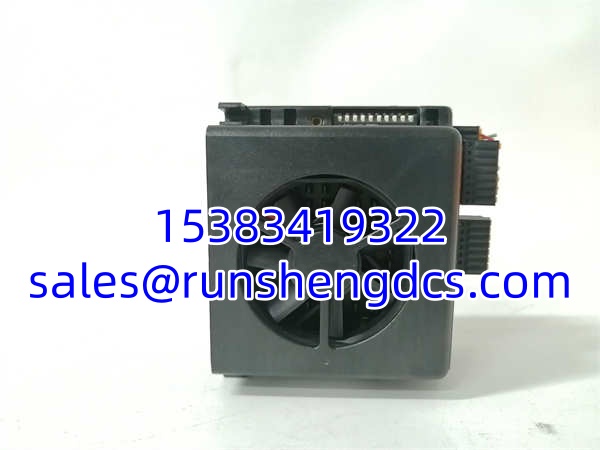
IMS MX-CS101-701-G1
Compatible Replacement Models
| Model | Compatibility Tier | Notes |
|---|---|---|
| MX-CS101-701-G1 | ✅ Drop-in Replacement | Exact match. Verify firmware version and I/O expansion configuration before swapping. |
| MX-CS101-702-G1 | ⚠️ Software Compatible | Same MicroLYNX platform, different current rating. Requires motor tuning and current limit adjustments. Budget 2-4 hours. |
| MX-CS101-701-G2 | ⚠️ Software Compatible | Hardware revision update. Logic should be compatible, but verify communication handshake parameters. |
| MX-CS101-700 | ❌ Hardware Mod Required | Older generation MicroLYNX. May require rewiring and reprogramming. Advise against unless no other options exist. |
Frequently Asked Questions (FAQ)
Can I use this module to drive a unipolar stepper motor?
No. The MX- is strictly a bipolar micro-stepping driver. If you have a unipolar motor with 6 or 8 wires, you can only use the outer 4 wires and ignore the center taps, effectively treating it as a bipolar motor. But you cannot use the center taps for half-coil operation.
Why is my RS-485 communication dropping intermittently?
90% of the time, it’s a termination or grounding issue. Make sure you have a 120-ohm termination resistor at both ends of the RS-485 bus. Also, verify that your communication cable is shielded and that the shield is grounded at only one end. Daisy-chaining these modules without proper termination will cause reflections that corrupt data.
Does the 51200 microstep resolution mean I get 51200 steps per revolution?
Yes, but only if your motor has a 1.8-degree step angle (200 steps/rev). The 51200 is the maximum interpolation resolution. If you’re using a 0.9-degree motor, your base steps double, but the max microstep resolution remains 51200. Always check your motor’s native step angle when configuring.
Can I expand the I/O on this controller?
Yes, that’s one of its best features. The MX- supports I/O expansion modules to add digital inputs, outputs, or analog channels. Just make sure you’re using genuine IMS expansion modules and that your firmware version supports the specific expansion card you’re adding.
Is the programming software included?
The module comes with a user-friendly programming environment, but you should verify with the supplier whether a licensed copy is included or if you need to source it separately. Always download the latest version from the IMS support site before commissioning, as older versions sometimes have bugs with newer firmware revisions.