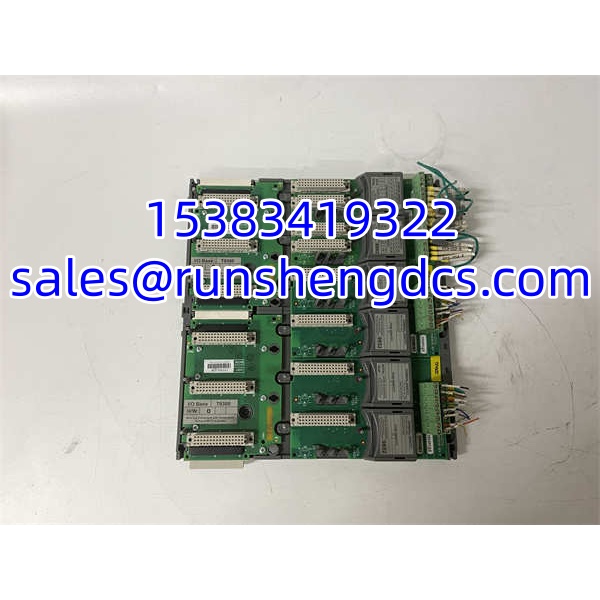

Description
Key Technical Specifications
| Parameter | Value / Status |
|---|---|
| Product String | 9802-1-9852-2 — unverified combined identifier |
| Likely Components | T9802 controller/processor + T9852 expander/interface module |
| Manufacturer | ICS Triplex, now Rockwell Automation |
| Product Family | Trusted TMR |
| Architecture | Triple Modular Redundancy, 3-2-0 fault tolerance |
| Fault Handling | Hardware-implemented fault tolerance (HIFT) |
| Fault Response | ≤1 ms claimed; verify with OEM manual |
| Safety Rating | SIL 3 confirmed for T9852 expander interface; SIL 4 claimed for 9802/9852 by some sellers but not consistently verified |
| Controller Interfaces | RS-232, RS-485, Ethernet claimed; confirm per revision |
| Expander Function | T9852 provides master interface between IMB and expander bus |
| Supply Voltage | 24 V DC typical; verify on nameplate |
| Hot Swap | Supported for Trusted TMR modules generally |
| Lifecycle | Discontinued / surplus |
Product Introduction
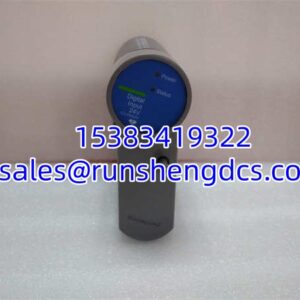
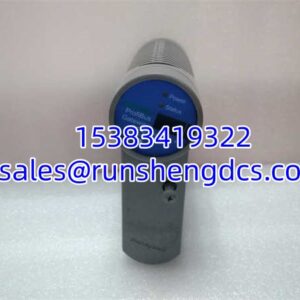
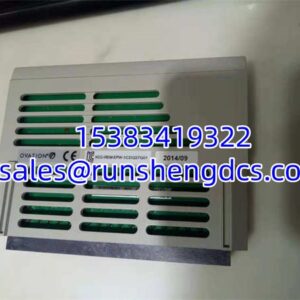
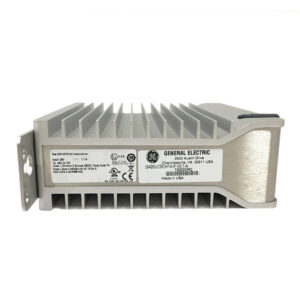
Buying “9802-1-9852-2” as one part number is how you end up with the wrong module in a safety cabinet. The string does not appear as a clean OEM SKU in ICS Triplex/Rockwell documentation. It almost certainly represents two Trusted TMR modules — a T9802 controller/processor and a T9852 expander/interface module — bundled by a reseller.
That matters because one is the brain and the other is the bus bridge. The T9802 handles control execution and TMR voting; the T9852 sits in the controller chassis and links the Inter-Module Bus to the expander bus so additional I/O chassis can be added over UTP cabling. Both are built on HIFT TMR architecture and support hot replacement, but they are not interchangeable and cannot be validated from a single combined label. Bottom line — treat this as a two-module lot, not a single drop-in part.
QA/QC Transparency SOP
- Intake & Origin Verification
Separate the lot into individual modules. Record T9802 and T9852 labels, SW/REV codes, serial numbers, and physical slot markings. Reject any module with unreadable revision data or mismatched backplane connectors. - Live Functional Testing
Install each module in a compatible Trusted TMR test chassis. Verify power-up, front-panel LED diagnostics, IMB recognition, and expander-bus presence. Confirm the controller reaches RUN without persistent TMR disagreement faults. - Electrical Parameter Tests
Check 24 V DC rail draw, backplane pin continuity, connector integrity, and isolation. Inspect for burnt traces, swollen capacitors, or corrosion on the 96-pin backplane interface. - Firmware/Config Verification
Read firmware revision and module identity through the diagnostic port. Back up configuration. Flag any module that fails self-test or reports unknown hardware. - Final QC & Anti-Static Packaging
Pack T9802 and separately in ESD-safe bags with rigid protection. Include a test summary listing model, revision, chassis behavior, and known limitations. Do not issue a factory SIL certificate for surplus hardware.
Field Engineer Gotchas
- Combined part number trap
Risk: Ordering “9802-1-9852-2” expecting one module. Solution: Confirm whether you need a T9802 controller, a expander interface, or both. War story: A refinery spare order arrived with two different module types than the failed slot because the PO used the bundled string instead of the T-prefix OEM codes. - Risk: Assuming is always a digital or analog I/O module. Some sources call it an expander interface; others list it as digital or analog output. Solution: Verify the exact label and OEM manual before wiring. Installing the wrong function class can break the expander bus or output voting.
- SIL rating overclaim
Risk: Assuming SIL 4 across the board. is documented with TÜV IEC 61508 SIL 3 in at least one technical description, while some seller pages claim SIL 4. Solution: Use the OEM certification tag, not the listing headline. - IMB/expander bus mismatch
Risk: Plugging into an expander chassis instead of the controller chassis, or mixing incompatible Trusted revisions. Solution: resides in the controller chassis as the master expander interface. Verify chassis type and slot rules. - Firmware/revision mismatch
Risk: New revision rejects existing logic or bus configuration. Solution: Read the original module SW/REV before removal. Do not mix revisions without engineering approval.
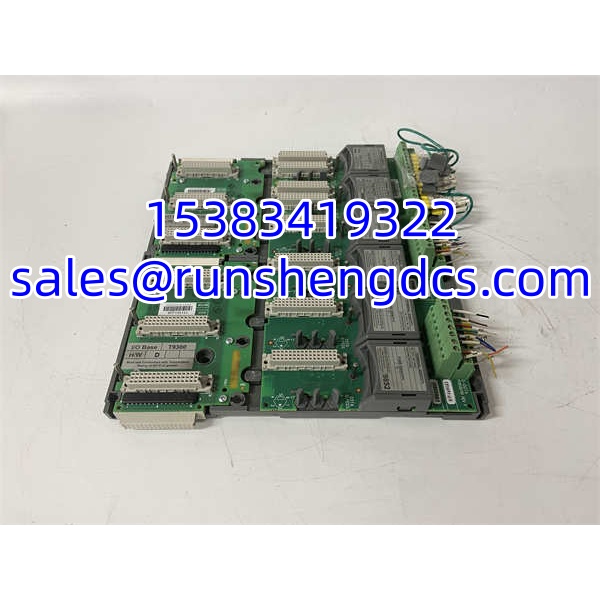
ICS TRIPLEX 9802-1-9852-2
Application Scenarios
- Refinery ESD systems with Trusted TMR controllers. The controller or expander interface fails, but the I/O wiring, voting logic, and safety philosophy remain valid. Verified / replacements keep the system online without re-proving the entire SIF.
- Gas compression stations using Trusted TMR for turbine and pipeline protection. An expander chassis loses communication after a fault. Replacing the correct expander interface module restores IMB-to-expander bus connectivity.
- Power generation auxiliary safety systems. Legacy Trusted cabinets need sparing parts because OEM lead times are long. A tested controller reduces risk during planned outages.
- Anonymized case: A chemical plant reported intermittent expander-bus faults on a Trusted TMR cabinet. The failed module was labeled only as “9852” on the purchase request. The replacement turned out to be an analog-output variant, not the required expander interface. After confirming the expander-interface function and IMB role, the correct module cleared the bus fault. The controller itself, a -class unit, remained healthy.
FAQ
Is 9802-1-9852-2 one module?
No. It is almost certainly a reseller bundle referencing a controller and a expander/interface module. Do not treat it as a single OEM part number.
No. is described as a Trusted TMR expander interface module located in the controller chassis. Confirm slot rules in the OEM hardware manual.
Not necessarily. T8110B is a documented Trusted TMR processor. appears in surplus listings as a redundant controller, but its exact role and revision must be confirmed from the OEM manual.
Trusted TMR modules generally support hot replacement. Still follow the OEM procedure to avoid bus disturbances.
Only if the OEM manual confirms compatibility. Trusted systems are strict about module identity, revision, and chassis placement.
Should I buy this for a new project?
No. This is legacy surplus hardware. Use it only for sparing or like-for-like replacement in existing Trusted TMR cabinets.
What documentation do I need before installing?
Module label photos, SW/REV codes, chassis model, slot map, and the OEM Trusted TMR hardware manual for the exact revision. Without those, do not energize.