
Description
Key Technical Specifications
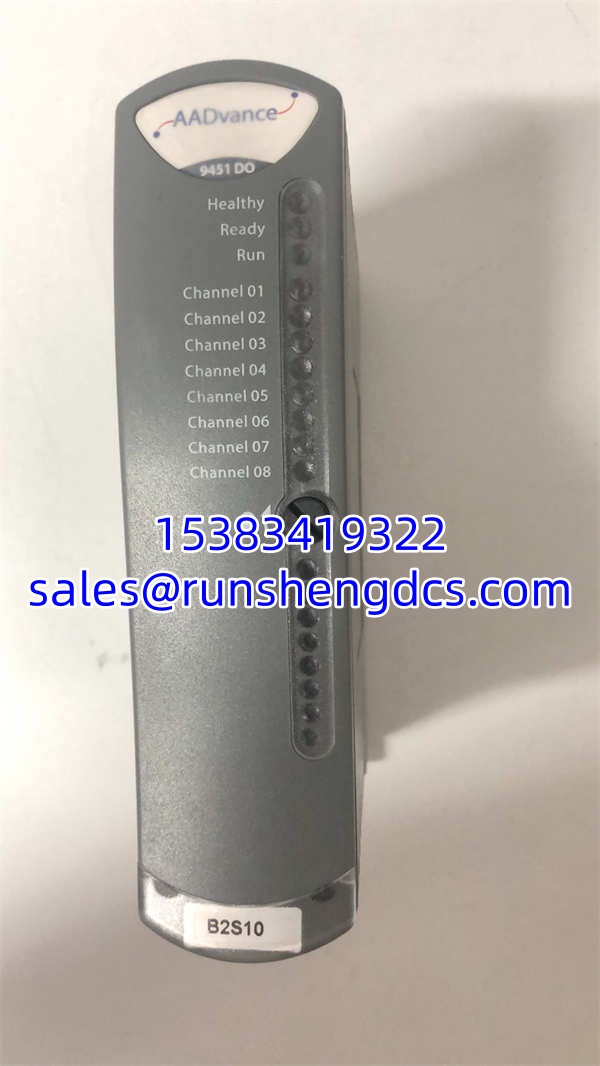
- Product Model: T9451
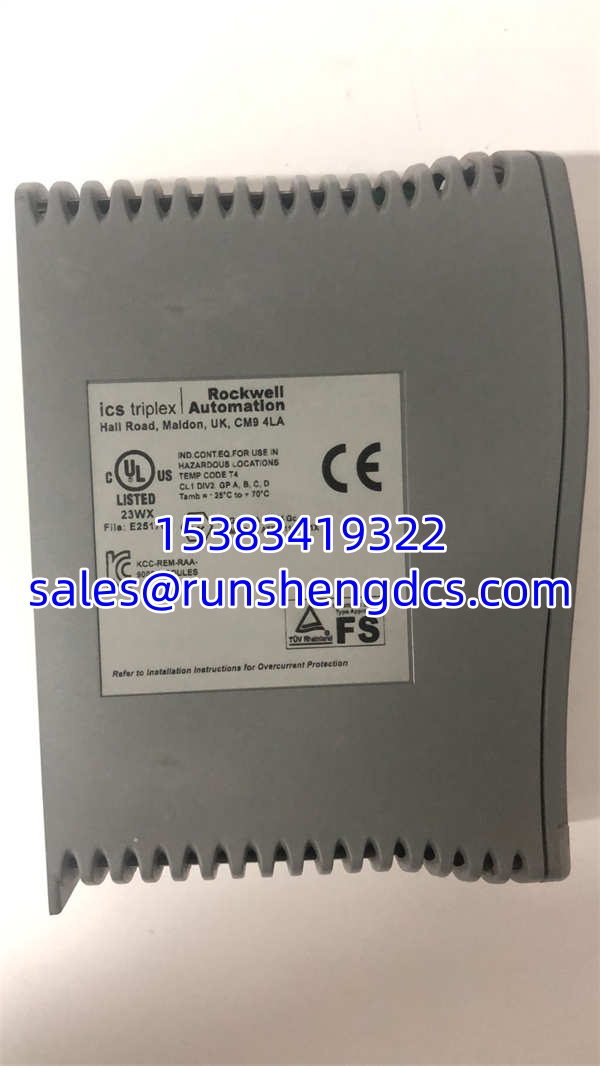
- Manufacturer: ICS Triplex / Rockwell Automation
- Channel Count: 8 Independent Digital Outputs
- Output Current: 1A Continuous per Channel
- Load Voltage: 24V DC Nominal (Max 32V DC)
- Safety Rating: SIL 3 (IEC 61508)
- Redundancy: Triple Modular Redundancy (TMR)
- Protection: Short Circuit, Open Circuit, Reverse Current
- Diagnostics: Full Channel Voltage & Current Monitoring
- Installation: Hot-Swappable in AADvance Rack
- Operating Temp: -40°C to +85°C
Product Introduction
You’re staring at a tripped safety system, and the HMI shows a “DO Fault” on a critical shutdown valve. The T9451 is the exact interface between your AADvance TMR processor and that field device. It doesn’t just switch 24VDC; it does so with three independent internal channels voting on every state change to prevent spurious trips or dangerous failures. This isn’t a standard PLC output card. It’s a safety-critical component where a single internal fault must never cause a loss of protection or an unintended plant shutdown.
Why specify the T9451 over a cheaper alternative? Because it carries SIL 3 certification and handles 1A per channel continuously without external interposing relays for most solenoid loads. The onboard diagnostics monitor voltage and current on every channel, feeding real-time health data back to the TMR processor. Bottom line — it buys you uptime and safety compliance in one module, eliminating the wiring complexity and failure points of external relay panels.
QA/QC Transparency SOP
- Intake & Origin Verification: Every T9451 is inspected for physical damage, corrosion, and correct revision markings. We verify the lot code against manufacturer records to rule out known counterfeit batches. No visual defects pass.
- Live Functional Testing: Module is installed in a verified AADvance TMR test rack. We force each of the 8 channels ON/OFF via software and confirm the TMR processor reads the correct state. Hot-swap insertion/removal is tested to verify backplane communication stability.
- Electrical Parameter Tests: Each channel is loaded to 1A resistive, and voltage drop is measured at the terminal block (must be <0.5V). Insulation resistance is megger-tested at 500V DC between channels and ground. Short-circuit protection is verified by momentarily grounding the output (current must limit, not latch).
- Firmware/Config Verification: Module firmware revision is read and logged. We confirm it matches the target AADvance system’s expected revision range. Configuration jumpers (if present) are photographed and documented.
- Final QC & Anti-Static Packaging: All test data is compiled into a certificate of conformance. Module is sealed in an anti-static bag with desiccant, then boxed with foam protection. QC signature and date are affixed to the package.
Field Engineer Gotchas
- Firmware Rev Mismatch: Risk: TMR processor rejects the module or flags a “Config Mismatch” fault. Solution: Always check the firmware revision on the module label against your system’s accepted revision list before installation. I’ve seen crews waste 4 hours troubleshooting a perfectly good T9451 that was just one rev too new for their legacy AADvance rack.
- DIP Switch/Jumper Errors: Risk: Module defaults to wrong channel count or diagnostic mode. Solution: Photograph the jumper settings on the old module before removal. The T9451 has no auto-configuration for channel grouping. One missing jumper = 4 channels dead.
- Wiring/Terminal Block Incompatibility: Risk: Intermittent faults or backplane damage. Solution: Use only ICS Triplex-rated terminal blocks. Generic DIN-rail blocks often have insufficient clamping force for the ’s solid-core wire requirement. I’ve seen backplane pins bent from forcing the wrong terminal adapter.
- Power Draw/ESD Risks: Risk: Backplane overload or latent ESD damage. Solution: Verify your AADvance power supply has ≥20% headroom when adding T9451s. Always wear a grounded wrist strap. The TMR logic is ESD-sensitive; I’ve replaced three “new” modules in one month before realizing the tech was working on carpet without a strap.
ICS TRIPLEX T9451
Application Scenarios
- Gas Turbine Emergency Shutdown: High-vibration environments demand modules that won’t fatigue. The ’s TMR architecture ensures a single vibration-induced solder crack doesn’t cause a false trip. 8 channels cover fuel valves, lube oil pumps, and overspeed solenoids without external relays.
- Offshore Platform ESD Systems: Space and weight are critical. The ’s 1A/channel rating eliminates bulky interposing relay panels, saving 30% panel space. Its -40°C to +85°C range handles unconditioned outdoor cabinets without derating.
- Chemical Reactor Safety Interlocks: SIL 3 compliance is non-negotiable. The ’s full-channel diagnostics provide proof-test data directly to the SIS, reducing manual testing time by 40%. Open/short detection catches field wiring degradation before it causes a nuisance trip.
FAQ
Yes. It’s designed for live insertion/removal in an AADvance rack. The TMR processor isolates the channel during swap. But — always verify your system software version supports hot-swap; older revisions may require a brief rack pause.
Yes, but they must be in the same TMR group. The AADvance system treats them as functionally equivalent for voting. Just ensure your I/O configuration matches the physical slot assignment.
Not guaranteed. V5.0 modules may have firmware that V4.2 processors can’t parse. Check the AADvance Compatibility Matrix first. If no matrix exists, call the supplier with your exact processor revision. Don’t guess.
What’s the max wire size for the terminals?
14 AWG solid or stranded. Anything larger won’t seat properly and risks arcing. I’ve seen 12 AWG forced in, then fail a hi-pot test during commissioning.
Is this module SIL 3 certified for all channels?
Yes. All 8 channels are independently SIL 3 capable. No channel sharing or grouping reduces the rating. But — you must use the correct safety-rated wiring practices (segregated conduits, shield grounding) to maintain the SIL claim in the field.
How do I prove-test this module?
The supports online proof testing via the AADvance diagnostic commands. You can force each channel and verify the feedback without shutting down the process. Full offline proof testing requires removing the module and applying calibrated loads. Document everything — auditors will ask.
What’s the typical lead time if out of stock?
New surplus: 2-4 weeks from global network. Refurbished: 1-2 weeks if in test queue. Don’t accept “in stock” without a serial number verification. I’ve seen 6-week delays when suppliers counted “allocated” stock as available.