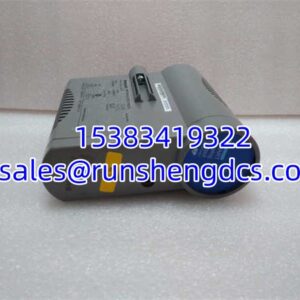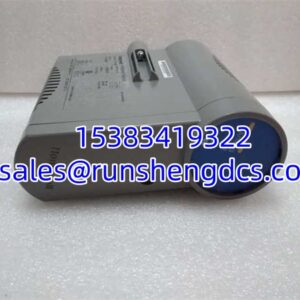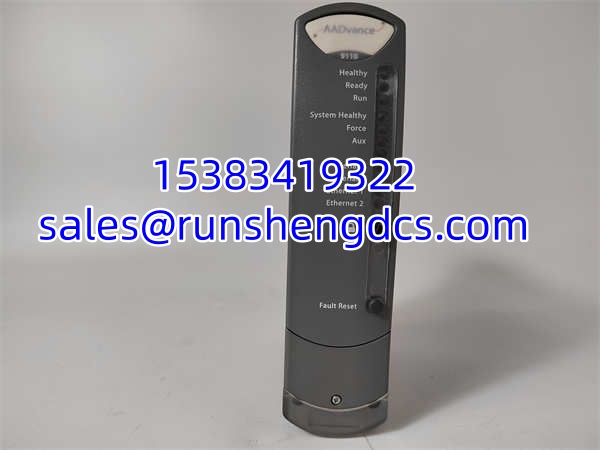
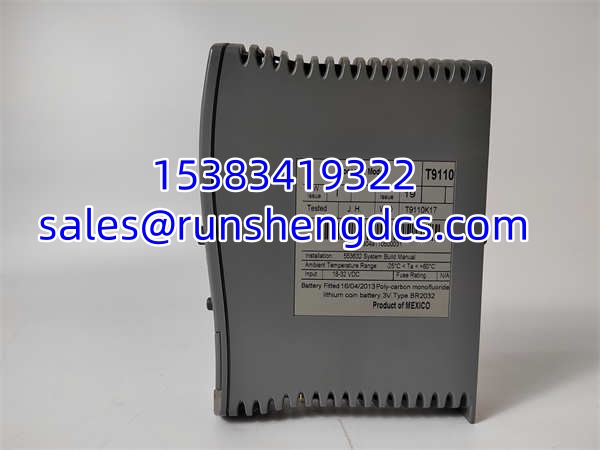

Description
Key Technical Specifications
- Processor Architecture: Triple redundant processors (TMR), each running identical logic in parallel
- Safety Rating: IEC 61508 SIL 3 (some documentation cites SIL 4 capability)
- Input Voltage: 18-32V DC (nominal 24V DC)
- Power Dissipation: 50-80W (varies by configuration and load)
- Fault Switchover Time: ≤1 millisecond (hardware-implemented fault tolerance)
- Operating Temperature: -25°C to +60°C (some sources list -40°C to +85°C — verify against your specific hardware revision)
- Communication Interfaces: Ethernet, RS-232, RS-485; supports Modbus TCP/IP, EtherNet/IP
- I/O Bus: Triple redundant module interconnect bus
- SOE Buffer: 1,000 events (expandable to 4,000 events in CI buffer)
- Processor Clock: 100 MHz (legacy spec; some variants may differ)
- Compatible Chassis: T8100 series
- Certifications: TÜV certified, CE Listed, ATEX compliant (Ex nA IIC T4)
- Origin: Product of Mexico (per hardware label)
Product Introduction
When a compressor trips at 2 AM on a refinery unit, you don’t want your safety controller debating which processor is telling the truth. The T9110 is the brain inside ICS TRIPLEX’s Trusted TMR system — three independent processors executing the same logic simultaneously, voting on every output. If one channel drifts or fails, the other two outvote it in under a millisecond. No bump. No debate. The process keeps running while you schedule a replacement during the next turnaround.
Why does this matter in the field? Because the T9110 carries SIL 3 certification (with SIL 4 capability in certain configurations), meaning it’s approved for the kind of applications where a wrong output means evacuating the plant. The hardware-implemented fault tolerance (HIFT) architecture doesn’t rely on software handshakes to detect failures — it’s baked into the silicon. For plants running legacy Trusted TMR racks, finding a working T9110 on the surplus market is often the difference between a two-day shutdown and a two-week project. Verify your firmware revision before ordering — mismatched firmware between redundant channels will prevent the system from entering Run mode.
Troubleshooting Quick Reference
| Fault | Probable Cause | Relevancy | Quick Check | Fix |
|---|---|---|---|---|
| Module won’t power up | Power supply or backplane issue | 80% | Measure 18-32VDC at terminal block | Check T824X power supply output; verify chassis backplane continuity |
| “System Healthy” LED off | Single channel failure | 60% | Check individual processor status LEDs | Isolate failed channel; module may still run in degraded 2-out-of-3 mode |
| Fault LED flashing | Firmware mismatch between channels | 40% | Connect via serial; read firmware revision per channel | Reload matching firmware to all three processors |
| Communication timeout | Ethernet/serial port failure | 30% | Ping module IP; test RS-232 loopback | Swap communication cable; verify IP configuration; check firewall rules |
| Erratic I/O readings | Module interconnect bus noise | 20% | Check shield grounding on I/O bus cables | Reseat module; verify bus terminator settings; check for EMI sources nearby |
| SOE buffer overflow | Excessive event logging | 15% | Download SOE log via engineering workstation | Clear buffer; review event trigger thresholds |
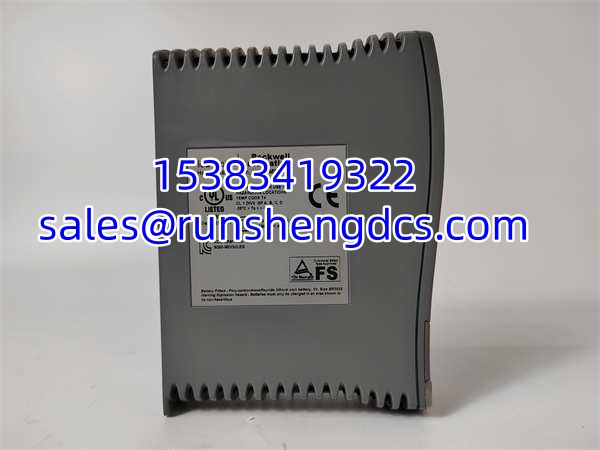
ICS TRIPLEX T9110
Application Scenarios & Pain Points
Offshore gas compression platform — vibration and salt air. The T9110 sits in a pressurized rack on a North Sea platform, running compressor anti-surge logic. Ambient temperature swings from -10°C to +45°C depending on season and equipment heat. The TMR architecture means a single processor failure from salt-induced corrosion doesn’t trip the compressor — critical when a shutdown costs $500K/day in lost production.
Ethylene cracker furnace safety interlock. Three T9110 processors monitor tube skin temperatures and fuel gas pressure. When a tube overheats, the system must cut fuel within milliseconds. The ≤1ms switchover time isn’t a marketing number here — it’s the margin between a controlled shutdown and a furnace tube rupture.
Pipeline compressor station — remote, unmanned. The T9110 handles both process control and safety functions in a single rack. When a channel fails, the station keeps running in degraded mode while the maintenance crew drives three hours to site. No one gets woken up at midnight for a single-channel fault.