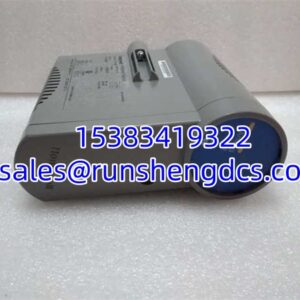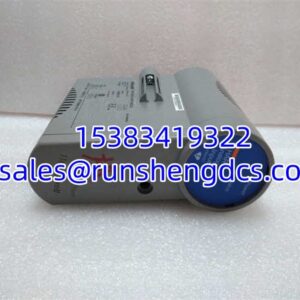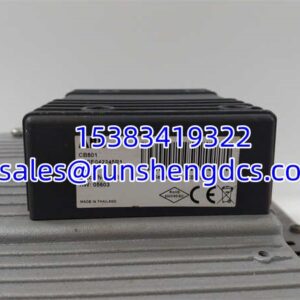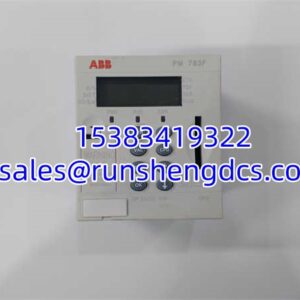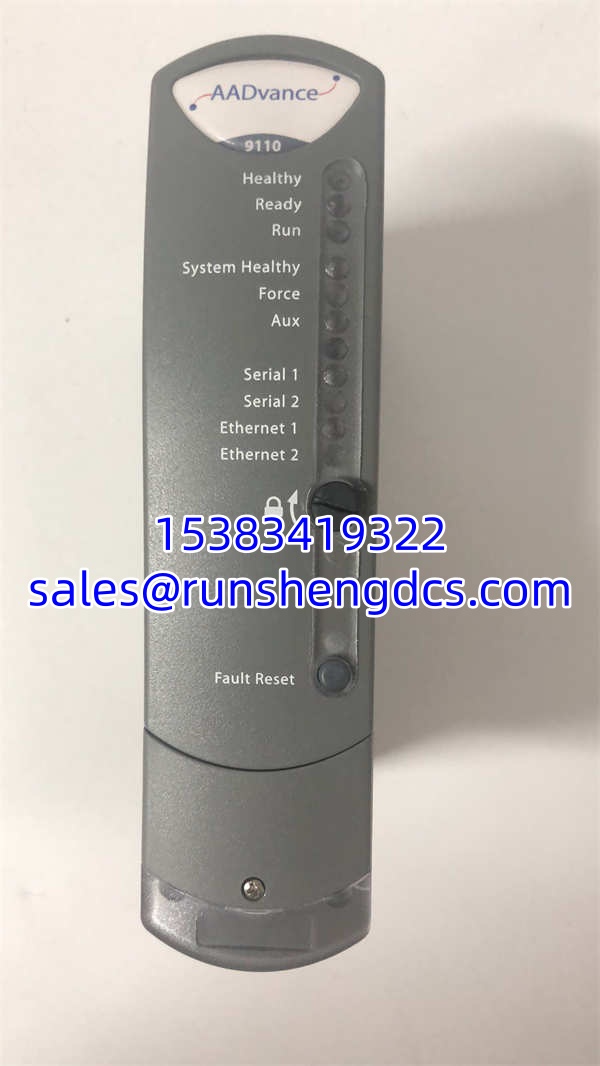

Description
Key Technical Specifications
- Product Model: T9110
- Manufacturer: ICS Triplex (Rockwell Automation)
- Product Category: TMR Safety Processor Module
- Safety Certification: SIL 3 (IEC 61508 / IEC 61511), TÜV Certified
- Architecture: Triple Modular Redundancy (TMR) with 2oo3 Voting
- Redundancy: Hot Standby, Automatic Failover (<100ms)
- Communication Protocols: Modbus TCP/IP, OPC UA, Profibus DP (Optional)
- Network Interface: Dual-port Ethernet (10/100 Mbps, Redundant)
- Power Supply: 24V DC (±10%), Redundant Input Optional
- Operating Temperature: -40°C to +70°C
- Configuration Software: Trusted Toolset™ / AADvance Workbench
Product Introduction
Legacy safety systems don’t fail gracefully. When a TMR processor in a 20-year-old refinery ESD system goes dark, you have hours to restore it before environmental regulators shut down the plant. The ICS TRIPLEX T9110 is the brain of the Trusted® safety architecture, executing 2oo3 voting logic to ensure a single point of failure never triggers a false trip or misses a genuine hazard. It sits in the primary processor slot of the Trusted rack, managing all I/O scanning, safety diagnostics, and redundant peer-to-peer synchronization.
Bottom line — this is a SIL 3 rated workhorse built for zero-tolerance environments. The T9110 supports hot standby redundancy with failover times under 100 milliseconds, meaning downstream control valves won’t even register a processor swap. Its -40°C to +70°C operating range handles unheated offshore platforms without derating. For facilities running Trusted systems installed in the 1990s and 2000s, sourcing a verified T9110 is often the only alternative to a $2M+ control system migration.
QA/QC Transparency SOP
- Intake & Origin Verification: Every T9110 is traced to its manufacturing batch. We verify the PCB revision, component date codes, and serial number against ICS Triplex production records to confirm authenticity and rule out counterfeit or field-pulled units with unknown history.
- Live Functional Testing: The module is installed in a verified Trusted® TMR test rack. We run a full TMR synchronization test, execute a 2oo3 voting simulation, and verify hot standby failover timing using an oscilloscope to confirm sub-100ms switchover.
- Electrical Parameter Tests: Backplane power draw is measured under full load to ensure it stays within the 24V DC ±10% tolerance. We perform insulation resistance testing (>10 MΩ @ 500V) on all communication ports and verify backplane isolation (2500V AC rated).
- Firmware/Config Verification: Firmware revision is read and documented. We verify compatibility with AADvance Workbench R1.2+ and confirm the module’s TMR license key is intact. A configuration backup is saved before shipment.
- Final QC & Anti-Static Packaging: Only modules passing all tests receive a QC Passed label. Each T9110 is sealed in an anti-static bag with desiccant, wrapped in bubble wrap, and shipped in a rigid carton with foam corner protectors.
Field Engineer Gotchas
- Firmware Rev Mismatch: The and your AADvance Workbench software MUST match exactly (e.g., both R1.33). A mismatch will cause the module to enter FAULT state and refuse to synchronize with its TMR peers. Always check the firmware tag on the old module before pulling it.
- TMR Sync Cable Missing: The requires a dedicated TMR synchronization cable between redundant processors. I’ve seen techs replace a processor, forget the sync cable, and spend 6 hours chasing a “Peer Comm Fail” alarm. Verify the cable is seated before powering up.
- Backplane Slot Position: The MUST be installed in the designated primary processor slot (typically Slot 0 or Slot 1, depending on rack configuration). Placing it in a generic I/O slot will result in a backplane initialization failure. Consult the Trusted rack manual for your specific chassis.
- ESD Sensitivity: The TMR voting logic ASICs are extremely sensitive to electrostatic discharge. Always use a grounded wrist strap when handling the . I’ve seen modules pass bench testing but fail in the field because a tech handled them without ESD protection on a dry winter day.
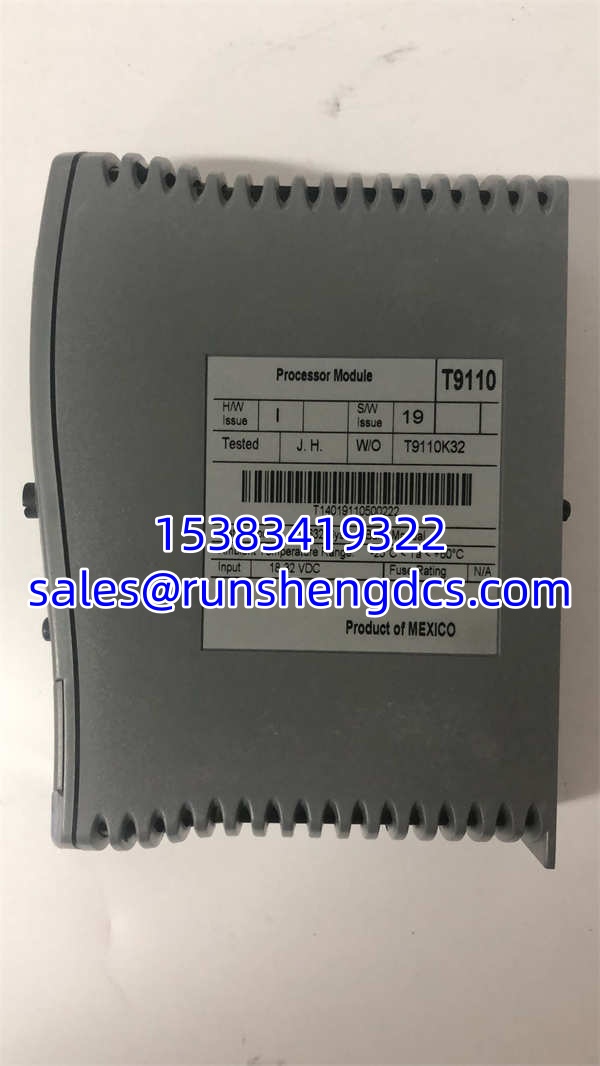
ICS TRIPLEX T9110
Application Scenarios
- Offshore Oil & Gas ESD Systems: Unheated control rooms, salt spray exposure, and zero maintenance tolerance. The ‘s -40°C rating and conformal-coated PCBs survive where standard PLCs corrode within 18 months.
- Nuclear Power Plant Safety Systems: SIL 3 compliance and TMR architecture meet NRC regulatory requirements. The 2oo3 voting logic ensures no single sensor failure can cause a spurious reactor trip.
- Petrochemical Fired Heater Protection: Burner management systems require <100ms failover to prevent flameout during processor switchover. The ‘s hot standby redundancy maintains burner safety during seamless processor transitions.
FAQ
- Yes, but only if the redundant processor is healthy and synchronized. Hot-swapping a processor when the peer is already in FAULT will cause a full system trip. Always verify peer health first.
- Only if the module firmware is R1.2 or higher. Older firmware requires a factory upgrade. Verify the revision tag on the module faceplate before ordering.
- Is this a direct replacement for the T9111? No. The T9111 is an enhanced version with additional protocol support. They are NOT pin-compatible or firmware-interchangeable. Confirm your exact model number.
- Verified surplus stock typically ships in 3-5 business days. Factory-refurbished units may take 4-6 weeks. We’ll confirm exact availability before you commit.
- Does this module include the TMR license? Yes, all modules ship with the TMR license key embedded. If you’re replacing a non-TMR processor, you’ll need a license upgrade from Rockwell.
- Can I use this in a new SIL 3 design? Technically yes, but Rockwell now recommends the Trusted® TriStation 1131 platform for new projects. The is best suited for maintaining existing legacy installations.
- What if my firmware revision isn’t available? We can source matching firmware or arrange a factory upgrade. Don’t attempt to flash firmware yourself without the proper Trusted Toolset license — you risk bricking the module.