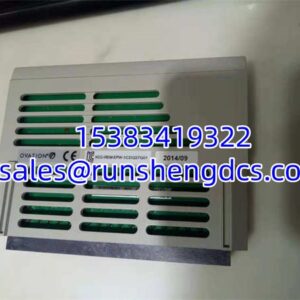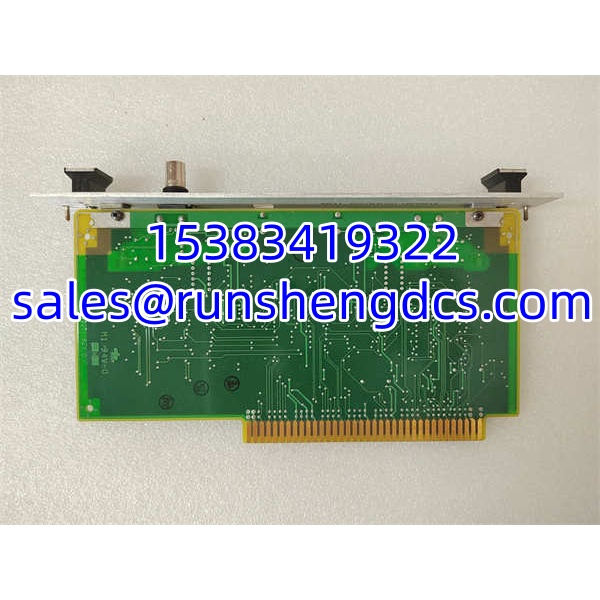

Description
Key Technical Specifications
| Parameter | Specification |
|---|---|
| Manufacturer | Honeywell Process Solutions |
| Model | 51305072-200 CLCN-A |
| Product Type | LCN coax interface / communication card |
| Network Interface | Dual coaxial BNC (LCN) |
| Data Rate | ~1 Mbps nominal |
| Power Requirement | 24 VDC ±10%, ~0.8 A max |
| Operating Temperature | -20°C to +60°C |
| Installation | Hot-swap capable in compatible chassis |
| Typical Platforms | Experion PKS, TDC 3000, C300 controller environments |
| Product Status | Legacy / surplus |
Product Introduction
In a Honeywell Experion or TDC 3000 environment, the LCN is the backbone that ties controllers, HMIs, and application modules together. If the coax segment breaks, entire stations can disappear from the network even though the controllers keep running locally. The 51305072-200 CLCN-A sits at that network boundary.
It is a dual-node LCN coax interface card that bridges two coaxial network segments and conditions the signal to maintain communication integrity. It is not a field I/O module and not a generic digital input/output card, despite what some surplus listings claim. In practice, this card appears in Experion PKS racks, C300 controller environments, and legacy TDC 3000 systems where LCN connectivity is still required. Because it is a legacy communication card, replacements are typically sourced from surplus inventory. Match the model, revision, and chassis type before installing it in a live control room.
QA/QC Transparency SOP
- Intake & Origin Verification — Confirm model 51305072-200, revision CLCN-A, serial number, and hardware revision. Inspect BNC connectors, backplane pins, and mounting hardware. Reject units with damaged coax ports, bent pins, or corrosion.
- Visual & Mechanical Inspection — Check for cracked housings, loose BNC jacks, and proper fit in the target chassis. Verify that the card matches the mechanical footprint of the installed rack.
- Electrical Parameter Tests — Measure insulation resistance and backplane continuity. Check for shorts between power rails and signal lines. Do not energize if power input shows abnormal resistance.
- Live Functional Testing — Install into a compatible Experion/TDC 3000 test rack. Verify LCN node recognition, coax communication, and hot-swap behavior. Confirm the card appears in Control Builder or the system configuration tool without faults.
- Final QC & Anti-Static Packaging — Label with model, revision, serial number, test date, and observed status. Pack in ESD-safe materials with BNC connector protection. Include a test summary for traceability.
Field Engineer Gotchas
- Misclassified as digital I/O — Risk: some listings describe 51305072-200 CLCN-A as a digital input/output module. Solution: treat it as an LCN communication interface card, not a field I/O card.
- Revision mismatch — Risk: CLCN-A and CLCN-B variants may differ in firmware or compatibility. Solution: match the exact revision to the existing rack and system documentation.
- Wrong chassis placement — Risk: installing the card into an incompatible slot prevents LCN recognition. Solution: verify the target chassis type and slot assignment before insertion.
- Coax termination errors — Risk: missing or incorrect coax termination causes communication instability. Solution: follow the original LCN wiring diagram and verify termination resistors.
- Hot-swap assumptions — Risk: removing the wrong card during online replacement can drop an entire LCN segment. Solution: confirm node address, redundancy status, and system impact before swapping.
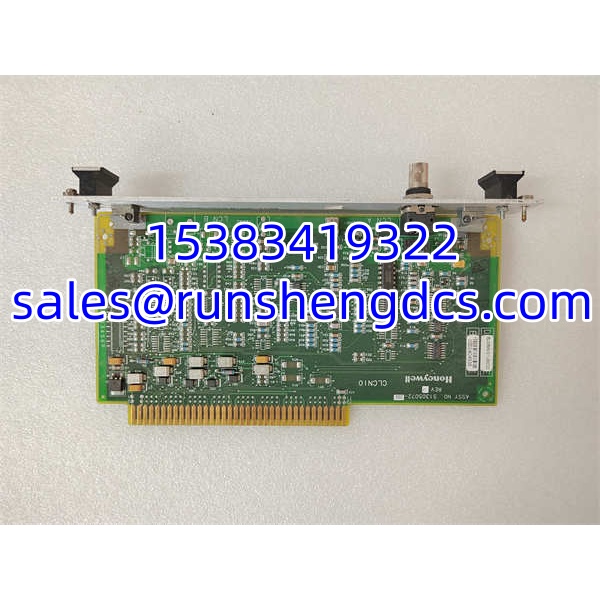
HONEYWELL 51305072-200 CLCN-A
Application Scenarios
- Experion PKS LCN expansion — The CLCN-A card connects a new controller or HMI station to the existing LCN coax backbone without adding external repeaters.
- Legacy TDC 3000 maintenance — Older plants running TDC 3000 rely on CLCN cards to keep HMIs, history modules, and controllers on the same network segment.
- LCN segment fault recovery — A failed coax interface card causes multiple stations to lose communication. Replacing it restores LCN visibility without replacing the entire rack.
- Spare pool for critical control rooms — Facilities running Experion PKS with legacy LCN hardware keep a verified 51305072-200 CLCN-A spare to reduce network downtime.
FAQ
Is 51305072-200 CLCN-A a digital I/O module?
No. It is an LCN coax communication interface card. Some surplus listings misclassify it as a digital I/O module, but its function is network connectivity.
What systems does it support?
It is used in Honeywell Experion PKS, TDC 3000, and C300 controller environments where LCN coax communication is required.
Can it be hot-swapped?
Yes, it is designed for hot-swap replacement in compatible chassis. Always confirm redundancy and node status before removing a live card.
What is the difference between CLCN-A and CLCN-B?
They are revisions within the same CLCN family. Compatibility depends on the chassis, firmware, and system configuration. Match the revision to your existing installation.
Is this card still in production?
It is typically available as surplus or refurbished stock. Verify current Honeywell availability before planning long-term spares.
What should I check before buying?
Confirm the model 51305072-200, revision CLCN-A, physical condition, BNC connector integrity, and whether the seller has tested LCN communication.