
Description
Key Technical Specifications
| Parameter | Specification |
|---|---|
| Product Type | High-Level Analog Input (HLAI) Module |
| Manufacturer | Honeywell |
| Part Number | CC-PAIX02 |
| System Platform | Experion PKS, C300 controller IOLink |
| I/O Family | C-Series I/O |
| Typical Channels | 16 analog inputs |
| Signal Types | 4–20 mA, 1–5 V, and similar high-level process signals |
| HART Support | Typically no; confirm against label and hardware catalog |
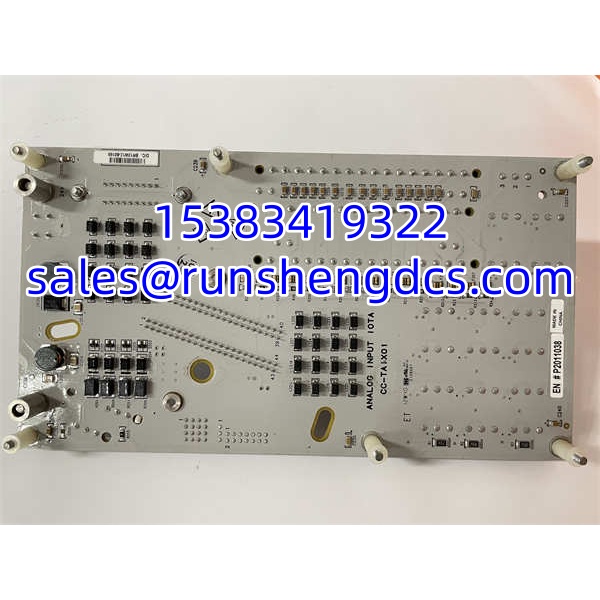
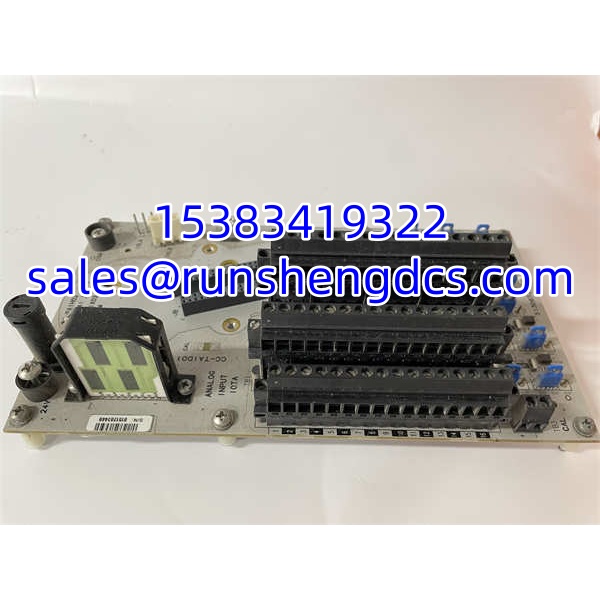
| Mounting Base | TAIX01 (non-redundant) or TAIX11 (redundant) IOTA |
| Hot Swap | Supported per C-Series I/O design |
| Redundancy | Module redundancy depends on IOTA base and system configuration |
| Typical Condition | New surplus, unused surplus, or refurbished |
Product Introduction
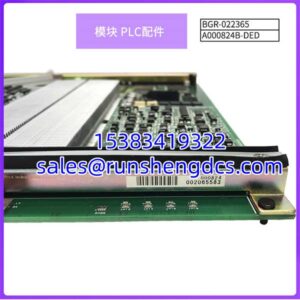
The Honeywell CC-PAIX02 is a C-Series high-level analog input module for Experion PKS systems built around the C300 controller. It sits on the IOLink segment and converts standard process signals — typically 4–20 mA or 1–5 V — into digital values that the control strategy can use for monitoring, regulation, interlocking, and alarming.
In the C-Series family, the CC-PAIX modules are generally the non-HART HLAI cards, while CC-PAIH modules add HART device communication. The CC-PAIX02 appears as a variant within that family, but it is not as widely published as CC-PAIX01. That means it should be treated as a like-for-like replacement only after the label, firmware, and Control Builder hardware definition are checked.
Bottom line — this is a process analog input card, not a controller, not a thermocouple/RTD low-level card, and not a HART asset-management interface. It belongs in C300 I/O racks where standard analog process measurements must be brought into Experion PKS reliably.
QA/QC Transparency SOP
- Part Number Verification
Confirm CC-PAIX02 on the module label. Record revision, serial number, and manufacturing date. Because CC-PAIX02 is less commonly referenced than CC-PAIX01, do not assume interchangeability without verification. - Visual and Mechanical Inspection
Inspect the front connector, IOLink interface, IOTA mounting latches, PCB condition, and LED indicators. Check for bent pins, corrosion, or prior rework. - IOTA Base Compatibility Check
Confirm whether the module is installed on a TAIX01 non-redundant base or TAIX11 redundant base. The base determines wiring density, redundancy behavior, and field termination. - Power-Up and Channel Validation
Install in a compatible C300 I/O rack. Verify module recognition in Control Builder, check LED status, and confirm that each configured channel reads a stable value with a known source. - Signal Accuracy and Scaling Check
Inject calibrated 4–20 mA or 1–5 V signals. Verify raw counts, engineering unit scaling, alarm limits, and bad-quality detection. - Final Documentation
Record firmware version, slot address, IOTA type, channel map, and test results. Pack in ESD-safe packaging with a configuration sheet.
Field Engineer Gotchas
- CC-PAIX02 is not as well documented as CC-PAIX01
Risk: Assuming identical behavior may cause wrong channel count, scaling, or HART expectations.
Solution: Verify the exact module type in Control Builder and against the physical label. - It is not a low-level temperature card
Risk: Confusing CC- with CC-PAIM01 can lead to incorrect wiring for RTD/thermocouple signals.
Solution: Use CC-PAIM01 for low-level mV/RTD/TC inputs; use CC- for high-level analog only. - HART capability is unlikely
Risk: Expecting HART device diagnostics from a CC-PAIX module may fail.
Solution: If HART is required, confirm whether CC-PAIH01/CC-PAIH02 is the correct replacement. - IOTA base determines redundancy
Risk: Installing a redundant-configured module on a non-redundant base can create misleading expectations.
Solution: Match TAIX01 or TAIX11 to the original design. - Surplus listings may mislabel it
Risk: Some vendors describe CC- as a temperature module, HART module, or generic analog card.
Solution: Accept only listings that identify it as a C-Series HLAI module for C300.
Honeywell CC-PAIX02
Application Scenarios
- C300 analog input replacement
When a failed HLAI card must be replaced in an Experion PKS rack, the CC- can restore analog measurement if it matches the original hardware definition. - Process loop monitoring
Suitable for pressure, flow, level, and valve-position feedback signals that use standard 4–20 mA or 1–5 V interfaces. - Redundant analog input racks
When mounted on TAIX11 and configured for redundancy, it can support higher-availability analog measurement points. - Commissioning and troubleshooting
A known-good CC- can be used to isolate whether a field wiring issue, IOTA base issue, or module fault is causing bad PV readings.
FAQ
No. It is a C-Series analog input module that connects to a controller through IOLink.
How many channels does it have?
It is typically a 16-channel HLAI module, but confirm this against the label and Control Builder hardware catalog.
Does it support HART?
Generally no. CC-PAIX family modules are normally non-HART HLAI cards. For HART, CC-PAIH01 or CC-PAIH02 is more typical.
What signals does it accept?
Standard high-level process signals such as 4–20 mA and 1–5 V. It is not intended for direct RTD or thermocouple wiring.
What base does it use?
TAIX01 for non-redundant or TAIX11 for redundant analog input configurations.
Not automatically. They belong to the same family, but firmware, channel behavior, and certification may differ. Verify in Control Builder before substitution.