
Description
Key Technical Specifications
| Parameter | Value / Status |
|---|---|
| Product Model | 51305072-300 CLCN-B |
| Manufacturer | Honeywell |
| Product Family | TDC 3000 / TPS LCN hardware |
| Module Function | Local Control Network coax interface |
| Network Type | LCN token-bus, IEEE 802.4 family |
| Network Speed | 5 Mbps nominal |
| Physical Media | Dual redundant 75-ohm coaxial cable |
| Segment Length | Up to ~300 m per coax segment with proper terminators |
| Max Nodes per LCN | 64 nodes typical |
| Hot Swap | Supported in supported LCN chassis |
| Power Supply | From LCN node chassis/backplane; exact voltage and current to be confirmed from OEM manual |
| Revision | CLCN-B (successor to CLCN-A, e.g., 51305072-200) |
| Compatibility | TDC 3000 / TPS LCN nodes; verify chassis type and firmware |
| Lifecycle Status | Discontinued / surplus |
Product Introduction
In a TDC 3000 or TPS cabinet, losing the LCN interface is worse than losing a single I/O point. The LCN is the supervisory backbone that ties operator stations, history modules, application modules, and NIMs together. If the CLCN interface fails, that node disappears from the network even though the rest of the plant may still be running.
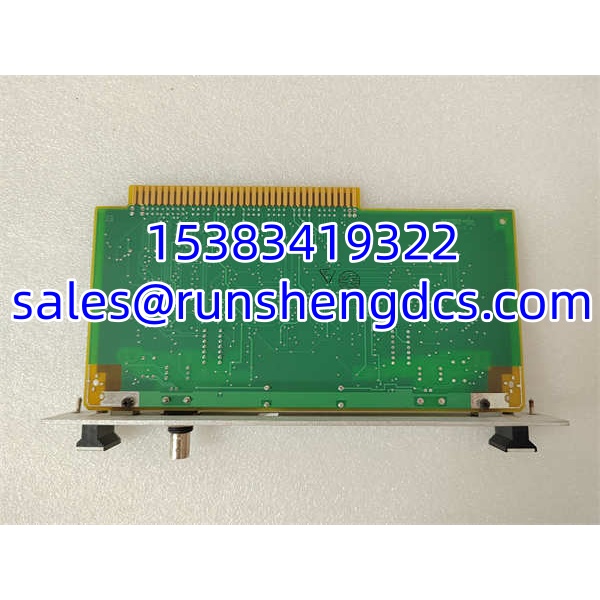
The 51305072-300 CLCN-B is the B-revision LCN coax interface module for Honeywell TDC 3000/TPS nodes. It provides the dual redundant 75-ohm coax connections required by the 5 Mbps LCN token-bus network. The “-B” revision generally indicates an updated version of the earlier CLCN-A hardware, but the exact firmware, boot PROM, and chassis compatibility must be checked against the installed node. Bottom line — this is a communication interface, not a universal processor or I/O card, despite what some surplus listings claim.
QA/QC Transparency SOP
- Intake & Origin Verification
Record the full label: 51305072-300, CLCN-B, revision, serial number, and date code. Confirm the module came from a TDC 3000/TPS LCN node chassis. Reject units with missing labels, bent coax connectors, or unknown chassis history. - Live Functional Testing
Install the module in a compatible LCN test chassis. Apply chassis power and verify the module powers up, passes self-test, and is recognized by the node. Confirm LCN presence on both A and B coax segments if a redundant test setup is available. - Electrical Parameter Tests
Check coax connector continuity, shield grounding, and 75-ohm interface integrity. Measure chassis power draw against the OEM specification. Inspect the backplane connector pins for corrosion, bending, or cold solder joints. - Firmware/Config Verification
Read the module firmware/ROM revision and node identity. Compare it with the revision running in the live cabinet. Back up any readable configuration data. Flag modules that fail self-test or report incompatible firmware. - Final QC & Anti-Static Packaging
Label with model, revision, test results, and known limitations. Pack in ESD-safe bags with coax connector protection caps. Include a test summary — not an OEM factory certificate.
Field Engineer Gotchas
- It is not a generic “processor module”
Risk: Buying 51305072-300 CLCN-B because a listing calls it a processor or I/O card. Solution: It is an LCN network interface. It does not replace a PM, APM, HPM, US, HM, or NIM by itself. War story: A plant ordered a “CLCN processor” to replace a failed node. The module arrived, installed cleanly, and did nothing — because the real failure was the node computer, not just the LCN interface. - Revision mismatch between CLCN-A and CLCN-B
Risk: Mixing CLCN-A and CLCN-B in redundant or multi-node cabinets without checking compatibility. Solution: Verify the OEM compatibility matrix. Some older nodes may require matched revisions or firmware updates. - LCN terminator and coax faults
Risk: Replacing the module but leaving a bad terminator, loose BNC/T-connector, or damaged coax in place. Solution: Check both ends of each LCN segment. A missing 75-ohm terminator can cause intermittent node dropouts that look like a failed CLCN card. - Node address and slot rules
Risk: Installing the module in the wrong slot or duplicating an LCN node address. Solution: Confirm the node type, slot map, and LCN address before power-up. A duplicate address can disrupt LCN token passing. - Hot-swap is not risk-free
Risk: Assuming hot-swap means zero impact. Solution: The LCN may tolerate module replacement, but the node itself can lose communication during the swap. Coordinate with operations and confirm redundancy status first.
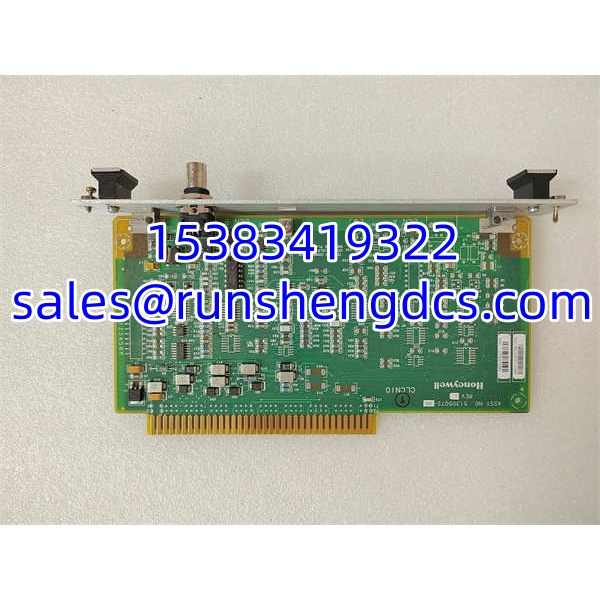
HONEYWELL 51305072-300 CLCN-B
Application Scenarios
- TDC 3000/TPS operator station loss on an aging LCN. The US or GUS disappears from the LCN while other nodes remain healthy. A verified CLCN-B replacement restores the node’s network presence without replacing the entire cabinet.
- LCN segment instability after cable maintenance. After coax re-termination, one node begins dropping off the LCN intermittently. The CLCN module is tested alongside the coax plant, terminators, and T-connectors to isolate whether the fault is physical layer or module-level.
- Spare pool standardization for legacy DCS. Sites running TDC 3000/TPS keep CLCN spares matched to the installed revision. Mixing CLCN-A and CLCN-B without verification can create commissioning delays during emergency outages.
- Anonymized case: A refinery reported a single operator station periodically going offline on a TDC 3000 LCN. The rest of the LCN was stable. The maintenance team replaced the CLCN interface with a surplus unit, but the problem returned. Further testing showed one LCN coax terminator had drifted out of spec after years of heat cycling. Replacing the terminator and re-testing the CLCN-B module resolved the dropout. The module was fine; the physical layer was not.
FAQ
Is 51305072-300 CLCN-B a processor or I/O card?
No. It is an LCN coax network interface module for TDC 3000/TPS nodes. Some surplus listings describe it as a processor or I/O module, but that is misleading.
Can I replace CLCN-A with CLCN-B?
Often yes, but not automatically. The -B revision is an updated version, but you must confirm chassis compatibility, firmware, and node requirements before swapping.
Does this module connect directly to field instruments?
No. The LCN is a supervisory network. Field I/O lives on UCN controllers, PMs, APMs, HPMs, or remote I/O, not on the CLCN interface itself.
What happens if both LCN coax cables are disconnected?
The node loses LCN communication. Depending on the node type, operators may lose visibility, trending, or supervisory control until the LCN link is restored.
Is hot-swap supported?
Yes, in supported LCN chassis. But the node itself may go offline during replacement. Treat it as a controlled maintenance action, not a routine plug-and-play swap.
How do I confirm it will work in my cabinet?
Check the failed module label, node type, chassis model, slot position, firmware revision, and LCN address. Do not install a surplus CLCN-B without matching those details.
Should I stock a spare?
If you still run TDC 3000/TPS LCN hardware, yes. CLCN modules are discontinued, and lead times for verified replacements can be long. Keep the spare matched to your installed revision.