
Description
Key Technical Specifications
| Parameter | Value |
|---|---|
| Manufacturer | HIMA |
| Model | F8650X |
| Part Number | 984865065 |
| Product Type | Central processor module for H51q SIS |
| Supported Systems | PES H51q-MS, H51q-HS, H51q-HRS |
| Processor | Dual clock-synchronized Intel 386EX, 32-bit, 25 MHz |
| Memory | 1 MB OS Flash-EPROM; 1 MB user Flash-EPROM; 1 MB SRAM |
| Serial Interfaces | 2 × isolated RS-485 |
| Watchdog Output | 24 V, short-circuit protected, max 500 mA |
| Module Width | 8 SU |
| Supply | 5 VDC / 2 A |
| Diagnostics | 4-character alphanumeric display + LED indicators |
| Bus Station Setting | DIP switch S1-1 to S1-7 for RS-485 station address |
| Baud Rate Selection | S1-8: ON = 9600 bps; OFF = 57600 bps |
| OS Requirement | BS41q/51q V7.0-8 or later for certain functions |
| Backup Battery | CR 2477N; replace on BATI indication or approximately every 6 years |
| Safety Rating | SIL 3 per IEC 61508 for applicable H51q configurations |
| Hot-Swap | System-dependent; do not assume without site procedure confirmation |
Product Introduction
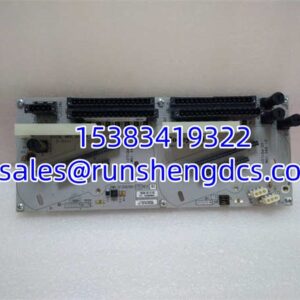
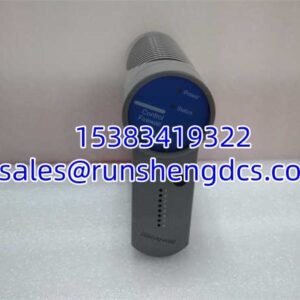
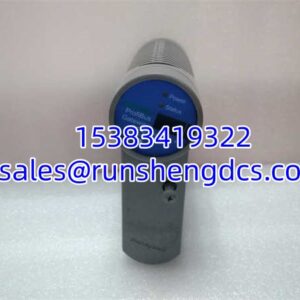
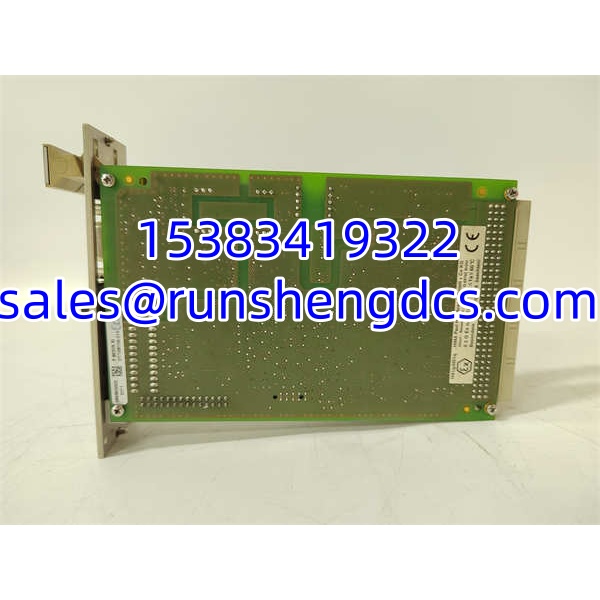
The HIMA F8650X 984865065 is a central processor module for HIMA H51q safety systems. It is not a field I/O card, analog output module, or standalone Ethernet communication adapter. Its job is to execute safety logic and coordinate the H51q rack through the backplane, while exposing two isolated RS-485 ports for engineering access, peer communication, or connection to an F8627X Ethernet communication module.
This module is typically found in legacy SIS installations where H51q-MS, H51q-HS, or H51q-HRS processors are still in service. The dual 386EX processors, separate OS and user program memory, and front-panel diagnostic display make it recognizable in the field. The biggest risk during replacement is not hardware failure — it is accepting a surplus unit with the wrong firmware revision, damaged battery compartment, or incorrect DIP switch settings.
QA/QC Transparency SOP
- Intake & Origin Verification
Confirm label reads F8650X and 984865065. Inspect the 4-character display, LED window, RS-485 connector, backplane pins, and battery compartment. Reject units with corrosion, cracked housings, or mismatched part numbers. - Live Functional Testing
Install in a compatible H51q rack. Apply 5 V system power. Verify module recognition, diagnostic display behavior, and absence of CPU/IO fault indications. - RS-485 Interface Check
Verify continuity and isolation on both RS-485 ports. Confirm station address switches and baud rate switch S1-8 are set correctly for the target system. - Memory & Diagnostic Verification
Check that the module completes self-test, displays valid status codes, and responds to PADT/ELOP II communication where supported. Record hardware revision and OS compatibility. - Final QC & Anti-Static Packaging
Package in ESD bag with foam support. Include tested status, DIP switch position record, battery condition, and a compatibility warning for H51q OS version.
Field Engineer Gotchas
- Misidentified as analog I/O or TMR controller
Risk: Some listings describe F8650X as an analog output module, digital input module, or ARM/TMR CPU.
Solution: Treat F8650X as an H51q central processor with dual 386EX CPUs and RS-485 ports.
Blunt warning: If the listing mentions 4–20 mA outputs, Ethernet ports on the itself, or Cortex-A9 processing, verify against the OEM label before proceeding. - Wrong OS or firmware revision
Risk: behavior depends on the installed BS41q/51q OS version.
Solution: Match the replacement module revision to the existing rack and confirm OS compatibility before insertion.
War story: A replacement powered up but could not join the existing H51q configuration because the OS revision predated the required V7.0-8 feature set. - DIP switch station address mismatch
Risk: Incorrect S1 settings prevent RS-485 communication or cause address conflicts.
Solution: Photograph the original module switch positions before removal.
Quick check: S1-1 to S1-7 set the RS-485 station number; S1-8 selects 9600 or 57600 bps. - Backup battery failure
Risk: An expired CR 2477N battery can cause configuration loss or persistent BATI alarms.
Solution: Replace the battery if the module shows BATI or if the installation date is unknown.
Field note: Battery replacement must follow site safety procedures and should not be performed on a live safety controller without authorization. - Ethernet confusion
Risk: does not carry native Ethernet ports. Ethernet connectivity typically requires an F8627X communication module.
Solution: Do not expect RJ45 ports on the front panel.
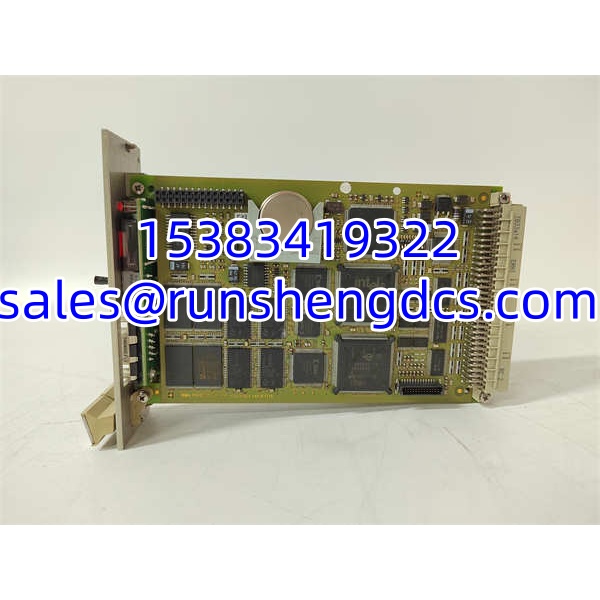
HIMA F8650X 984865065
Application Scenarios
- Legacy H51q SIS maintenance
Used as a replacement central module when an existing H51q-MS, H51q-HS, or H51q-HRS processor fails or requires sparing. - ESD and BMS logic execution
Executes safety interlocks for emergency shutdown, burner management, fire and gas, and HIPPS applications within the H51q architecture. - Engineering access and communication backbone
Provides RS-485 connectivity for PADT/ELOP II access or links to F8627X for Ethernet-based communication. - Brownfield safety system troubleshooting
Helpful when diagnosing CPU faults, watchdog alarms, RS-485 communication errors, or battery-related diagnostics.
FAQ
No. It is a central processor module for HIMA H51q safety systems.
What processors does it use?
Dual clock-synchronized Intel 386EX 32-bit processors at 25 MHz.
Does it have Ethernet ports?
No. provides two isolated RS-485 interfaces. Ethernet communication typically requires an F8627X module.
What safety level does it support?
It is used in H51q systems rated up to SIL 3 per IEC 61508, depending on configuration.
Can it be hot-swapped?
Only if the specific H51q configuration and site procedures allow it. Do not assume hot-swap capability on a live SIS rack.
What battery does it use?
CR 2477N. Replace on BATI indication or approximately every 6 years.
How do I confirm compatibility?
Check the rack type, OS version, DIP switch settings, and existing hardware revision before installing a replacement.