Description
Key Technical Specifications
| Parameter | Detail |
|---|---|
| Manufacturer | HIMA (HIMA Paul Hildebrandt GmbH) |
| Model | F7133 |
| Product Type | 4-channel power distribution module |
| System Family | HiMAX safety I/O rack |
| Primary Function | Distributes L+ / EL+ / L- to I/O modules and sensors |
| Fuse Channels | 4 micro-fuses per module |
| Fuse Monitoring | Evaluation logic with per-channel LED indication |
| Slot Mapping | Slots 18-21; each F7133 feeds four I/O slots (1-4, 5-8, 9-12, 13-16) |
| Relay Contact Rating | 30 V / 4 A continuous load |
| Switch Time | Approximately 100 ms (relay) |
| Residual Voltage | 0 V |
| Connection Points | Front terminals for L+, EL+, L-; rear terminals d6, d10, d14, d18 for per-slot 24 V |
| Protection Level | IP20 (typical for rack-mounted modules) |
| Mounting | HiMAX I/O subrack, DIN-rail compatible system |
Product Introduction
A blown fuse on a safety I/O rack does not always trip an alarm. Sometimes it just kills power to four I/O slots, and the logic keeps running with stale or missing inputs. The F7133 is the module that prevents that from going unnoticed — it distributes 24 VDC to I/O slots in a HIMA HiMAX rack and monitors each of its four micro-fuses with LED and evaluation-logic feedback.
This is not a CPU, not a communication module, and not a generic 24 V power supply. It is a power distribution and fuse-protection card for the HiMAX I/O subrack, installed in slots 18 through 21. Each F7133 protects and feeds four I/O slots, with rear terminals d6, d10, d14, and d18 delivering 24 V per slot. Bottom line — if you are maintaining a HiMAX SIS rack, this is the kind of module you want verified before a turnaround, not during one.
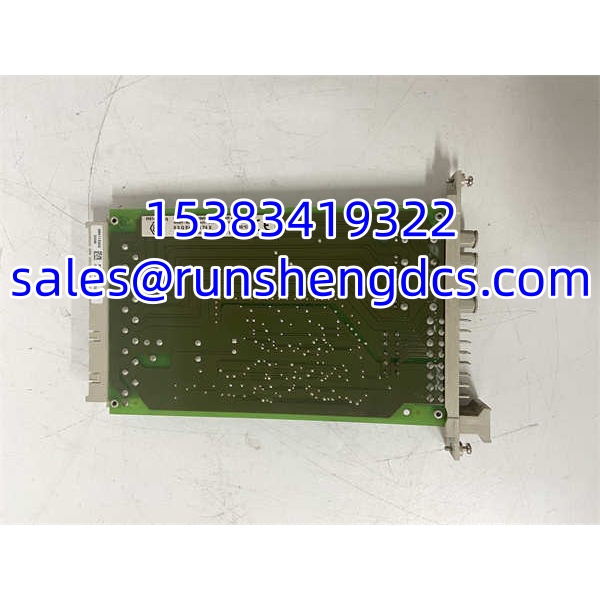
HIMA F7133
QA/QC Transparency SOP
- Intake & Origin Verification — Confirm model F7133, PCB revision, serial number, and physical condition. Inspect for burnt fuse holders, damaged rear connectors, or corrosion on L+/L- terminals.
- Live Functional Testing — Install into a compatible HiMAX I/O subrack slot 18-21. Verify module registration, LED status, and per-channel fuse monitoring logic. Confirm rear terminal voltage at d6, d10, d14, d18.
- Electrical Parameter Tests — Measure L+ / EL+ / L- input voltage and per-channel output. Verify fuse continuity with a Fluke multimeter. Check relay contact integrity and 0 V residual voltage under load.
- Firmware/Config Verification — Confirm fuse-monitoring evaluation logic responds correctly to simulated open-fuse conditions. Record LED behavior and any diagnostic readouts from the host rack.
- Final QC & Anti-Static Packaging — Document fuse channel test results, LED status, and terminal readings. Pack in anti-static material with nameplate photos, slot mapping notes, and fuse rating confirmation.
Field Engineer Gotchas
- Slot mapping is rigid. F7133 modules in slots 18-21 feed I/O slots 1-4, 5-8, 9-12, and 13-16 respectively. Putting one in the wrong slot means the wrong four I/O channels lose power. Always confirm slot assignment against the rack manual before swap-out.
- It is not a power supply. The distributes power from the rack’s supply rails; it does not generate 24 VDC on its own. If the upstream power module fails, the cannot compensate.
- Fuse rating must match. Micro-fuse current ratings must match the original specification and downstream I/O load. An incorrect fuse rating defeats the protection function and can damage I/O modules.
- LED on does not always mean healthy. A lit LED indicates the monitoring circuit is active, but the actual fuse state must be confirmed electrically. Never assume a channel is live based on LED appearance alone.
- Some third-party listings add wireless/A-D features. Claims about built-in wireless communication or A/D conversion appear in reseller descriptions but are not consistent with the module’s core function as a power distribution card in a HiMAX I/O rack. Treat those claims with caution and verify against HIMA documentation.
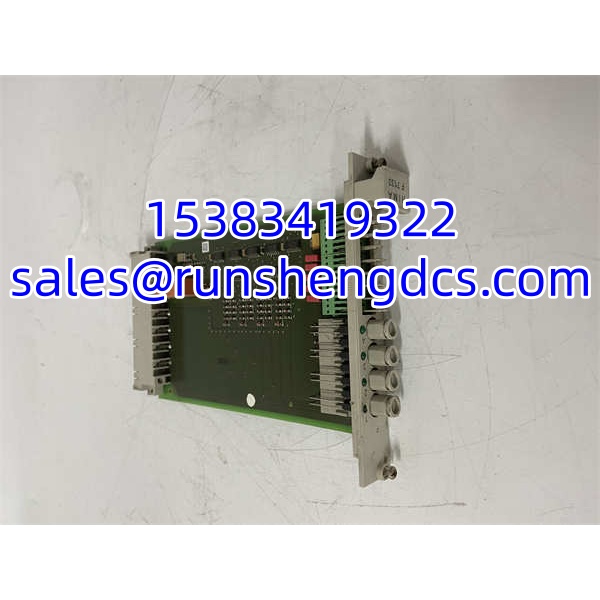
HIMA F7133
Application Scenarios
- HiMAX SIS rack power segmentation. Each isolates four I/O slots, so a single fuse failure does not cascade across the entire rack.
- ESD system I/O power protection. Protects discrete input and output modules in emergency shutdown systems where spurious trips must be avoided.
- F&G system sensor supply distribution. Feeds 24 VDC to flame and gas detectors while providing per-channel fuse monitoring for early fault detection.
- Turnaround maintenance replacement. A verified can replace a failed distribution module during a planned shutdown without re-engineering the rack.
FAQ
No. It is a 4-channel power distribution and fuse-protection module for the HIMA HiMAX I/O rack. It does not execute logic or handle fieldbus communication.
Which HIMA system does it fit?
It is designed for the HiMAX safety I/O subrack, typically installed in slots 18 through 21. Confirm rack generation and mechanical compatibility before ordering.
Four I/O slots. Slot 18 feeds I/O 1-4, slot 19 feeds I/O 5-8, slot 20 feeds I/O 9-12, and slot 21 feeds I/O 13-16.
Does it have built-in wireless or A/D conversion?
Some reseller listings mention wireless communication or A/D conversion, but the ‘s primary and confirmed function is 4-channel power distribution with fuse monitoring in a HiMAX rack. Verify any additional features against official HIMA documentation before relying on them.
Can I substitute it with a generic fuse terminal block?
Not in a HiMAX safety rack. The integrates with the rack’s backplane, monitoring logic, and slot mapping. A generic fuse block would break diagnostics and may not fit mechanically.
What should I check before installing a surplus unit?
Confirm PCB revision, fuse holder condition, LED operation, rear terminal integrity, and correct micro-fuse rating. Test per-channel output voltage before connecting live I/O modules.
Is this module SIL-certified on its own?
The is part of a HIMA HiMAX safety system, which is certified for SIL 3 applications. However, certification applies to the configured system, not individual modules in isolation. Confirm the safety case with HIMA documentation and your site’s functional safety engineer.