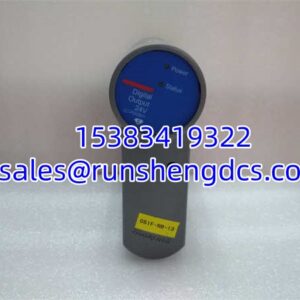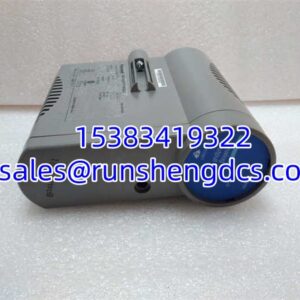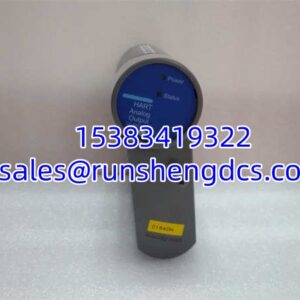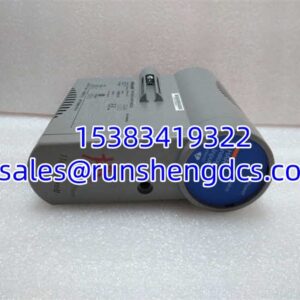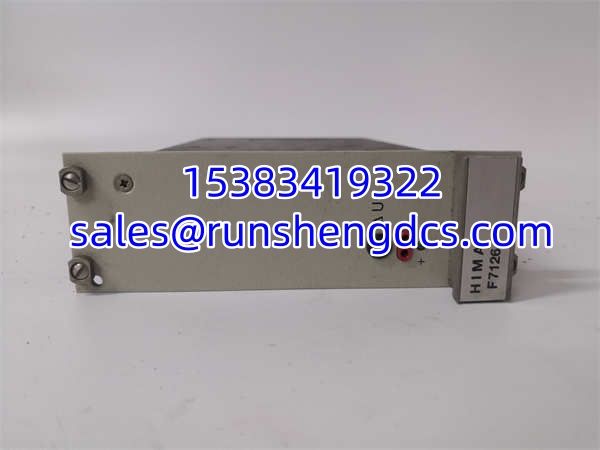
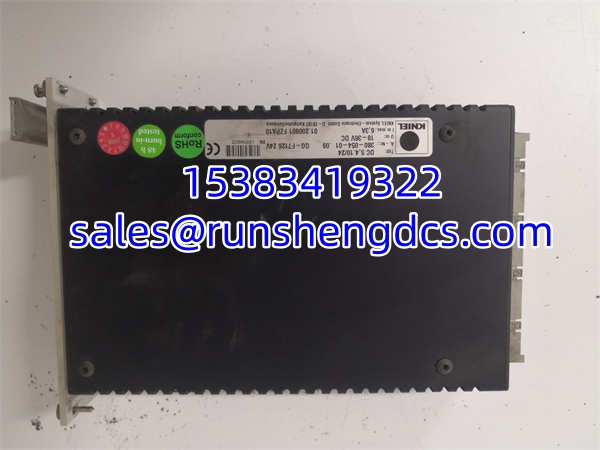
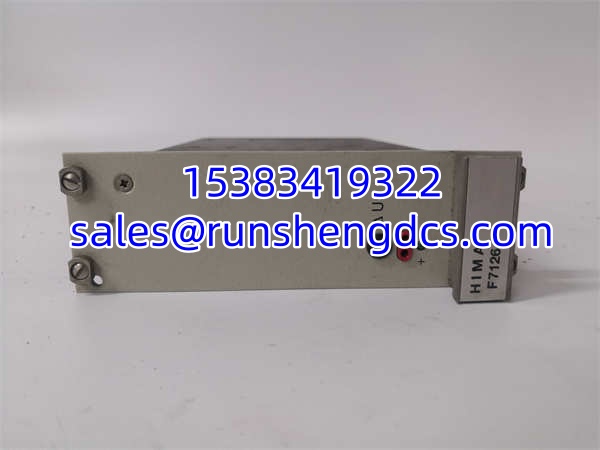

Description
Key Technical Specifications
| Parameter | Specification |
|---|---|
| Model Number | F7126 |
| Brand | HIMA |
| Product Type | Power Supply Module |
| System Family | HIMA Safety Control System (ESD / F&G / BMS) |
| Output Configuration | Multi-channel isolated DC (e.g., 24VDC / 5VDC) |
| Output Voltage Stability | Typical ±2% (verify with OEM datasheet) |
| Ripple / Noise | < 50 mV (typical) |
| Protection | Overvoltage, overcurrent, overtemperature |
| Protection Response | < 1 ms (typical) |
| Redundancy | N+1 parallel hot-backup capable |
| Load Sharing | Automatic current balancing (typical deviation < 5%) |
| Operating Temperature | -20°C to +60°C |
| Enclosure Rating | IP54 |
| Weight | Approx. 0.6 kg |
| Mounting | Modular rack / backplane mount |
| Origin | Germany (verify per unit label) |
| Reference Price | Approx. CNY 6,200 – 6,990 via surplus channels |
Product Introduction
Power supply failures in safety instrumented systems do not produce graceful degradation. They produce trips, spurious actuations, or — worse — silent loss of protection. The HIMA F7126 exists to prevent exactly that scenario. It sits inside HIMA safety system racks (ESD, fire-and-gas, burner management) and converts incoming plant power into clean, regulated DC rails that feed the controller, I/O cards, and field devices.
The module’s value is not in raw wattage. It is in protection speed and redundancy behavior. Overvoltage, overcurrent, and overtemperature faults trip in under 1 ms, isolating the faulted channel before damage propagates to downstream safety logic. In N+1 configurations, a failing unit drops out while the remaining module(s) absorb the load — with load-sharing deviation held below 5% across parallel units. For plants where a single power rail failure can trigger a full unit shutdown, that kind of fault isolation is the entire reason this module exists.
QA/QC Transparency SOP
- Intake & Origin Verification
Photograph the module nameplate. Record the F7126 designation, serial number, hardware revision, and any date codes. Cross-reference the revision against the target HIMA rack’s accepted hardware list. Mismatched revisions are the number-one cause of “module installed but system won’t acknowledge it” tickets. - Visual & Mechanical Inspection
Inspect the PCB for cracked solder joints, electrolytic capacitor bulging, corrosion, or thermal discoloration. Check all backplane connector pins for bending or oxidation. Confirm the module slides into the target rack slot without binding — forced insertion damages backplane contacts. - Electrical Parameter Tests
Using a calibrated multimeter and electronic load, measure output voltage under no-load, half-load, and full-load conditions. Verify voltage stays within the ±2% band. Perform insulation resistance testing (megger) between input, output, and ground. Confirm overcurrent and overvoltage protection thresholds trip within specification. - Functional Verification
If test infrastructure supports it, install the module in a HIMA test rack. Verify that the controller recognizes the power supply, reports correct status diagnostics, and that redundant switchover functions correctly when the primary unit is disconnected. Log all diagnostic readouts. - Final QC & Anti-Static Packaging
Label with QC pass status, test date, and revision. Pack in anti-static shielding with foam protection on all connector faces. Include a note that the module must be matched to the correct rack slot and that redundant pairings should use the same hardware revision.
Field Engineer Gotchas
- Hardware Revision Mismatch Will Bite You
The F7126 has gone through hardware revisions over its production life. A surplus unit with a different revision than the existing module in the rack may not be recognized by the controller, or worse — may report OK but behave differently under fault conditions. Always check the revision code on the nameplate against what the system expects. Bottom line — matching revisions in a redundant pair is not optional. - Redundant Pairs Must Be Load-Matched
If you are running N+1, do not mix an F7126 with a different HIMA power module (e.g., F7130A) in the same redundant group. The load-sharing circuitry expects matched output characteristics. Mismatched modules will fight each other, and one will end up carrying most of the load until it overheats. - Do Not Skip the Backplane Seating Check
These modules plug into the HIMA backplane. A partially seated module may power up and appear functional during bench testing, but vibration on the plant floor can break the connection intermittently. Push firmly until the retention mechanism engages. I have seen three “mystery power loss” tickets traced back to a module that was 2 mm short of full insertion. - ESD During Handling Is a Real Risk
The protection circuits on the F7126 are designed for operational faults, not for electrostatic discharge during handling. Always use a grounded wrist strap when removing or installing the module. A static hit to the backplane connector pins can damage the protection circuitry in a way that passes initial testing but fails months later under load. - Overtemperature Protection Is Not a Design Parameter
The module trips at overtemperature. That is a safety net, not an operating mode. If your cabinet regularly runs above 50°C, the module will spend its life near the thermal trip point, cycling protection on and off. That shortens capacitor life dramatically. Fix the cabinet cooling before blaming the power supply.
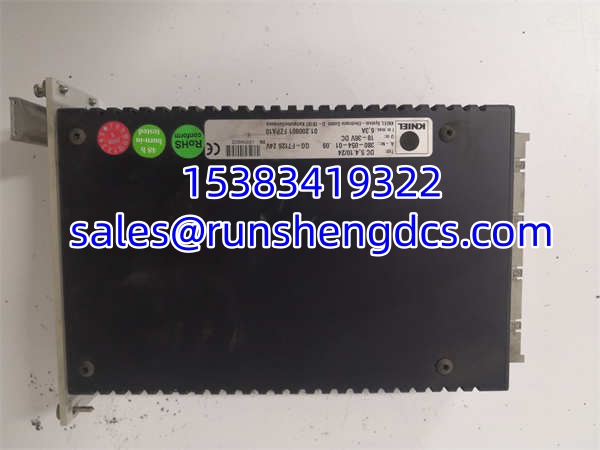
HIMA F7126
Application Scenarios
- ESD systems in oil and gas facilities — The provides isolated, redundant DC power to emergency shutdown controllers and their associated I/O, ensuring that a single power supply failure cannot disable the safety function.
- Fire and gas detection panels — F&G systems require continuous, uninterrupted power to maintain detector bias voltages and relay outputs. The ‘s fast fault isolation prevents a shorted detector loop from collapsing the entire panel’s power rail.
- Burner management systems (BMS) — BMS controllers rely on stable 24VDC and 5VDC rails for flame scanner processing and safety relay logic. The ‘s clean output (ripple < 50 mV) prevents noise-induced false flame-loss signals.
- High-integrity pressure protection systems (HIPPS) — In pipeline applications, the powers the safety logic that must operate correctly even during upstream power disturbances. The N+1 redundancy ensures the protection function survives a single module failure.
FAQ
It is a modular power supply designed for HIMA safety system racks. It plugs into the backplane and is not intended for DIN-rail or standalone panel mounting. Verify your rack model compatibility before ordering.
No. Redundant power supply pairs should use identical modules with matching hardware revisions. Mixing models risks uneven load sharing and unpredictable fault behavior.
The remaining module takes over the full load. The switchover is designed to occur within milliseconds. The controller should log a power supply fault alarm — verify that your alarm configuration actually monitors this diagnostic point.
Does this module support hot-swap?
Hot-swap capability depends on the specific HIMA rack and system configuration. Do not assume hot-swap is available without confirming it in the system documentation. Pulling a live module from a non-hot-swap rack will cause a momentary power interruption to the affected rail.
Request output voltage test data under load, insulation resistance readings, and confirmation of protection circuit functionality. A visual inspection for capacitor condition and solder joint integrity is the minimum acceptable QC. If the supplier cannot provide test data, walk away.
What is the typical lead time from surplus suppliers?
Stock availability varies. Some suppliers ship within 3–7 days from regional inventory. Others list the part but require sourcing from overseas warehouses, which can extend lead times significantly. Confirm actual stock location and shipping timeline before committing to a project schedule.
Verify directly with HIMA or an authorized distributor. The belongs to a legacy product family, and availability through official channels may be limited. Surplus and third-party distributors remain a viable sourcing path, but always confirm hardware revision compatibility with your specific system before purchasing.