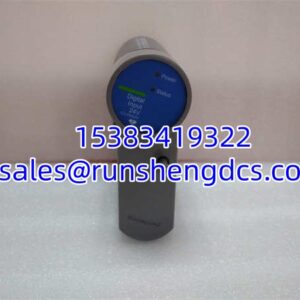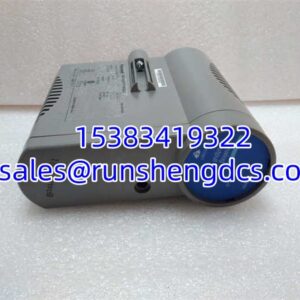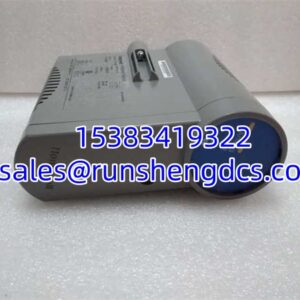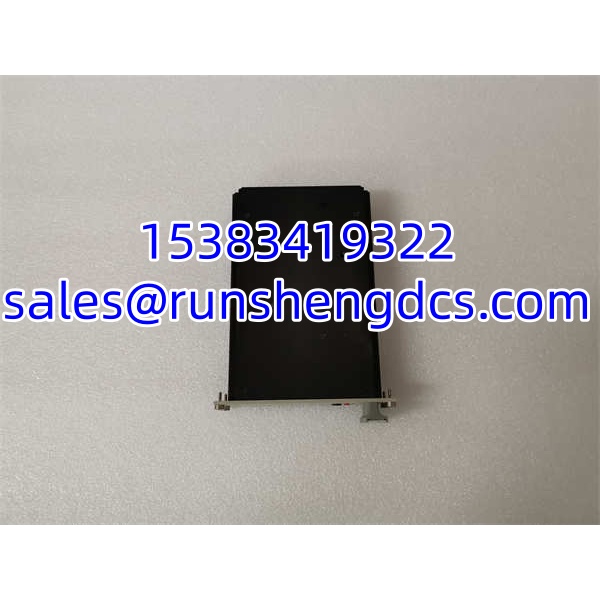

Description
Key Technical Specifications
| Parameter | Detail |
|---|---|
| Manufacturer | HIMA (HIMA Paul Hildebrandt GmbH) |
| Model | F7126 |
| Product Type | Power supply module for HIMA safety systems |
| Typical Platforms | HIMA F35, F60, HIMax, or related SIS families (confirm per label) |
| Primary Function | Regulated power distribution to HIMA controllers and I/O |
| Redundancy Support | Commonly deployed in N+1 or dual-redundant configurations (verify per system design) |
| Protection Features | Over-voltage, over-current, short-circuit, and thermal protection typical |
| Diagnostic Capability | Module status indication; integrates with HIMA system diagnostics |
| Safety Context | Used within IEC 61508 SIL-rated safety instrumented systems |
| Typical Applications | ESD, BMS, F&G, HIPPS, turbine protection, process safety |
| Platform Status | Legacy / verify current OEM support with HIMA |
Product Introduction
The HIMA F7126 is a power supply module used within HIMA safety instrumented systems. It is not a CPU, not a digital I/O card, and not a communication gateway. Its role is to provide clean, monitored, and protected power to HIMA controller racks, processor modules, and I/O subsystems.
In SIS cabinets, power supply integrity is a safety function. A failed or unstable supply can force a spurious trip or mask a dangerous failure. The F7126 is typically deployed with redundant power architecture so that a single module failure does not compromise system availability. Because HIMA systems are used in ESD, BMS, F&G, and HIPPS applications, any replacement must be validated against the site’s safety case, power budget, and redundancy design.
Some third-party listings describe F7126 as a “communication module,” “digital input module,” or “TMR CPU.” Those descriptions are unreliable. Based on multiple spare-parts catalogs and system documentation, F7126 is best classified as a HIMA power supply module.
QA/QC Transparency SOP
- Intake & Origin Verification — Confirm model , HIMA branding, serial number, revision, and system origin. Reject units with damaged connectors, burnt components, corrosion, or missing labels.
- Visual & Mechanical Inspection — Check housing integrity, DIN-rail or rack mounting hardware, terminal blocks, status LEDs, and ventilation. Verify no evidence of overheating or prior field modification.
- Input Power Test — Apply rated input voltage and verify stable startup, inrush behavior, and correct status indication. Measure input current under no-load and simulated load conditions.
- Output Rail Verification — Measure all output voltages against the nameplate or system specification. Check regulation, ripple, and load stability. Confirm protection behavior under over-current or short-circuit simulation where safe.
- System Integration Check — Where a compatible HIMA rack is available, verify module recognition, diagnostic reporting, and redundancy handover behavior. Document all results.
- Final QC & Packaging — Record input/output measurements, revision, cosmetic grade, and test limits. Pack in anti-static materials with nameplate photos, test logs, and handling instructions.
Field Engineer Gotchas
- Confirm function before substitution. is widely listed as a HIMA power supply module. Do not accept listings calling it a CPU, communication card, or digital input module without OEM documentation.
- Platform compatibility is critical. HIMA power modules are often tied to specific controller families and backplane architectures. An from one platform may not fit or function correctly in another.
- Redundancy settings matter. If the system uses redundant power, both supplies should match in revision and output characteristics. Mismatched units can cause uneven load sharing or false alarms.
- Nameplate data overrides generic descriptions. Input voltage, output rails, current ratings, and compatible chassis must be verified from the installed label. Do not assume values from third-party listings.
- SIS change management applies. Replacing a power module in a SIL-rated system may require MOC review, functional testing, and documentation updates. Treat it as a safety-related change.
- Legacy platform risk. Confirm with HIMA whether is still supported or has been superseded by a current-generation power module.
HIMA F7126
Application Scenarios
- ESD cabinet power supply failure. A HIMA SIS rack reports a power supply fault on one channel. A verified with matching revision restores redundancy after output rails and diagnostic status are confirmed.
- BMS brownfield spare provisioning. A refinery keeps one tested on the shelf because the burner management system runs on a legacy HIMA platform with long OEM lead times. The spare allows controlled replacement during a planned shutdown.
- F&G system maintenance. A fire and gas controller shows intermittent power alarms. Investigation traces the issue to a degraded supply module. Replacing with a pre-tested and verifying redundant handover eliminates the alarm.
FAQ
No. It is a power supply module for HIMA safety controller systems.
Which HIMA platforms does it support?
Confirm from the nameplate and system manual. is associated with HIMA SIS families such as F35, F60, or HIMax, but exact compatibility must be verified per installation.
Can I use any HIMA power module as a replacement?
Not automatically. Power modules must match the system platform, input voltage, output rails, revision, and redundancy configuration.
Does it support redundant operation?
HIMA power supplies are commonly deployed in redundant configurations. Confirm whether the specific unit and system design support N+1 or dual-redundant operation.
Confirm directly with HIMA or an authorized distributor. It may be legacy or superseded.
Do you provide SIL certification or commissioning support?
No. SIL compliance, system integration, and commissioning must be handled by the site engineering team or a qualified HIMA service provider. We provide hardware identification, inspection, and functional testing support only.