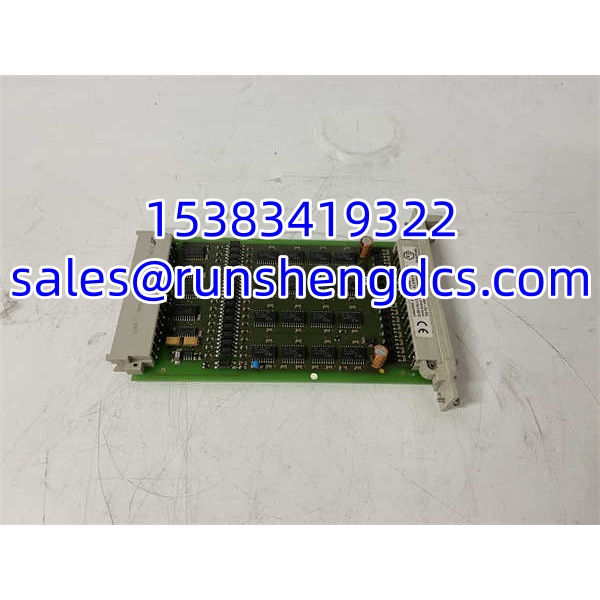

Description
Key Technical Specifications
| Parameter | Value / Note |
|---|---|
| Channels | 16 digital outputs |
| Output voltage | 24 VDC typical |
| Max current per channel | 0.5 A |
| Output configuration | Source/sink configurable per channel (verify with OEM) |
| Output type variant | Open-collector or push-pull depending on revision (verify) |
| Protection | Short-circuit, overload, overvoltage protection |
| Isolation | Galvanic isolation between channels (verify grouping) |
| Diagnostics | Per-channel status/diagnostic monitoring |
| Safety rating | SIL 3 per IEC 61508 (module-level claim requires OEM confirmation) |
| Operating temperature | -20 °C to +70 °C (verify with OEM datasheet) |
| Storage temperature | -40 °C to +85 °C (verify with OEM datasheet) |
| Humidity | 0–95% RH non-condensing (verify with OEM) |
Product Introduction
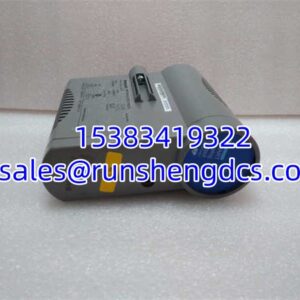
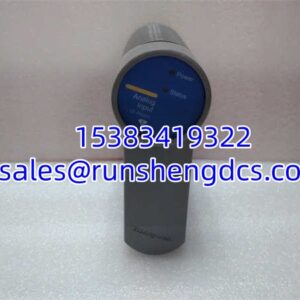
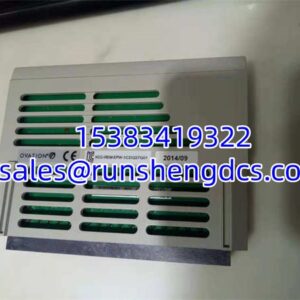
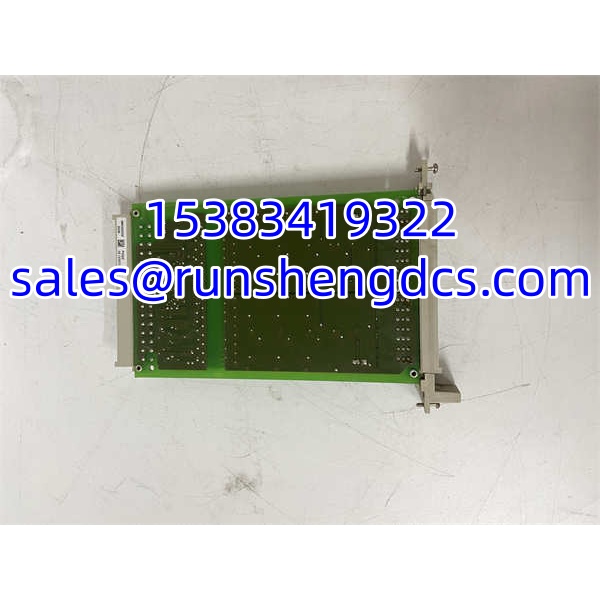
Replacing a single DO card in a safety rack should not turn into a firmware hunt. The HIMA F3322 sits in the HIMax safety I/O family as a 16-channel 24 VDC digital output module, typically used to drive relays, solenoid valves, alarm beacons, and trip devices inside ESD, BMS, and F&G systems. It is not a general-purpose PLC output card; it belongs in a HIMA safety architecture where diagnostics, channel isolation, and controlled de-energization matter.
Why spec it? You get 16 individually monitored outputs at 0.5 A each, with short-circuit and overload protection baked in. That is enough to pull small relay coils and pilot valves without external interposing hardware in many designs. The module’s diagnostic feedback helps maintenance teams catch a stuck output or wiring fault before it becomes a spurious trip. Still, confirm the exact HIMax base, firmware level, and SIL certificate before declaring it a drop-in replacement.
QA/QC Transparency SOP
- Intake & Origin Verification — Record model, serial number, hardware revision, and country of origin. Check for physical damage, corrosion, bent pins, and mismatched labels. Reject modules with unknown plant history or evidence of arc damage.
- Live Functional Testing — Seat the module in a compatible HIMax test rack. Power up with a regulated 24 VDC supply. Force each channel ON/OFF and verify LED indication, output voltage, and diagnostic flags. Confirm no channel latches unexpectedly.
- Electrical Parameter Tests — Measure output voltage under load at 0.1 A and 0.5 A. Check short-circuit response with a current-limited supply. Perform insulation/continuity checks between channel groups and backplane. No megger testing on live electronics without OEM limits.
- Firmware/Config Verification — Read hardware and firmware revision from the module or rack diagnostics. Compare against the customer’s existing HIMax configuration. Back up any readable identity data. Do not flash firmware unless authorized.
- Final QC & Anti-Static Packaging — Seal in ESD bags with desiccant. Attach a test report showing channel count, pass/fail status, revision, and test date. Label as “Untested in Customer System — Verify Compatibility Before Installation.”
Field Engineer Gotchas
- Firmware/Revision mismatch — Risk: module seats but fails diagnostics or blocks safety logic download. Solution: match hardware and firmware revision to the existing HIMax project. War story: a plant swapped an F-series DO card during a turnaround; the rack saw it, but the safety program refused to validate until the revision matched.
- Source vs. sink wiring error — Risk: outputs never energize the load, or diagnostics flag a wiring fault. Solution: confirm whether the field loop expects sourcing or sinking, then match the module configuration and common wiring. Don’t assume “24 VDC output” means it behaves like a relay contact.
- Terminal block/base incompatibility — Risk: poor contact, intermittent trips, or module rejection. Solution: verify the HIMax base, connector type, and terminal block part number before removal. War story: a tech forced a non-matching terminal block; two channels read open under vibration testing.
- Inductive load kickback — Risk: repeated output failures on solenoid valves. Solution: add flyback diodes or snubbers at the load side, even if the module has internal protection. The spec says overload protection; it does not mean abuse tolerance.
- ESD and hot-swap discipline — Risk: latent damage to output drivers. Solution: use a grounded wrist strap, power down the slot if the rack allows controlled replacement, and avoid touching backplane pins.
HIMA F3322
Application Scenarios
- ESD solenoid valve tripping — 24 VDC trip valves need confirmed de-energization on fault. The F3322’s per-channel diagnostics help detect a failed coil before a demand occurs.
- BMS burner permissive control — Fuel valve relays and ignition permissives require clean, monitored outputs. Channel isolation limits a single wiring fault from dragging down the entire card.
- F&G alarm and beacon control — Horns, beacons, and damper actuators often run on 24 VDC. Sixteen channels allow grouped annunciation without adding extra relay panels.
- Process shutdown interlocks — Pump trip, compressor stop, and isolation valve commands benefit from overload-protected outputs with diagnostic feedback into the safety controller.
FAQ
1. Is the HIMA F3322 a CPU or an I/O module?
It is a digital output I/O module, not a controller. It plugs into a HIMA HIMax safety rack and is driven by the safety CPU.
2. How many channels does it have?
Sixteen digital output channels.
3. What voltage and current does each output handle?
Typically 24 VDC at up to 0.5 A per channel. Verify the exact rating against the OEM datasheet before loading solenoids or relays.
4. Can it replace any HIMA DO card?
No. It must match the HIMax family, base type, firmware level, and safety project configuration. Treat it as non-interchangeable until confirmed.
5. Does it support hot-swapping?
Some HIMax modules allow controlled replacement, but do not assume hot-swap without confirming the rack, firmware, and plant procedure. A wrong move can force a safety state.
6. Is it SIL 3 certified?
Public listings associate it with SIL 3 / IEC 61508 applications, but the actual certificate, module version, and application constraints must come from HIMA documentation.
7. Should I buy this as surplus?
Only if you can verify revision, firmware compatibility, and test history. For a live SIS loop, an unverified card is a maintenance risk, not a bargain.