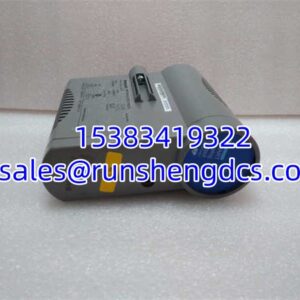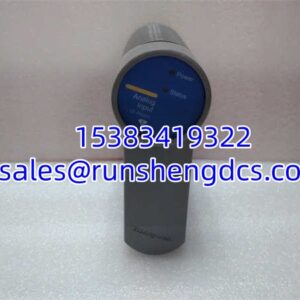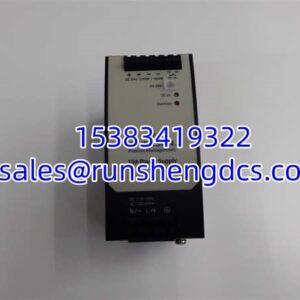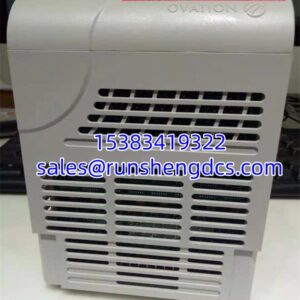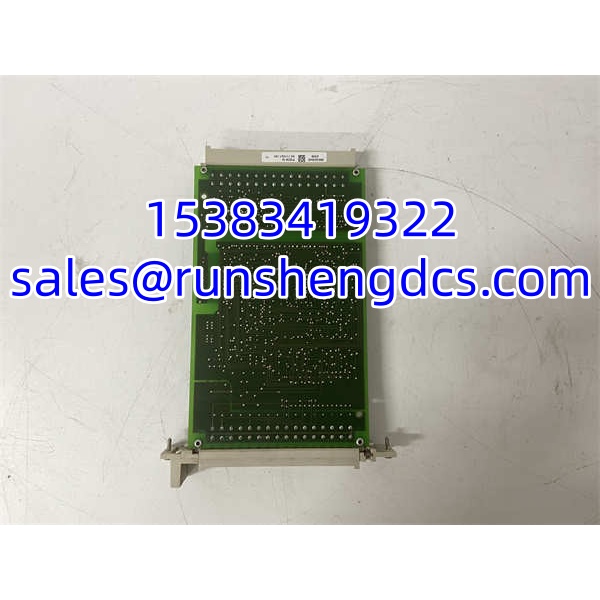

Description
Key Technical Specifications
| Parameter | Specification |
|---|---|
| Channels | 16 digital inputs |
| Safety capability | SIL 3 / AK 6 (verify per application report) |
| Input types | 6 mA current signal or 24 V mechanical contact |
| Typical switching time | ~8 ms |
| Processor architecture | Dual Intel 386EX, 32-bit, 25 MHz |
| Diagnostics | Hardware comparator, self-test, crosstalk/capacitor monitoring |
| Power supply | 5 V DC (120 mA) or 24 V DC (200 mA) |
| Space requirement | 4 TE |
| Operating temperature | -20 °C to +60 °C |
| Storage temperature | -40 °C to +85 °C |
| Humidity | 5%–95%, non-condensing |
| Protection class | IP20 |
| EMC | IEC 61000 family |
| Compatible platforms | HIMA C300, C500, C700 series |
Product Introduction
Replacing hardwired safety relays with a diagnosed input module is where SIS architectures start earning their keep. The F3236 sits in that slot: a 16-channel safety-related digital input module for HIMA PES systems, not a standalone controller. It reads field devices — E-stop pushbuttons, pressure switches, valve position switches, flame detectors, gas detectors — and delivers those states into the safety logic solver with continuous hardware-level checking.
Its value is in disciplined fault detection rather than raw speed. The dual-processor design with a hardware comparator, plus automatic tests on inputs, crosstalk, and filter capacitors, gives it a strong diagnostic posture for SIL 3 / AK 6 applications. With a typical 8 ms switching time and operation from -20 °C to +60 °C, it fits older process safety installations where proven behavior matters more than new-feature hype.
QA/QC Transparency SOP
- Intake & Origin Verification: Record full model number, suffix, serial number, firmware label, and lot markings. Reject units with cracked housings, corroded terminals, missing labels, or evidence of unauthorized repair.
- Live Functional Testing: Mount the module in a compatible HIMA test rack. Power with 5 V DC and 24 V DC separately. Force each of the 16 inputs with a calibrated 6 mA source and a 24 V dry contact simulator. Confirm channel status, LED indicators, and diagnostic reporting.
- Electrical Parameter Tests: Check insulation resistance, terminal continuity, and supply current draw against expected ranges. Inspect for cold solder joints, burnt traces, or swollen capacitors.
- Firmware/Config Verification: Read firmware revision and module identity. Back up any readable configuration data. Flag mismatches against the target system revision.
- Final QC & Anti-Static Packaging: Apply an asset tag, seal in anti-static packaging with desiccant, and include a test report. Do not ship without a recorded serial-to-report match.
Field Engineer Gotchas
- Firmware revision mismatch: A replacement F3236 may carry older firmware than the running safety CPU. That can cause download blocks, diagnostic flags, or unexpected module rejection. Solution: match firmware revision and verify compatibility in the HIMA project tool before swap-out.
- Input type configuration error: The module supports 6 mA and 24 V mechanical-contact inputs. If the project expects one type and the field wiring supplies the other, channels will read wrong or remain stuck. Solution: confirm project configuration and sensor type before energizing.
- Backplane/rack compatibility: The F3236 is designed for HIMA PES-style racks such as C300/C500/C700 families. It will not drop into arbitrary third-party backplanes just because the terminal pitch looks similar. Solution: verify exact rack, slot rules, and addressing.
- Power supply confusion: The module can be powered from 5 V DC or 24 V DC. Feeding the wrong rail, or an unregulated supply with high ripple, can create intermittent faults. Solution: measure supply voltage at the rack before insertion.
- Hot-swap assumptions: Some legacy HIMA configurations allow module replacement under redundancy, but that is not a universal green light. Solution: follow the approved safety procedure, isolate the loop if required, and confirm that the system remains in a validated safe state.
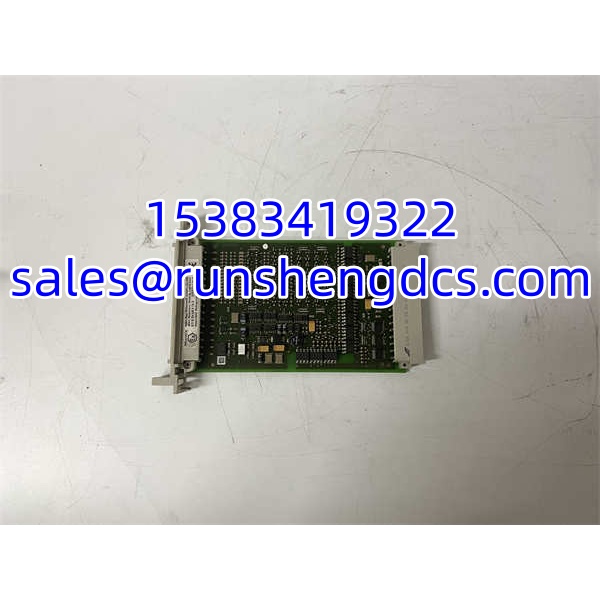
HIMA F3236
Application Scenarios
- Offshore platform ESD: Reads wellhead pressure switches, manual E-stops, and flame detectors. The 16-channel density helps consolidate field inputs into a single diagnosed module slot.
- Chemical reactor overpressure interlock: Monitors pressure switches and valve position feedback. Typical 8 ms input response supports timely trip initiation when paired with a validated logic solver.
- Turbine protection auxiliary inputs: Accepts mechanical-contact signals from auxiliary trip devices while the primary speed protection runs on dedicated overspeed hardware.
- Rail signaling wayside inputs: Collects trackside switch and position signals in environments where continuous self-test and SIL-rated diagnostics are required.
FAQ
Is the HIMA F3236 a controller or an input module?
It is a 16-channel safety-related digital input module. Some surplus listings call it a “controller,” but that is misleading. It acquires field signals for a HIMA safety logic solver.
Does it support SIL 3?
It is rated for SIL 3 / AK 6 capability in appropriate applications, but the final SIL claim depends on the full safety function, architecture, and proof-test interval.
Can I hot-swap it?
Only if the installed HIMA configuration explicitly supports it under redundancy and your safety procedure allows it. Do not assume hot-swap is valid for every rack or project.
What field devices can it accept?
Typical devices include E-stop buttons, pressure switches, level switches, valve position switches, flame detectors, and gas detectors wired as 6 mA or 24 V mechanical-contact inputs.
Will it work in a C300/C500/C700 system?
Yes, it is documented as compatible with those HIMA PLC families. Still verify slot rules, firmware level, and power distribution before installation.
Is new stock still available?
Treat most market supply as surplus or refurbished unless you have OEM documentation. Verify serial number, firmware, and test history before buying.