
Description
Key Technical Specifications
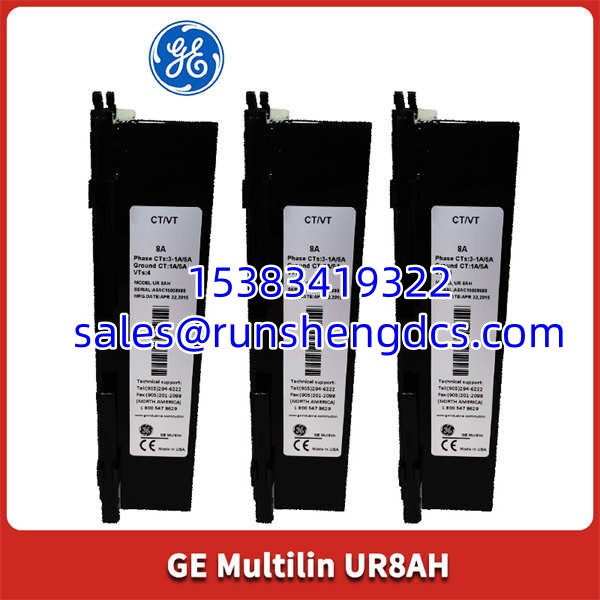
- Product Model: UR8AH
- Manufacturer: GE Multilin
- Product Type: CT/VT Input Module
- System Compatibility: GE UR Series Universal Relays
- Phase CT Inputs: 3 Channels (1A/5A Selectable)
- Ground CT Input: 1 Channel (1A/5A Selectable)
- Voltage Transformer (VT) Inputs: 4 Channels
- Measurement Accuracy: High-Precision (0.5 Class)
- Configuration Software: EnerVista UR Setup
- Environmental Rating: IP20
- Mounting Style: Backplane / Plug-in Module
Product Introduction
When a generator trips unexpectedly because the relay saw a phantom overcurrent, you know the problem usually isn’t the relay’s brain—it’s the sensors feeding it garbage. The GE UR8AH is the critical front-end module that takes raw, dangerous power signals and steps them down so the UR relay can actually make sense of them. I’ve seen too many plants skip upgrading these input modules during retrofits, only to wonder why their expensive new protection system keeps nuisance-tripping. The UR8AH provides the high-precision measurement foundation that keeps the grid stable and the operators sane.
Engineers rely on the UR8AH because it handles the dirty work of stepping down high-voltage and high-current inputs into safe, isolated logic levels. With three selectable 1A/5A phase CTs, a ground CT, and four VT inputs, it covers all the bases for standard three-phase protection. One subjective note from the field: always double-check your CT ratio jumpers before powering up. I once saw a tech leave the UR8AH set to 5A when the field CTs were actually 1A; the relay didn’t explode, but it definitely saw a massive, instantaneous overload and locked out the breaker. Treat this module with respect, and it will protect your million-dollar assets for decades.
Quality SOP & Tech Pitfalls
We don’t just pull these from a dusty bin and ship them. Every GE UR8AH goes through a strict QA protocol. First, we do a visual inspection for cracked housings or bent backplane pins. Then, we mount it on a live UR test rack and inject known secondary currents and voltages to verify the scaling matches the EnerVista UR software readout. I use a Fluke 115 to check isolation resistance between the CT/VT secondary windings and the backplane ground. Finally, it gets sealed in anti-static packaging.
Here is the brutal reality check: the most common mistake with the is ignoring the secondary grounding requirement. CT secondaries must be grounded at one point to prevent dangerous floating voltages during a primary fault. I’ve seen panels where someone cut the ground wire to “fix a ground loop,” and during a minor line fault, the secondary spiked to several kilovolts, destroying the module and frying the backplane. Also, never open a CT circuit while the primary is energized. It’s a fast track to an arc flash. Always verify your jumper settings against the OEM manual before applying power.
Installation & Configuration Guide
- Pre-Installation: ⚠️ SAFETY FIRST. Ensure the primary power is completely de-energized and locked out. Verify that all CT secondary circuits are shorted before disconnecting the old module to prevent open-circuit voltage spikes. Photograph the existing wiring and jumper block settings.
- Removal: Label every wire meticulously. Release the backplane locking mechanism and pull the straight out. Inspect the backplane receptacle for any bent or corroded pins.
- Installation: COPY ALL JUMPER SETTINGS NOW. This step prevents 90% of startup failures. Align the new with the backplane guides and press firmly until the locking mechanism engages. Reconnect the wiring exactly as photographed, ensuring CT grounds are intact.
- Power-On & Testing: Restore control power. Open EnerVista UR and verify that the module is recognized. Inject a low-level test current and verify that the relay’s measured values match your test set. Check for any CT/VT wiring alarms in the event log.
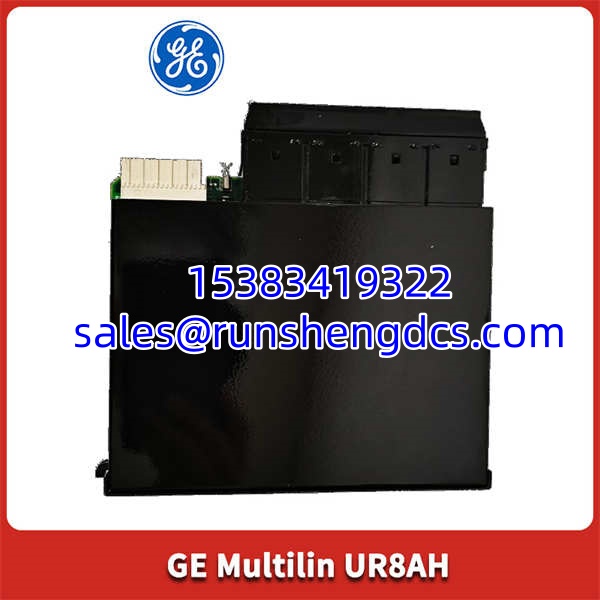
GE UR8AH
Compatible Replacement Models
- ✅ Drop-in Replacement: (Ensure the suffix matches exactly; GE occasionally updates internal components without changing the base model number).
- ⚠️ Software Compatible: -RevB (Same physical footprint, but requires a firmware update in the main relay chassis; expect 15 minutes of configuration time).
- ❌ Hardware Mod Required: UR7AH (Older generation with different backplane pinout; do not attempt to force this into a slot without replacing the entire relay chassis).
Frequently Asked Questions
Can I hot-swap this module while the relay is powered?
No. Pulling the while the relay is live will cause an immediate loss of measurement data, which will trigger a “CT/VT Fail” or “Loss of Potential” alarm and likely cause the relay to trip the breaker. Always schedule this swap during a planned outage or maintenance window.
The relay is showing a “CT Open” alarm. Is the module bad?
Before condemning the , check your field wiring. A loose terminal screw or a broken wire in the junction box will cause this exact alarm. I’ve seen techs swap three “bad” modules before realizing there was a corroded connection in the field. Measure the CT loop resistance with a multimeter first.
Do I need to recalibrate this in the field?
No. The is factory-calibrated and sealed. There are no internal adjustment pots. If the relay is reading incorrectly, verify your CT ratio settings in EnerVista UR. If the settings are correct and the reading is still wrong, replace the module.
Is this compatible with all UR series relays?
Generally, yes, but always verify the specific relay model (e.g., UR-8, UR-6) and firmware revision. The is designed for the UR platform, but mixing very old relay firmware with newer input modules can sometimes cause communication issues. Check the GE Multilin compatibility matrix before installing.
What happens if the secondary ground is lost?
If the secondary ground on the is lost, the module will still function under normal conditions, but during a primary fault, the secondary voltage can float to dangerous levels. This poses a severe shock hazard and can destroy the module. Always verify the ground connection during installation and during annual maintenance.
Does this come with a warranty?
Yes, every we ship has a 1-Year Warranty. We test these because a failed input module can lead to a misoperation of the protection system. If it fails, we replace it. No arguments.